What hair porosity is
Hair porosity is how readily your hair takes in water and how long it holds it. It is set by the cuticle, the outer layer of each strand: closed resists water, open lets it in and out. The bands are low, medium, high and mixed. Porosity explains more about how products behave on your hair than curl type does.
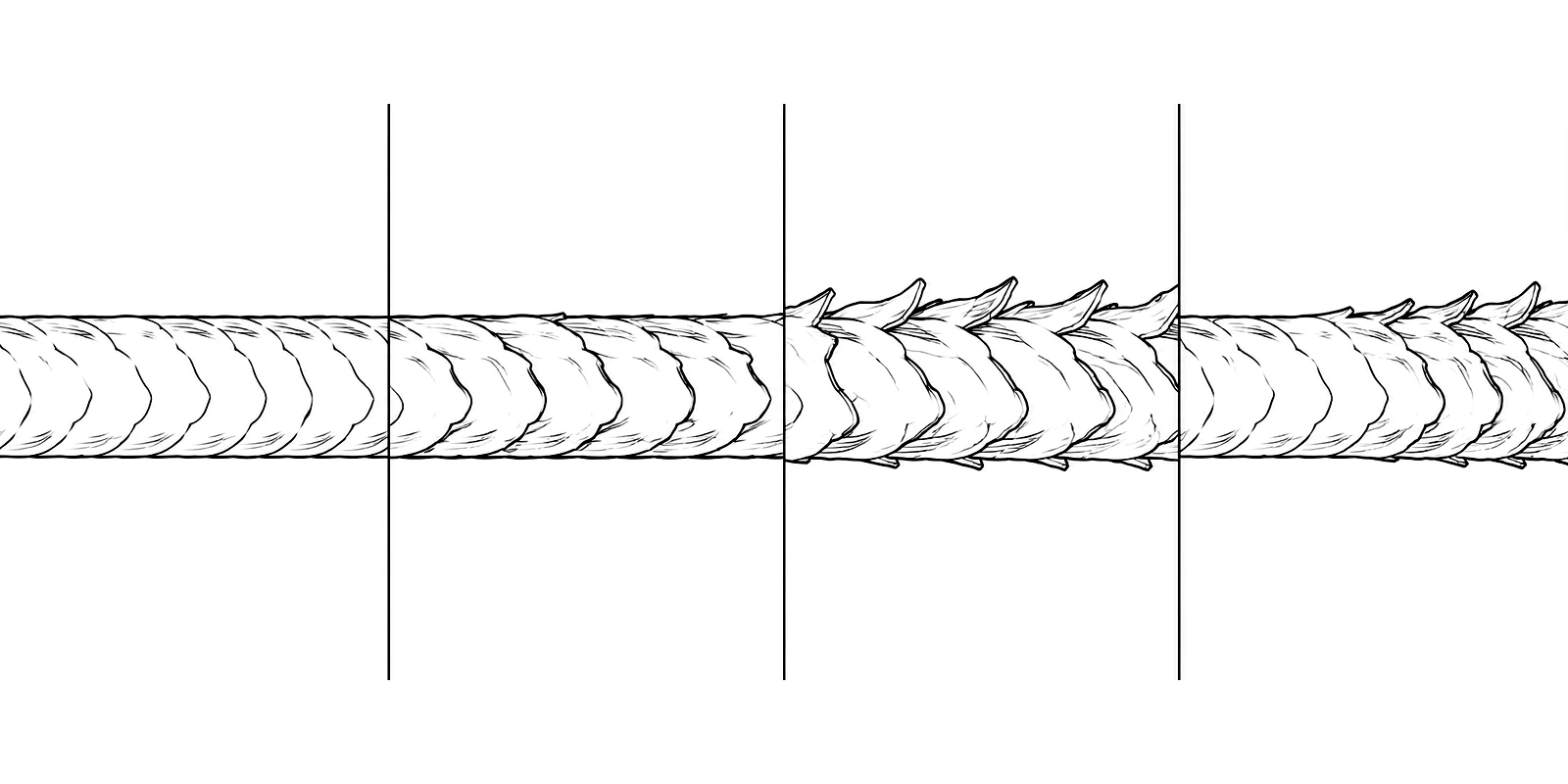
That is the whole definition; the rest of this page is what follows from it. The hair porosity types are not kinds of hair so much as positions on one scale, and the mechanism is simple once you have seen it. Water and product have to get past the cuticle to reach the inside of the strand. When the scales lie flat, that takes time and sometimes heat, and whatever does get in stays in, because the same closed surface holds it there. When the scales are lifted, worn or missing in places, water goes in almost at once and leaves almost as fast, so the hair is wet through in seconds and dry again within the hour. Most heads sit between those two, which is why medium is the most common band and the one least written about.
Porosity is a description of how hair behaves this month, not a grade. It moves with bleach, heat, buildup and time, it differs along one strand, and it does not describe health. The hair porosity test reads it from nine questions about wash day: how long the shower takes to soak your hair, how long it takes to air-dry, where a leave-in goes. No strand in a glass of water.
Hair porosity chart
The four bands, by what you can observe on a normal wash day. Every row describes hair that has been washed with a clarifying shampoo recently and is free of oil and heavy product; buildup makes any band behave like low.
| Band | Wet through | Air-dry | Where product goes | Common reasons | Guide |
|---|---|---|---|---|---|
| Low | Minutes; water runs off at first, like a film | Half a day or more; "takes forever to dry" | Sits on top, feels coated, can flake; deep conditioner does more under heat | Cuticle lies flat; usual on hair with no chemical history; coarse strands | Low porosity hair |
| Medium | Under a minute | One to three hours | Absorbs after a moment | How most hair grows from the scalp | Below |
| High | Seconds | Under an hour | Disappears; hair drinks it up and feels dry again by evening | Bleach, color, relaxers, heat; also some hair with no history at all | High porosity hair |
| Mixed | Ends soak faster than roots, or front faster than back | Ends dry first | Ends drink it, roots hold it on the surface | Ends are older and more worn than new growth; treated lengths over untreated regrowth | Below |
Read the chart with the hair types in mind, because the two are independent: a 2A head can be high porosity after bleach and a 4C head can be low. Curl pattern says how the hair is shaped; porosity says how it handles water. The letters do not predict the band.
Medium porosity hair
Yes, medium porosity is possible, and it is the most common band, because it is how hair grows out of the scalp before anything has been done to it. The cuticle lies mostly flat, water gets through in under a minute, air-drying takes an hour or three, and a leave-in sits for a moment and then absorbs. Nothing about it demands attention, which is why so little is written about it and why people with medium porosity hair go looking for a band that sounds more like a diagnosis.
If your answers on the hair porosity test come back medium, that is a full result, not a failure to decide. It usually means the products that behave badly on your hair are doing so for another reason: strand thickness, density, buildup, or the ends being more porous than the roots. Medium hair still shifts with treatment. Bleach or daily heat will move the lengths toward high over a year, and a clarifying wash after a heavy-product phase can make hair that felt low behave medium again.
Mixed porosity hair
Different parts of one head taking water at different speeds is common enough that it needs its own band. The most usual shape is ends more porous than roots: the ends are the oldest hair on your head, they have been through the most washing, brushing, sun and styling, and the new growth at the root has been through none of it. Hair that was bleached or relaxed a year ago and has grown out since is the sharpest version, with a treated length over an untreated root. Front differing from back is the other common pattern, since the front and the edges get more handling and more heat.
People with mixed porosity describe the same thing from the product side: "different amounts of product depending on the section". The ends drink up a leave-in while the roots hold it on the surface, so a single amount applied everywhere is too much for one part and too little for the other. The practical reading is by section rather than by head, which is why the hair porosity test asks whether parts of your hair behave differently and, when they do, reports an overall band plus which part is the more porous one.
Why porosity changes
Porosity is a state, not an identity. "Your porosity can, does, and will change" is the way the community puts it, and the reasons are all physical.
Treatment lifts the cuticle. Bleach and lighteners, permanent color, relaxers, perms and chemical straightening all work by opening the cuticle to reach the inside of the strand, and it does not close all the way afterward. Heat does the same more slowly. This is why high porosity is common after these processes and why the treated lengths stay high until they are cut.
Buildup covers it. Oil, conditioner, gel, silicones and hard-water minerals coat the strand, and a coated strand behaves like low porosity whatever its cuticle is doing: water runs off, product sits on top, deep conditioner needs heat. Most people who think they have low porosity hair are describing buildup and infrequent washing, and a clarifying wash changes the reading.
Position along the strand. The ends have had months or years more wear than the root, so porosity rises from root to end on almost everyone. A trim lowers the overall reading; growth raises it.
Thickness confuses it. Coarse strands have more cuticle layers than fine ones, so fine hair can wet through faster than its porosity would suggest and still hold water for a long time. Fine, low-porosity hair is the combination behind most "my signs contradict each other" reports.
A result therefore describes your hair now. Retake the hair porosity test after a clarifying wash, a trim or a color, because any of those can move it.
Porosity is not a diagnosis
Porosity does not mean health. High porosity is common after bleach and heat, but it also occurs on hair that has never been treated, and low porosity says nothing about condition either way. This site explains the mechanism, why water and product behave as they do on your hair, and stops short of judging the hair. Nothing here calls a band healthy or unhealthy, and nothing here needs repairing.
It is also not a shopping label. The community has watched porosity become "the new typing system", a word used with confidence and without much idea of what it means, and the reaction is fair: two people with the same band report opposite experiences with the same kind of product, one thriving on light water-based formulas and one needing rich creams, because thickness, density and buildup are in the mix too. Knowing your band explains why a product behaves as it does on your hair. It does not tell you which one to buy, and this site does not list any. Trial and error is still how the last step gets done; porosity just makes the trials fewer.
FAQ
Short answers to the questions asked most often about hair porosity.
What are the types of hair porosity?
Three bands, low, medium and high, plus mixed for hair whose ends or front behave differently from the rest. Low resists water going in and holds it once there; high takes it in fast and lets it out fast; medium sits between and is the most common. The chart above gives the signs for each.
Is low or high porosity better?
Neither. Porosity describes how hair handles water, and each way of handling it has products that work with it and against it. Low porosity holds moisture once it is in and takes longer to get it there; high porosity takes it in fast and loses it fast. There is no band to aim for, and the high and low guides each explain what theirs means rather than ranking them.
Can porosity change?
Yes, on its own and more than most people expect. Bleach, heat and chemical treatments raise it; buildup makes hair behave lower than it is; the ends are always further along than the roots; a trim brings the overall reading down. You cannot set it to a number, and a result describes your hair now rather than for good.
How do I know my hair porosity?
By how it behaves: how long the shower takes to soak it through, how long it takes to air-dry, whether a leave-in disappears or sits on top, and whether a mask needs heat to do anything. The hair porosity test asks those nine things and scores them; a strand in a glass of water is held up by surface tension and pushed around by residue, so it tells you less.
Does porosity matter more than curl type?
They answer different questions, so neither outranks the other. Curl type describes the shape of the hair and is useful for finding people with the same hair and for talking to a stylist. Porosity describes how the hair handles water and product, which is the question most routine decisions turn on. The hair type quiz reads the pattern plus a first porosity reading; this guide and the test go deeper on porosity alone.
Do Asians have low or high porosity hair?
Porosity describes the state of the cuticle on one person's hair, and it does not describe any group of people. Every band occurs in every population, and the same person moves between bands with bleach, heat, buildup and time. The only way to know yours is to look at how your own hair behaves.
Nine questions about wash day, about three minutes. Returns low, medium, high or mixed with the answers that decided it, and a two-minute spray check to confirm. No cup of water.
Porosity is one of the three axes that sit alongside curl pattern. The hair types guide covers the twelve patterns, and the hair type quiz reads pattern, thickness, density and a first porosity reading together.