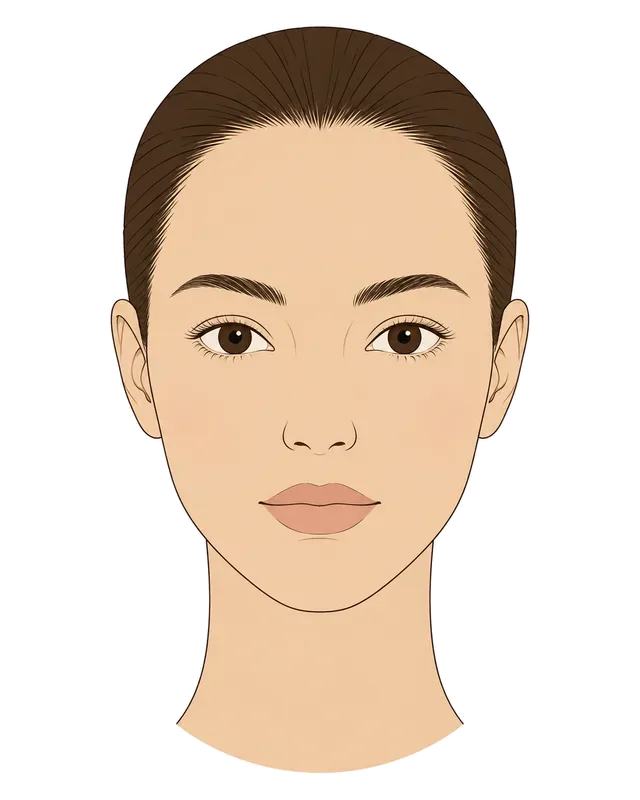
OvalClosestThen check
An oval face is 1.3 to 1.6 times as long as it is wide, widest at the cheekbones, with a jaw that tapers gently.
Read the Oval guideFree · No sign-up · Runs in your browser
One selfie is enough. Your proportions are measured right in your browser — the two of seven shapes your outline sits between, not a guess.
Your photo never leaves your device — never uploaded, never stored.
 Sample
Before you upload
The short answer
Your face shape describes how your outline’s length, width, widest point and jawline relate. This detector uses one front-facing photo to return the closest two of seven labels: oval, round, square, oblong, heart, diamond or triangle. Treat them as a comparison shortlist, then check the result against the measurements and mirror prompts below.
The photo path uses MediaPipe landmarks and Style Look Lab’s classifier and geometry rules to evaluate a normalized 36-point outer contour and return seven labels. The manual path is separate: it starts at the hairline and uses this site’s 1.3 and 1.6 quick-reference bands, so its numbers should not be compared directly with detector values. Repeating the same unchanged image is deterministic, but repeatability does not establish correctness or independent validation. Camera perspective, head pose, landmark placement, facial hair and two-dimensional projection can shift a close result.
How it works
It opens in your browser and stays there. Nothing is sent to a server, so there is nothing for us to keep — close the tab and the photo is gone.
MediaPipe locates facial landmarks. This site then evaluates a normalized 36-point outer contour with its own classifier and geometry rules to return seven labels.
Two of the seven shapes every time — the one your outline sits closest to and the one to check next — each with its own mirror check, and where a reading rests on a measurement, that measurement shown against where other faces fall.
The photo detector and manual table are separate methods. Read the source and method notes before comparing a close result.
The catalog
Same face, seven outlines. One sentence each on what sets it apart, so you can match your own reflection against them.
An oval face is 1.3 to 1.6 times as long as it is wide, widest at the cheekbones, with a jaw that tapers gently.
Read the Oval guide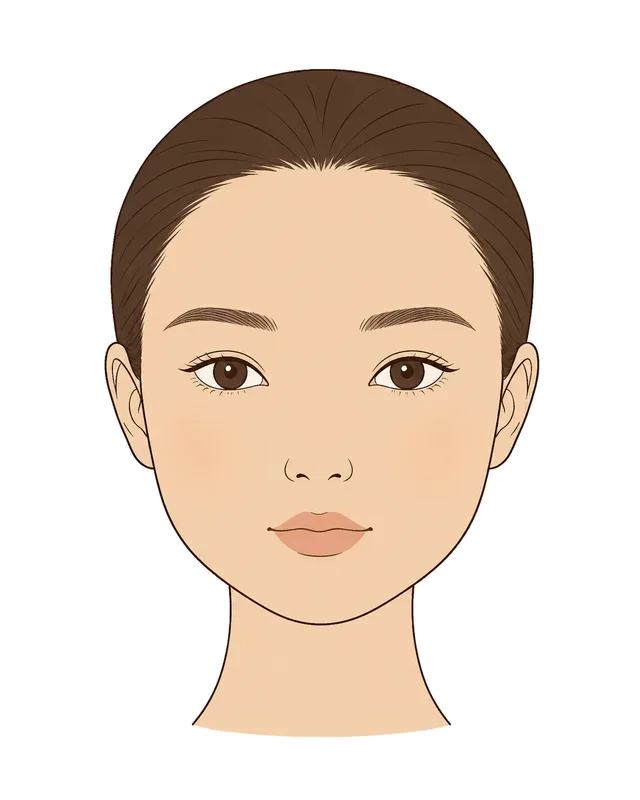
A round face is about as long as it is wide, widest at the cheekbones, with a soft, curved jawline.
Read the Round guide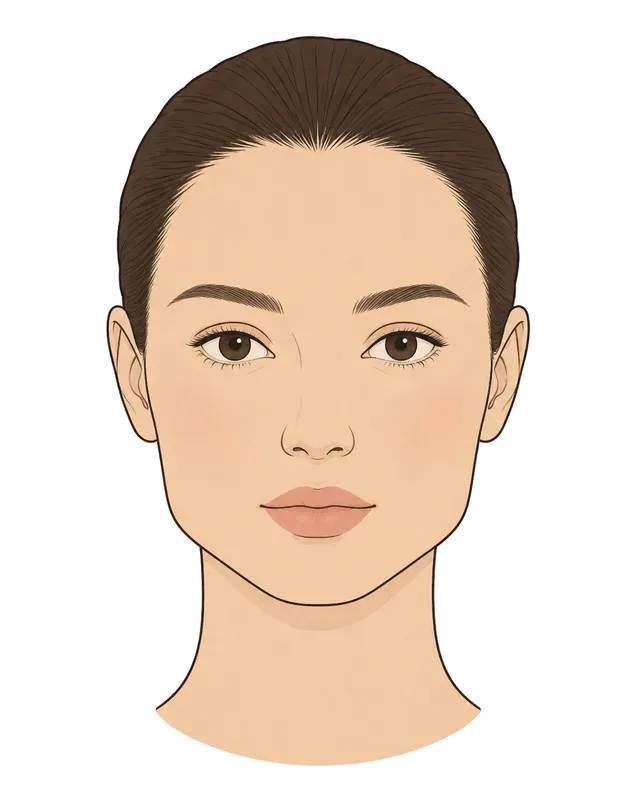
A square face is about as long as it is wide, with forehead, cheekbones and jaw near-equal and an angular jawline.
Read the Square guide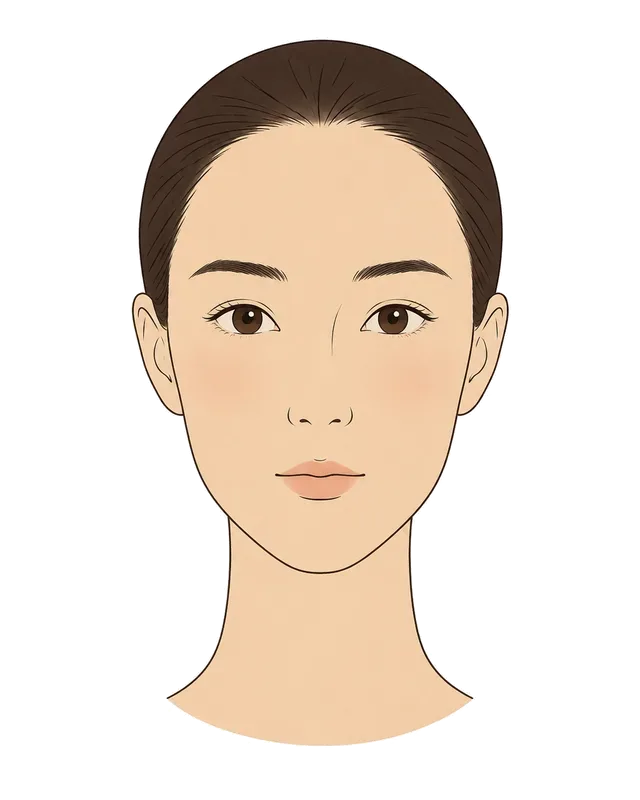
An oblong face is at least 1.6 times as long as it is wide, with all three widths similar, so the face reads long.
Read the Oblong guide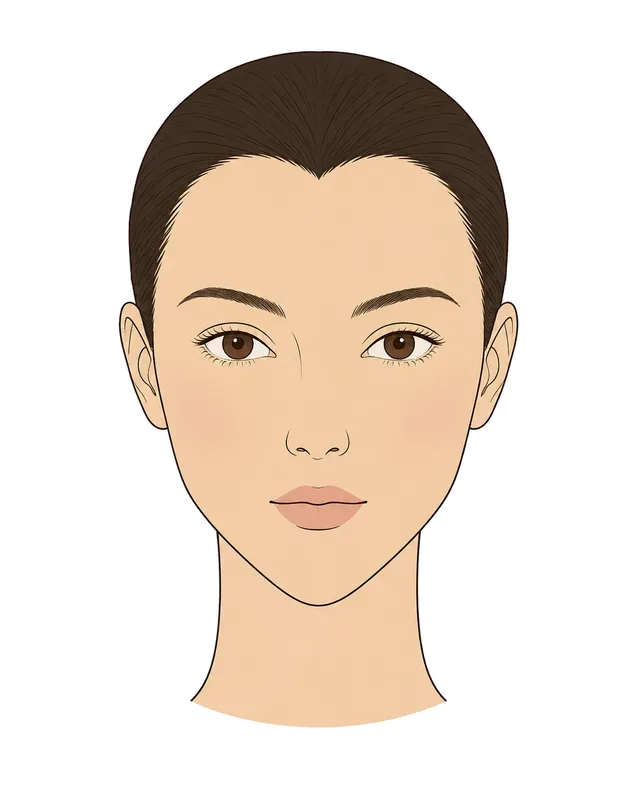
A heart face draws in quickly below the cheekbones and finishes in a small, pointed chin.
Read the Heart guide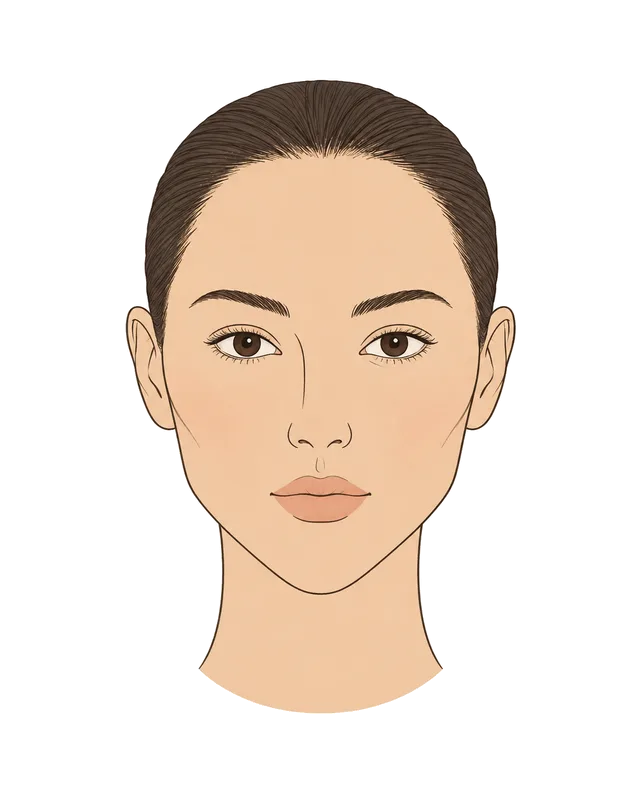
A diamond face is widest at the cheekbones, narrowing to both the forehead and the chin.
Read the Diamond guide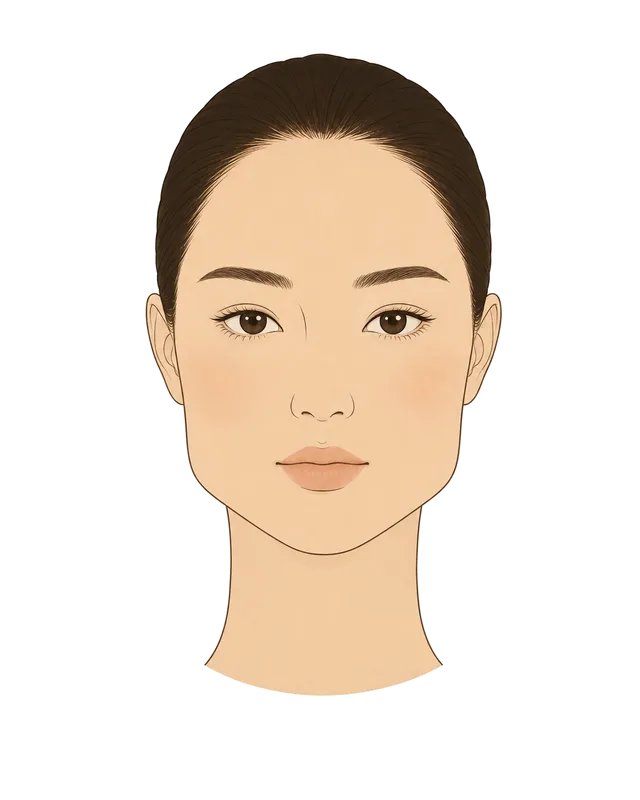
A triangle face reads short against the width of its cheekbones, so the outline sits wide through the middle rather than long.
Read the Triangle guideUpload a selfie and get the two shapes your outline sits between.
Detect my shape ↑The calculator method
No photo handy, or want a separate cross-check? A soft tape measure and a mirror provide four manual observations. This site’s quick-reference table is not the detector’s classifier: the tape method runs from your hairline, while the detector works from facial landmarks, so the two sets of numbers are not meant to be compared side by side. Keep the tape snug but not pressed in, and note each number before moving on.
Center of the hairline straight down over the nose to the tip of the chin. If bangs cover it, follow the natural line where your hair grows.
Across the widest part of the forehead, midway between your eyebrows and hairline, from one side to the other.
From the sharpest point of one cheekbone to the other — just below the outer corner of each eye.
Across the widest points of the jaw, about a thumb's width below each ear, following where the bone turns.
| Shape | Length : width | Widest point | Jawline |
|---|---|---|---|
| Oval | 1.3 – 1.6 | Cheekbones | Gently tapered |
| Round | < 1.3 | Cheekbones | Soft, curved |
| Square | < 1.3 | Even widths | Angular |
| Oblong | ≥ 1.6 | Even widths | Varies |
| Heart | 1.3 – 1.6 | Cheekbones | Narrows fast to a point |
| Diamond | 1.3 – 1.6 | Cheekbones | Narrow, pointed |
| Triangle | < 1.3 | Cheekbones | Angular |
Divide face length by cheekbone width, then read across this site’s 1.3 and 1.6 quick-reference bands. They are editorial guides, not externally validated clinical cutoffs. Landing between two rows is normal — the detector tells you which side you lean.
Style Look Lab method and limits: the normalized 36-point contour, classifier, geometry rules, seven-label output, candidate ranking and manual 1.3/1.6 bands are internal rules, not claims from the cited sources. They have not been independently validated. Two-dimensional projection, pose, camera perspective, facial hair and landmark placement can shift a close result.
Questions
Upload one front-facing selfie above and you'll get two of the seven shapes — the one your outline sits closest to and the one to check next — with what separates them spelled out. Prefer to do it by hand? The four-measurement method is in the section above.
No. The analysis runs entirely in your browser — the photo is never uploaded, never stored, never used for training. What reaches us is the reading and the numbers behind it — the two shapes, where the one measurement falls among other faces, and the angle and pixel size of the photo — never the picture itself.
Less than they used to. Nothing in the measurement depends on finding your hairline any more, so bangs no longer shorten your face length. Heavy bangs can still nudge where the landmarks land along your temples, so pulling your hair back and retaking is still the surest way to steady a close reading.
The same unchanged photo returns the same result because the implementation is deterministic, but repeatability does not establish correctness or independent validation. You get two candidates and a mirror check rather than one settled label. A different camera distance, angle, expression, hairstyle, facial hair or landmark placement can move a close reading.
That is how the result is given here. Every reading names two — the shape your outline sits closest to and the next one to check — each with its own mirror check, because most faces sit between two rather than landing squarely on one.
No, keep them on. The measurements use your brow line, cheekbones, jaw and chin. A heavy beard is different — it can cover the jawline, which the men's version handles separately.
Pull your hair back and look straight into a mirror. Ask three questions: which part of your face is widest — forehead, cheekbones or jaw? Does your jaw turn a corner or curve? Is your face clearly longer than it is wide? Read those three answers against the table above and you'll usually narrow it to one or two shapes; the detector settles which side you lean.
The category rarely changes, because it follows your bone structure — the ratios of forehead, cheekbones and jaw. Weight can change how wide the cheeks read and nudge a result that sits near a boundary, and jawlines soften gradually over the years, so retest after a big change. Both results were true when they were taken.