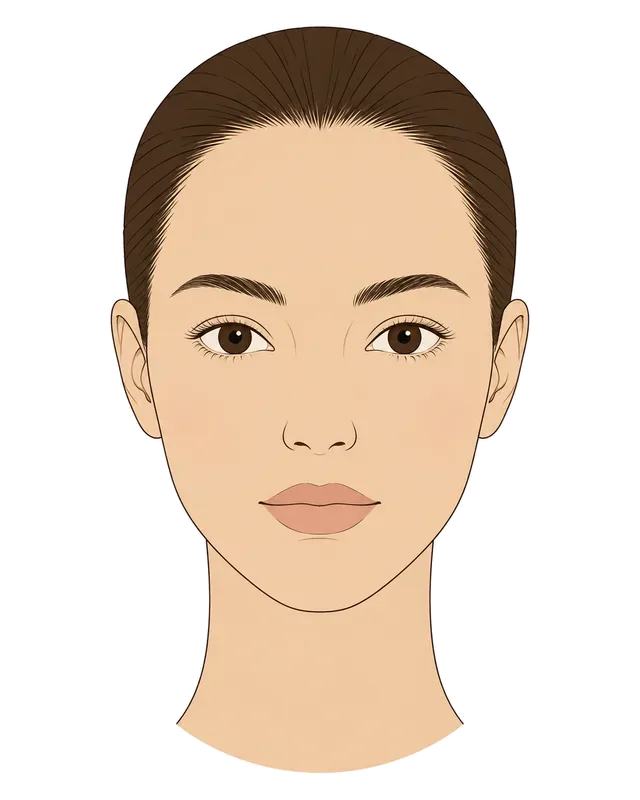
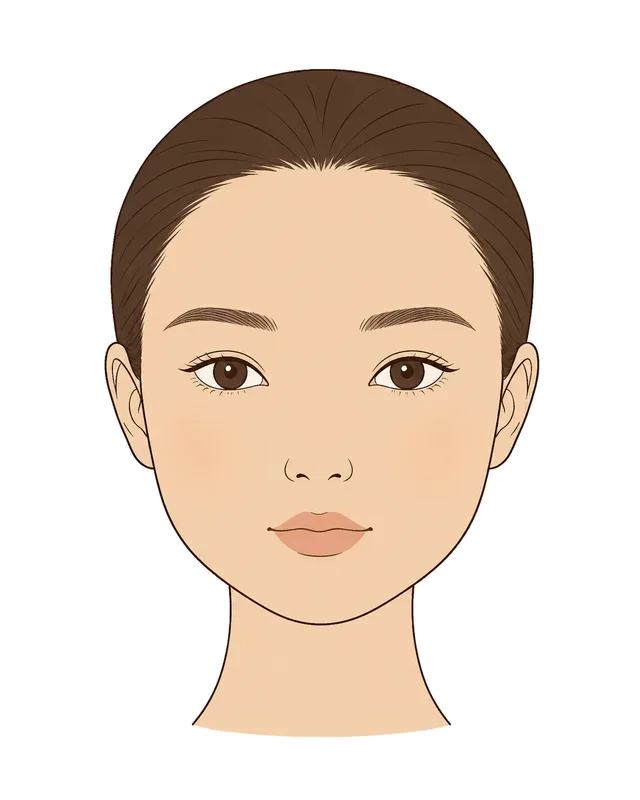
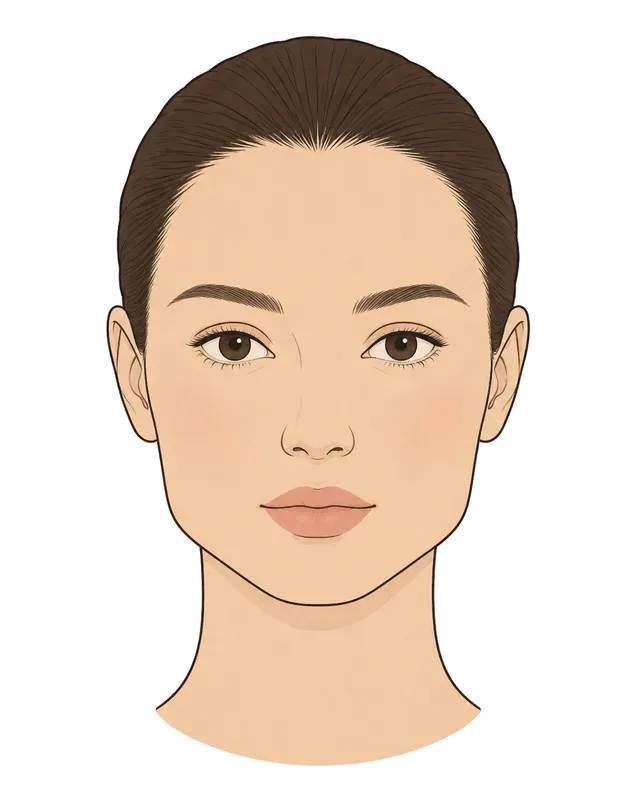
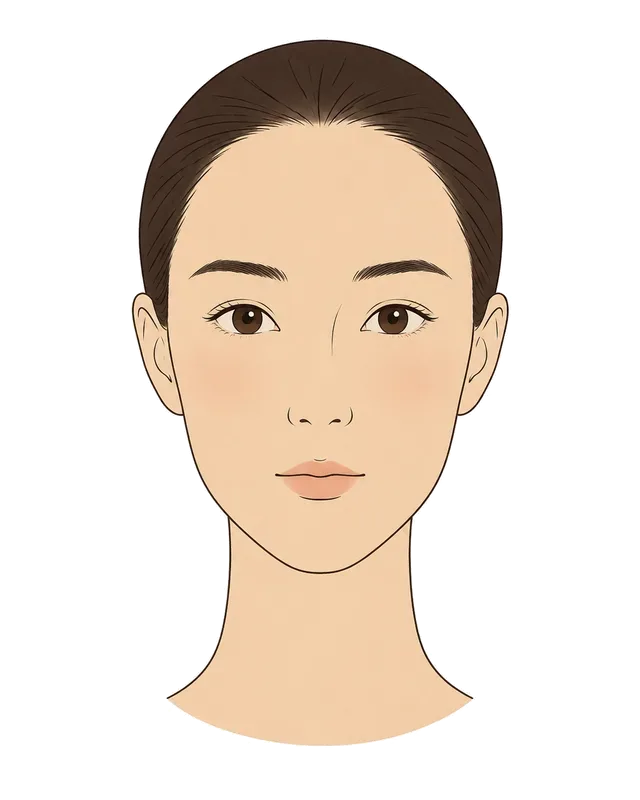
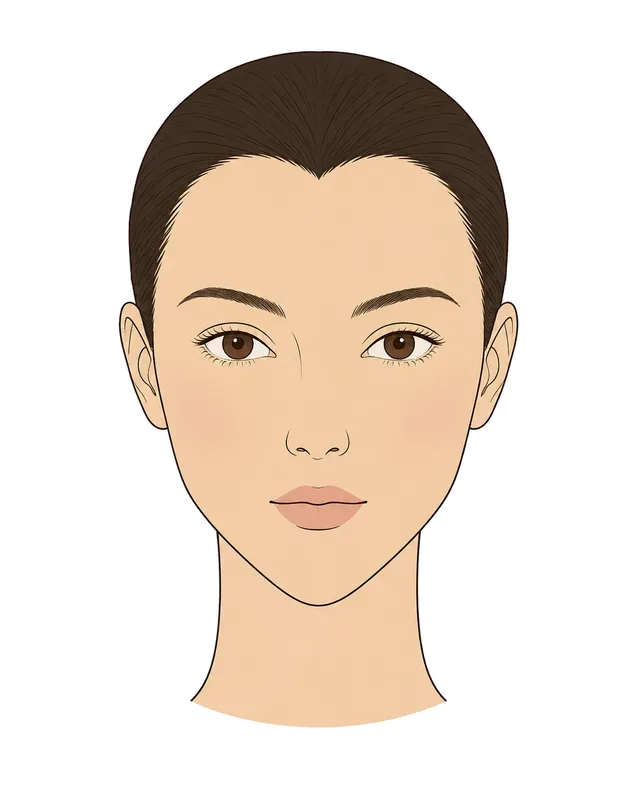
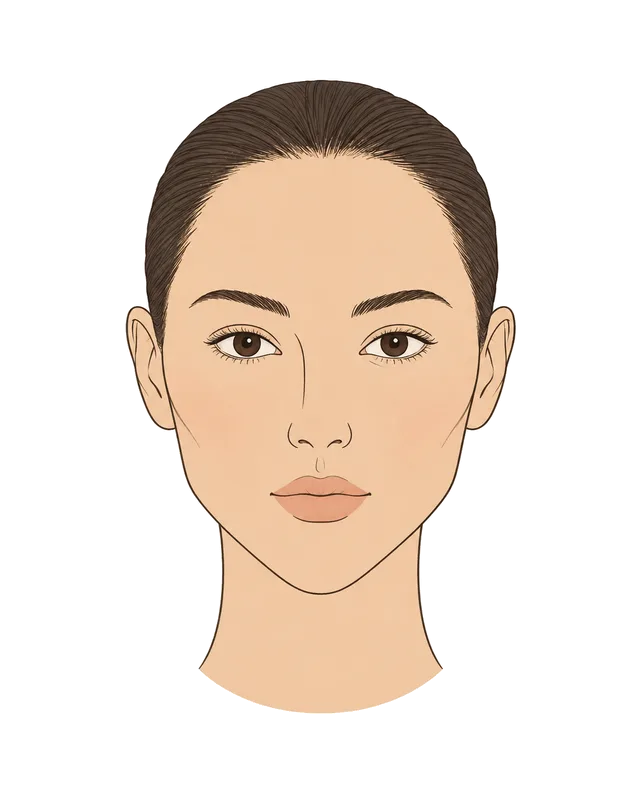
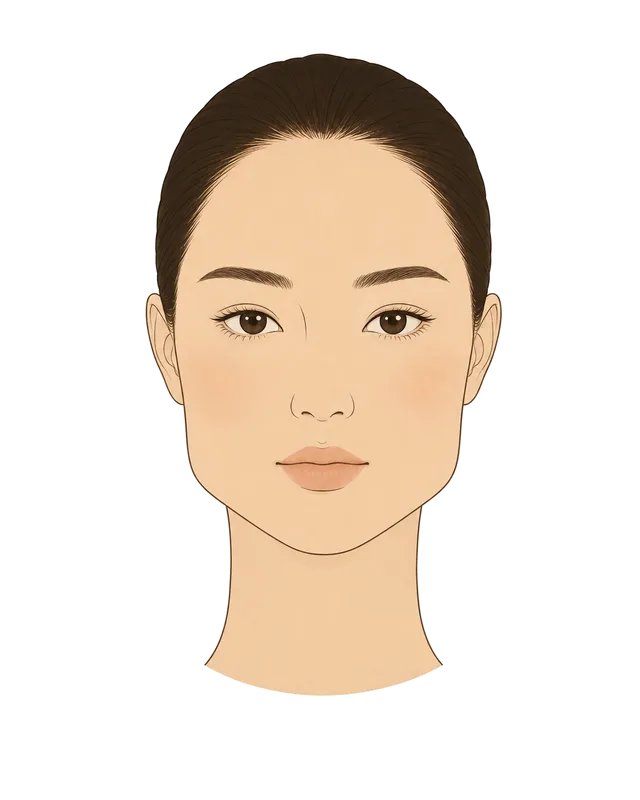
Face shapes are working labels for the outline created by relative length, width, cheek and jaw observations. Style Look Lab uses seven labels, but other guides may group the same face differently. This hub helps you compare those labels, choose a photo or manual check, and interpret overlap without treating a category as an objective diagnosis.
Why face-shape labels differ
A face does not arrive with a category attached. Different guides choose different landmarks, names and dividing rules, so the same outline can reasonably sit near more than one description. “Long,” “oblong” and “rectangular” may overlap in one guide, while another separates diamond from oval or triangle from square.
Style Look Lab therefore presents its seven names as a working model. They organize visible outline observations and styling experiments; they do not rank faces or define a universal standard. If another source gives you a different name, compare what each source measured before deciding which description is more useful.
Seven labels in this guide
Start with the relationship that stands out, then read the neighboring guides rather than matching one feature in isolation.
| Guide | Style Look Lab working description | Useful next comparison |
|---|---|---|
| Oval | Longer than wide, with a gentle jaw transition | Round or oblong |
| Round | Similar length and width, with a curved jaw | Oval or square |
| Square | Similar length and width, with a more angular jaw | Round or triangle |
| Oblong | A distinctly longer vertical outline | Oval or square |
| Heart | The lower face draws inward toward the chin | Diamond or oval |
| Diamond | The cheek area reads wider than both ends | Heart or oval |
| Triangle | A comparatively short, broad middle with an angular lower outline | Square or round |
These descriptions summarize this site’s public labels. They are prompts for closer comparison, not claims that every face must fit one box.
Two ways to check your outline
The face shape detector and a manual cross-check are separate paths. The photo path uses MediaPipe landmarks and Style Look Lab’s classifier and geometry rules to return two named candidates after a successful analysis. Google’s MediaPipe documentation supports the landmark capability; it does not define or verify the seven labels used here.
The manual path asks you to compare relative face length, the widest visible area and the jaw transition. Marinescu describes one research approach based on facial-landmark measurements and notes both the subjective nature of classification and the need for a near-neutral pose. That study does not test this site’s categories or rules.
Try a three-pass check rather than forcing a quick answer:
- Use a front-facing image with a relaxed expression and hair clear of the outer contour.
- Mark the visible forehead, cheek and jaw widths without changing the crop between marks.
- Read the two closest guides and note which description remains consistent when you repeat the observation.
Camera distance, lens perspective, head angle, hair, facial hair and landmark quality can all change a two-dimensional reading. Repeating the same image may reproduce the same output because the implementation is deterministic; repeatability alone does not establish correctness or external validation.
What a second candidate means
A successful photo analysis names a primary candidate and a second candidate. The pair is a practical way to show that outlines often share visible relationships. It is not a score about personal value, and it is not evidence that either label is a permanent biological fact.
Use the second guide as a targeted cross-check. Ask which description better matches the widest point, jaw transition and overall length in the same image. If neither holds across several controlled observations, keep the result provisional and retake the photograph under clearer conditions.
Turn a label into a useful comparison
A useful label narrows the next question; it does not dictate an answer. Once one or two guides seem plausible, use their styling sections as small A/B trials. Keep the item, scale and lighting consistent, change one visual element, and judge the effect against your own preference.
This approach keeps identity pages separate from the detector. The detector owns photo analysis and the full manual measurement walkthrough. The seven guides explain what each site label means, where it overlaps with nearby labels, and how to test a limited set of visual directions without promising one result for everyone.
Questions people ask about face shapes
How many face shapes are there?
There is no single public count used by every guide. Style Look Lab uses seven labels so its detector and identity guides share one vocabulary. Other systems may merge or rename some of them.
Why do two websites give me different answers?
They may use different landmarks, photos, names or decision rules. Compare the stated method and limitations instead of assuming that agreement between sites is guaranteed.
Is the photo result permanent?
The result describes one two-dimensional input under particular conditions. Pose, camera setup, hair and facial hair can change the visible outline, and the label remains an editorial classification rather than a medical identity.
Should I use the first or second candidate?
Read both guides and run the same controlled comparisons. The more useful label is the one that consistently explains the visible relationships you can verify and supports styling trials you actually prefer.
Sources & limitations
MediaPipe documents landmark output, not face-shape labels. Marinescu describes one landmark-measurement approach and its pose constraints, not a validation of this site. The seven-label model, manual quick references, candidate order and all styling interpretation are Style Look Lab editorial choices. A two-dimensional reading can change with pose, camera distance, lens perspective, hair, facial hair and landmark quality.
- Google AI Edge — Face landmark detection guide for Web — Documents the browser API’s 3D landmarks and transformation matrices; it does not classify face shapes.
- Marinescu (2021) — Automatic Face Shape Classification via Facial Landmark Measurements — Primary research showing one landmark-based classification approach and noting the subjectivity and near-neutral-pose constraint; it is not a validation of this detector.