A buzz cut keeps a visible layer of short hair. A bald or shaved-head look aims to remove that layer much more closely. The central choice is simple: do you prefer a short-haired outline, or an outline defined more directly by the head?
If you want to keep a hairline and some texture, start by comparing a buzz cut. If the smooth head outline is the feature you want, compare a shaved finish. When you are undecided, a longer buzz is a useful first haircut to discuss: you can choose to go shorter afterward, while reversing a shave means waiting for growth.
Here, “bald look” means a shaved-head appearance, rather than every form of natural hair loss.
What do buzz cut and bald mean here?
Buzz cut refers to hair cut close with clippers while some hair remains visible. The top, sides, and transition between them can vary, so “buzz cut” does not specify one exact length.
Bald or shaved-head look refers to a much closer, hair-free visual finish. In real life, a close shave and a no-guard clipper cut do not create the same surface. Gillette’s cut, trim, and shave overview separates clipper cutting from shaving, which is the practical distinction to discuss with a barber.
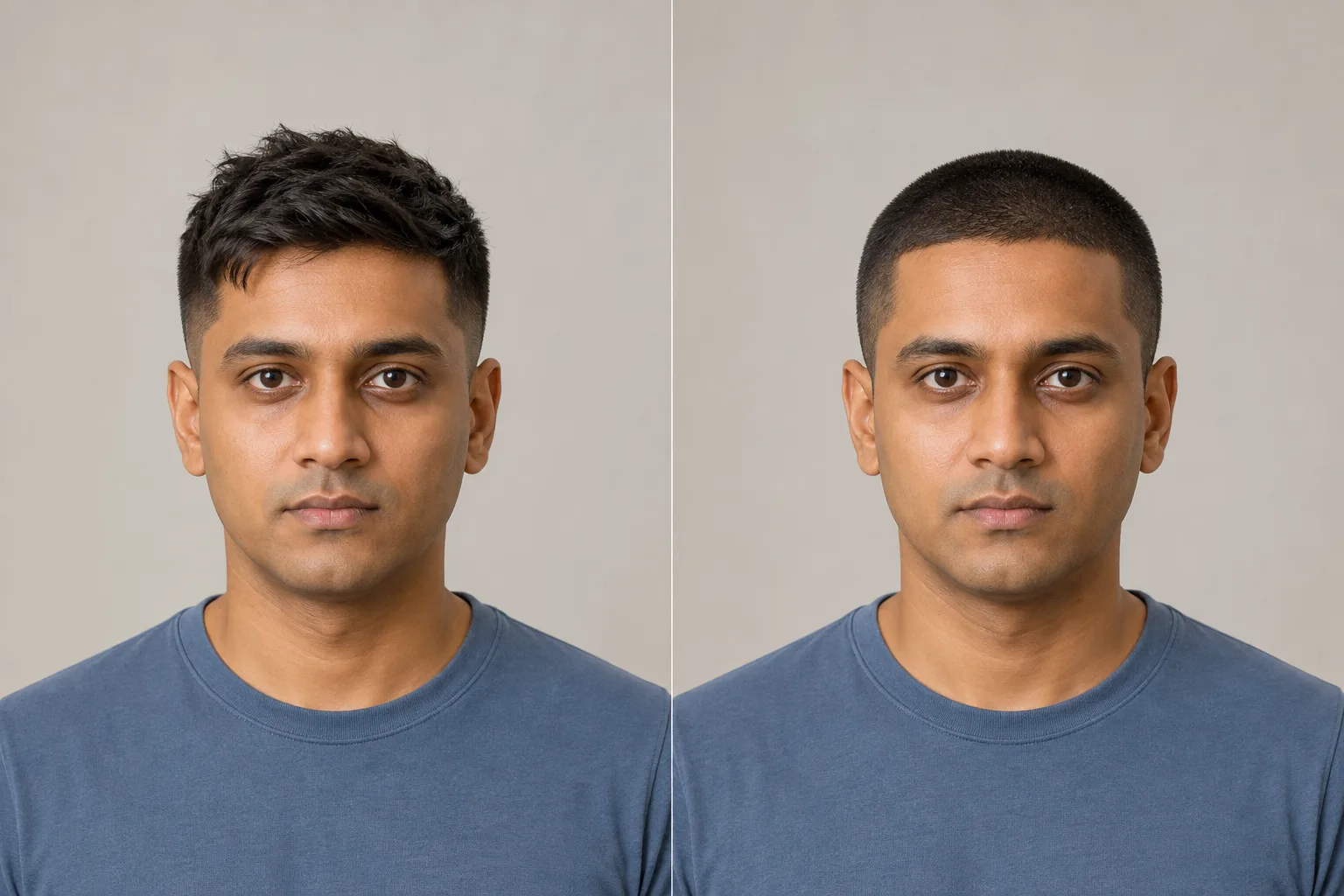
How do the two looks compare side by side?
| Dimension | Buzz cut | Shaved-head or bald look |
|---|---|---|
| Hair left visible | A short layer remains; its length can vary | The intended finish removes the visible hair layer much more closely |
| Hairline in the look | Short hair still defines the forehead edge | The forehead and head outline become the main visual edge |
| What to inspect in a preview | Top-to-side relationship, hairline contrast, and remaining texture | Head silhouette, forehead exposure, and balance with facial hair or glasses |
| Barber conversation | Ask about length, top versus sides, and whether you want a transition | Ask how close a finish you want and which shaving approach is appropriate |
| As it grows | The crop becomes longer and its shape softens | New stubble changes the hair-free appearance |
Neither option is automatically more confident, masculine, flattering, or easy. The useful question is which visible state and upkeep pattern you prefer.
How can you make a fair photo comparison?
Use one front-facing source photo that includes the full top and both sides of the head. Keep glasses, facial hair, pose, and expression consistent.
First generate a short-haired option with the buzz cut filter. Then return to the same source and use the bald filter. Place the original, buzz cut, and shaved-head result at a similar size.
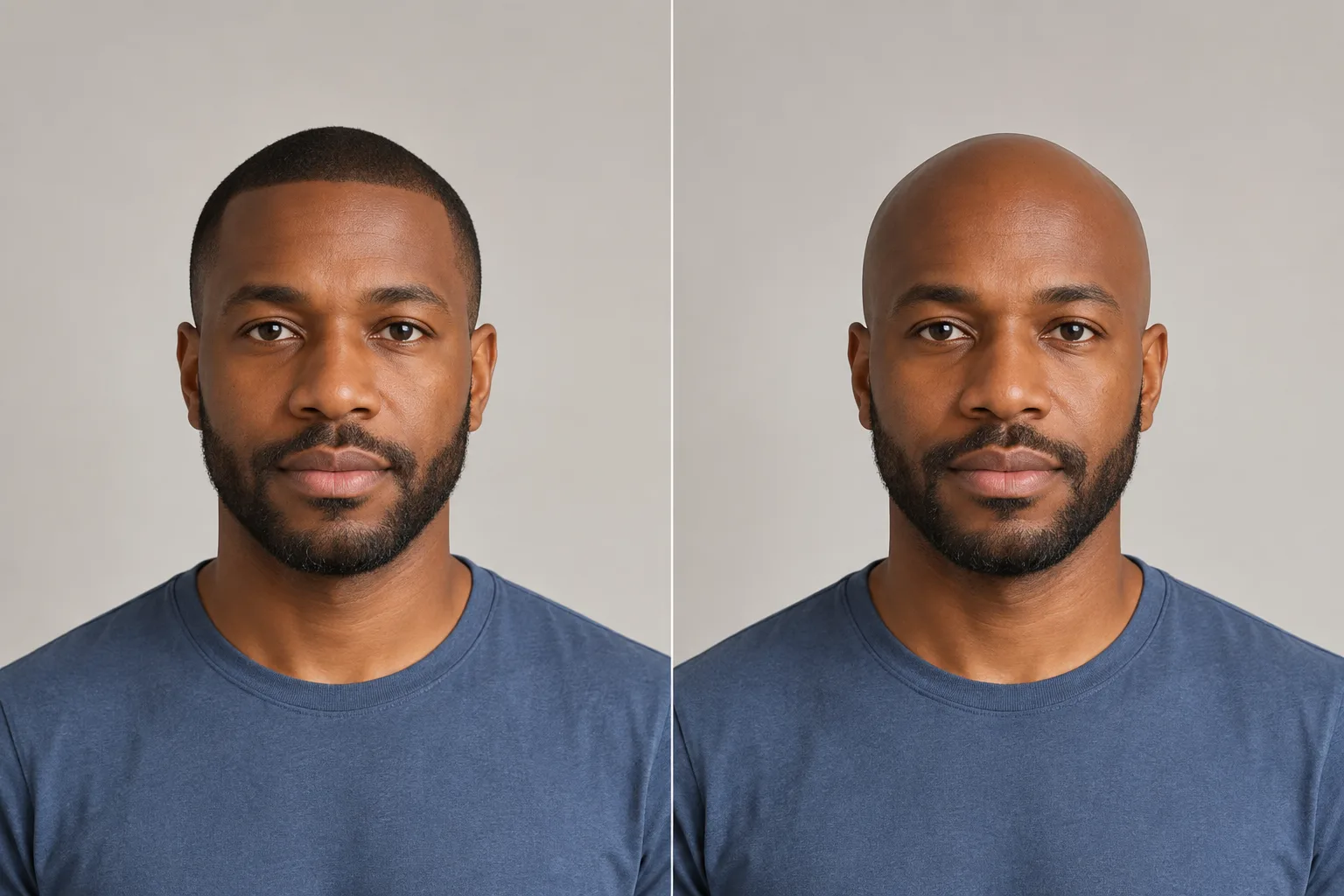
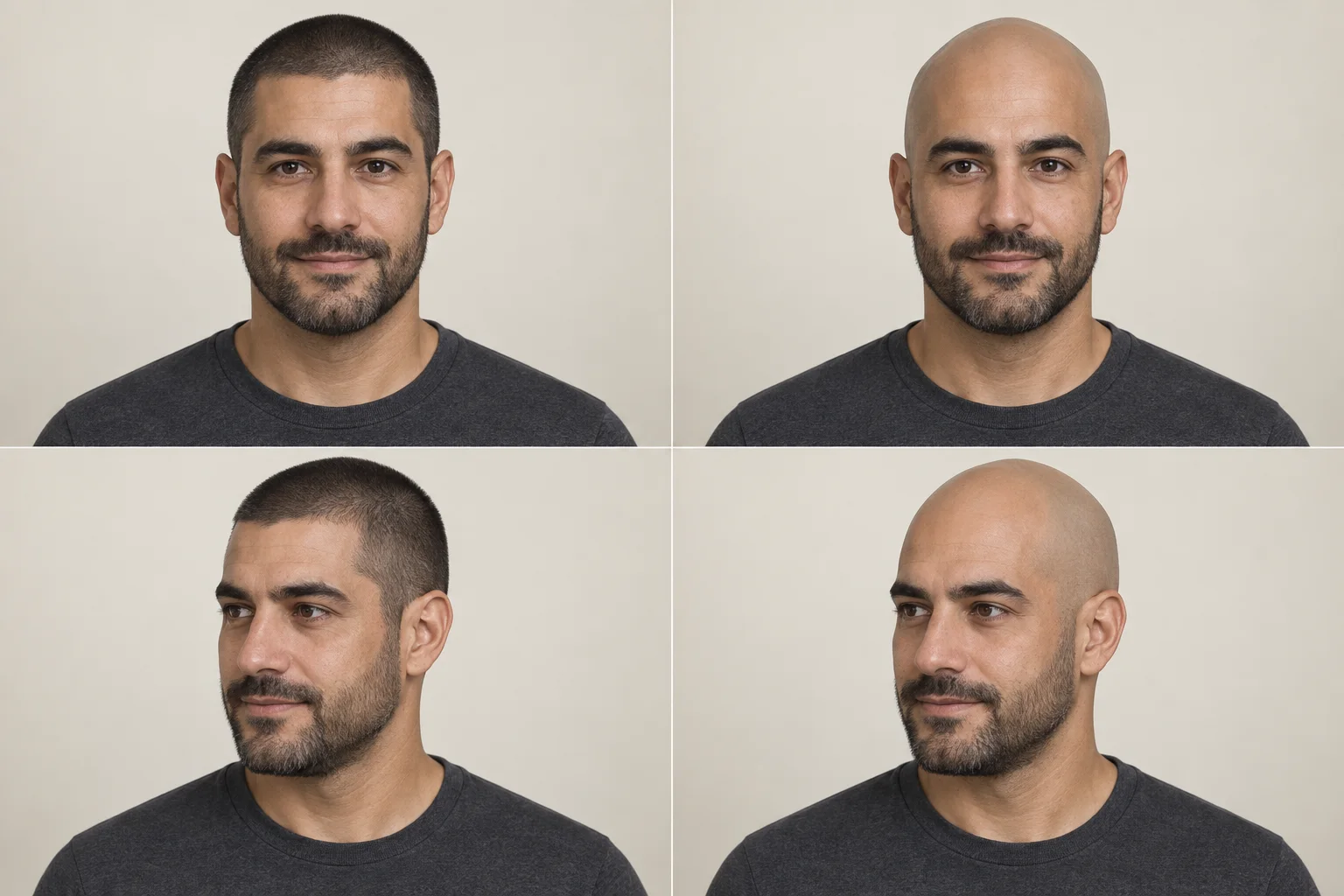
Read the forehead edge, the contrast at the sides, and the overall silhouette separately. If one preview also changes the face or beard, do not count those changes as evidence for the hair choice.
What upkeep choice are you making?
Clippers and a visible hair layer
A buzz cut is maintained by shortening the remaining hair. A uniform crop asks you to preserve one overall length; a cut with shorter sides also asks you to maintain that transition. If your goal is a straightforward routine, compare an even crop with a faded version before assuming both need the same upkeep.
Your practical kit may include clippers with the appropriate guard, a mirror that lets you check the back, and the cleaning tools specified for the clippers. A barber can handle the cut if you do not want to work around the back of your own head. Keep a note of the actual length and the top-to-side relationship you liked, rather than relying on a filter image to supply a guard number.
Shaving and a close finish
A shaved look asks you to maintain closeness instead of a visible haircut shape. Decide whether you want a smooth finish consistently or whether some stubble between shaves is acceptable. That preference helps determine when you feel a touch-up is needed; there is no single schedule everyone must follow.
For a wet razor shave, the routine includes preparation, shaving, rinsing, and aftercare. Gillette’s head-shaving instructions describe shortening longer hair first, using shave preparation, making light strokes, rinsing the blades, and moisturizing afterward. An electric head shaver has its own preparation and cleaning instructions. Include replacement blades or heads and product refills when comparing upkeep costs.
What happens between cuts or shaves?
With a buzz cut, watch the edges around the ears and neck and how the top relates to the sides as it grows. With a shaved head, watch for the return of visible stubble and the hairline. If you like those stages too, you have more flexibility about when to refresh the look.
If you want to grow either option out, save a reference for the next length you want. You can discuss tidying the outline while allowing the top to get longer, rather than repeatedly returning everything to the starting length. Avoid choosing based on an exact grow-out deadline: the starting length, desired cut, and your own growth all matter.
A practical choice: prefer a buzz cut if retaining a little hair is part of the appeal and you are comfortable maintaining a short crop. Prefer a shaved finish if the smooth outline is the goal and the shaving routine fits your week. If both looks feel too exposed, compare a longer crop before committing.
What can a preview not reveal?
Hair in the source image can hide the exact head contour, scalp marks, skin texture, and the way hair density varies across the head. A generated bald outline fills in information it has not actually observed.
The preview also cannot diagnose hair loss, identify why density has changed, or predict irritation and skin response. Keep health questions separate and use the image only to communicate the appearance you prefer.
What should you ask a barber?
Take the original and the more useful preview, then point to the visible detail that matters:
- Do I want a clearly visible hair layer or a much closer finish?
- If I keep hair, how should the top relate to the sides?
- How would my actual hairline and head shape change this outline?
- What would regrowth look like for the finish I am considering?
- What routine and tools would be appropriate for my scalp and chosen finish?
If you cannot answer the first question, ask to compare a longer crop before choosing either extreme. The main hairstyle tool includes other short directions you can use as references.