Deciding whether to cut your hair short comes down to two separate questions: which shorter outline do you like, and what must the haircut still let you do? Compare a few specific lengths, then check them against your real routine and the way your own hair usually dries.
A good result can be “yes,” “not this short,” or “keep my current length.” The aim is to make the choice more precise before the appointment.
What are you actually hoping a short cut will change?
Name the part you want to change before choosing a haircut name. You may want the ends off your shoulders, more neck visible, less hair around your face, easier access to earrings, or simply a stronger new outline.
Ask yourself:
- Is the length itself bothering me, or do I mainly want a new fringe or part?
- Do I want less hair overall, or do I like the polished finish in the reference?
- Which feature must be visible in a successful preview: chin endpoint, open ears, shorter sides, or a cropped nape?
If the answer is mainly about the front of the face, compare bangs separately before making length the decision.
Which length checkpoint should you test first?
Use visible body landmarks rather than relying on haircut names:
- Collarbone length: a smaller step that keeps the ends near the shoulders.
- Chin-length bob: a clear endpoint around the jaw and more neck exposure.
- Pixie: a much shorter outline with the ears and sides more exposed.
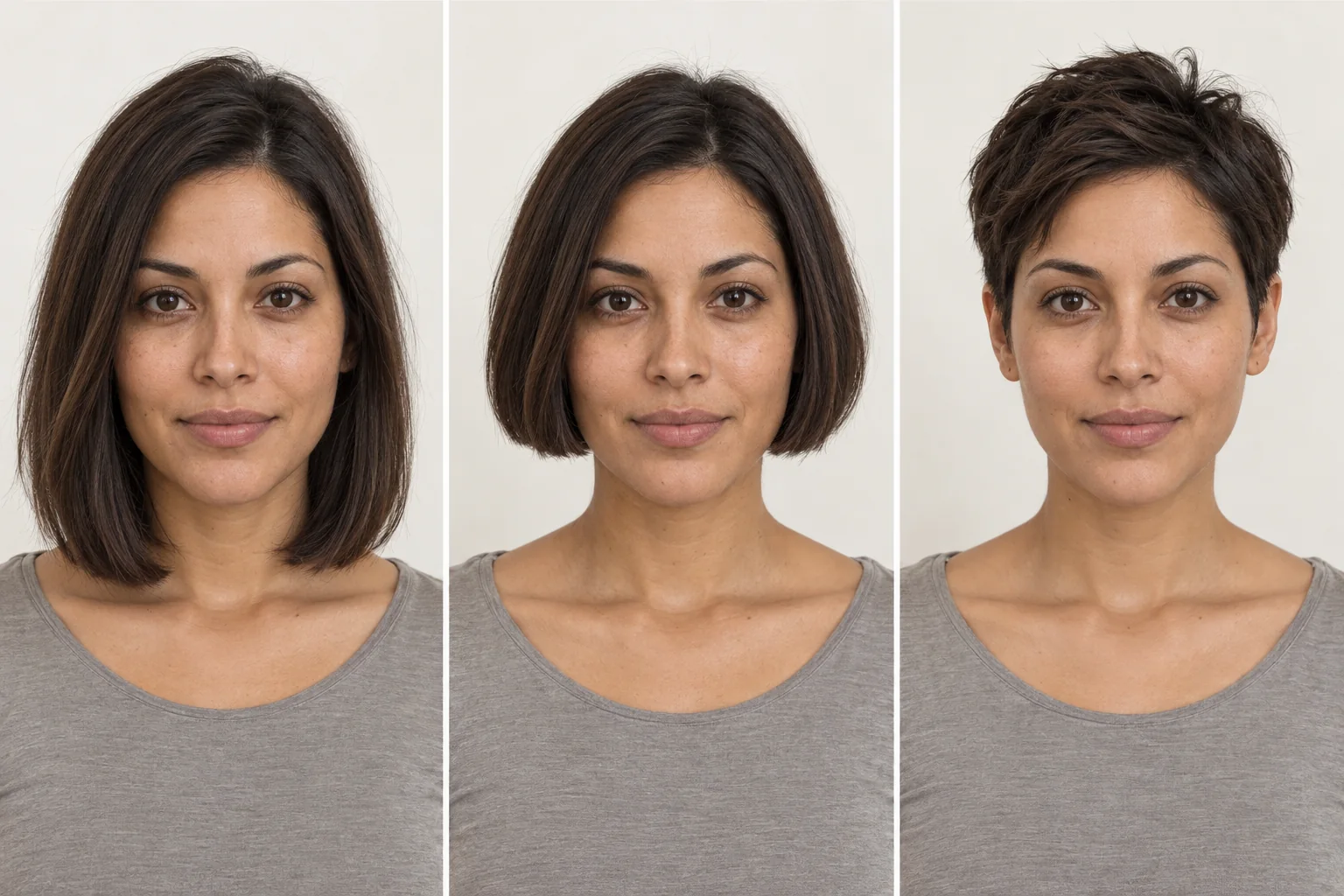
Start with the shortest point you are seriously considering, then add one less dramatic option. That pair reveals whether you want “short” in general or one particular endpoint. The short hair filter can help you locate available references.
What must the haircut still let you do?
Make a short must keep / can change list.
| Daily need | Decide before the cut |
|---|---|
| Tie hair back for work or exercise | Which sections must reach a tie, and are clips or a headband acceptable for the rest? |
| Air-dry most days | Do you like the likely natural outline, or only a smooth or textured styled finish? |
| Keep hair away from the face | Would shorter front pieces help, or fall forward more than your current length? |
| Stretch time between appointments | Would you still like the shape as the perimeter and layers grow? |
| Change gradually | Is a collarbone or longer bob a useful first stop before a chin bob or pixie? |
A still preview cannot prove that every layer will tie back. Bring that requirement to the consultation and ask about the shortest pieces, not just the back length.
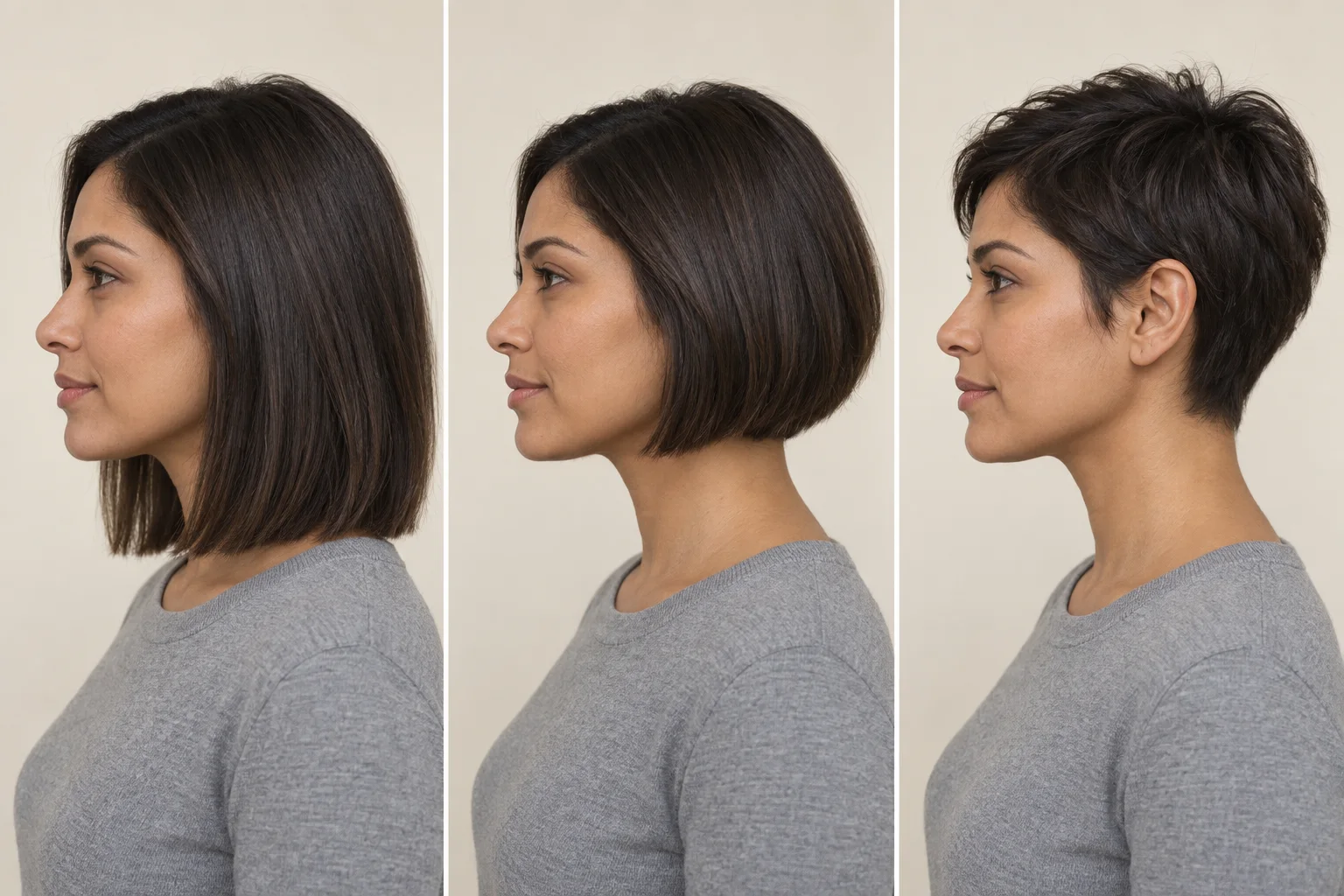
What should you notice in your own hair?
Use the preview to identify the outline you want, then use your everyday hair as the check on what matters most:
- Fine hair: compare whether you prefer a cleaner, more compact outline or the extra fullness created by the styled reference. Ask which parts of that fullness depend on daily styling.
- Dense hair: look at the shape around the ears, nape, and cheeks. Decide whether you like an airy, removed look or want to keep more visible weight; those are different requests even at the same endpoint.
- Curly or wavy hair: compare the dry outline and where the widest area sits, rather than judging the cut only by a smooth preview. Bring a photo of your usual natural texture so the stylist can discuss the shape you will actually see.
Use those observations to tell the stylist which finish you like and which parts of it you are willing to shape on an ordinary morning.
When should you choose a smaller step?
Choose a collarbone or longer-bob stop first if you must tie all of your hair back most days or want to test the change before committing to a chin bob or pixie. If a reference depends on straightening or blow-drying for its smoothness, volume, or shape and you do not want that routine, compare a shorter reference with your natural texture instead. If you prefer longer gaps between haircuts, ask how the chosen outline will look as the perimeter and front pieces grow.
What does the 2.25-inch rule really tell you?
The popular 2.25-inch rule says to hold a pencil horizontally under the chin and measure vertically from beneath the earlobe to the pencil. A result under 2.25 inches is said to favor short hair; a longer result is said to favor long hair. Color Wow’s explanation presents it as a theory rather than a natural law.
That measurement cannot independently decide whether you should cut your hair short. It ignores the length you want, your hair texture and growth pattern, tie-back needs, styling preferences, and your own taste. Use a preview and the routine checklist above to make the actual choice.
How should you compare the options?
Use the same source photo and keep the hair color consistent. For each length, answer four questions:
- Where do the ends sit relative to the collarbone, chin, ears, and neck?
- How much forehead, ear, and neck exposure do you prefer?
- Is the appeal coming from the length or from extra volume, smoothness, or texture?
- Would the shape still work with the way you normally wear your hair?
Look at the outline before the overall polish. A chin bob with a salon-smooth finish combines two choices; you may like its endpoint and still want a different everyday texture. The preview gives you a visual preference, while your stylist can explain how that outline may behave with your hair.
Compare the maintenance and exit route, too
For each shortlisted length, note what you would do on an ordinary morning: leave it to air-dry, shape the front, add texture, or secure it for activity. Then ask how the perimeter and front pieces will look as they lengthen. A staged change can be practical: keep enough length for your routine first, then decide later whether the chin or pixie endpoint is still the one you want.
What should you take to a haircut consultation?
Bring your source photo and no more than a few useful references. Add one sentence to each:
- “I like this collarbone endpoint and need the front to tie back.”
- “I want the chin outline, but I do not need the same smooth finish.”
- “I like the open ears of the pixie and want to know how the front would grow out.”
Also ask what the shortest pieces would be, how the cut could be secured during activity, what routine creates the pictured finish, and how the outline changes as it grows. Those answers turn a visual preference into a haircut you can make an informed decision about.