Bangs are worth trying when the front-framing effect appeals to you and you can accept a small front section that may need attention after sleep, exercise, or a hat. Keep your length for now if you usually need every strand tied back, dislike hair on your forehead, or only like the fringe when it has a freshly styled finish. A longer, softer front piece can be a useful first step when you are unsure.
Compare the visual options first, then test the choice against your part, cowlicks, exercise, styling habits, and plans for growing the fringe out. The aim is to decide whether you want to live with a fringe shape, not to find a universal pass or fail for your face.
What change do you want around your forehead?
Choose the effect before the name:
- more or less forehead coverage;
- a center opening or a continuous edge;
- shorter pieces near the brows or longer pieces moving toward the cheeks;
- a softer frame without changing the rest of your haircut.
Keep your overall length similar while testing the fringe. If both change at once, it becomes harder to tell whether you want bangs, shorter hair, or both.
How do curtain, blunt, and wispy bangs differ?
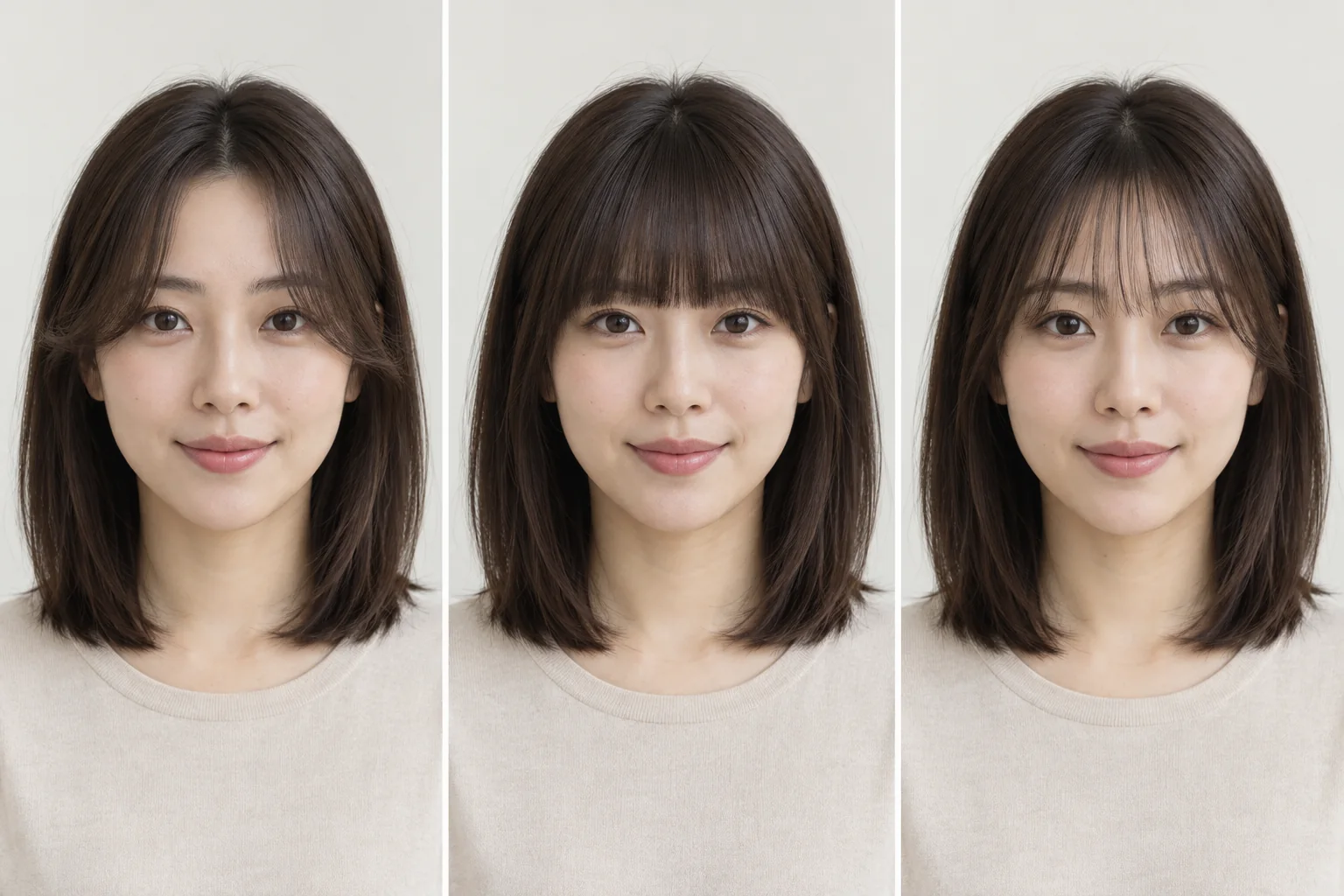
Curtain bangs open around the center and lengthen toward the sides. Decide how wide you want that opening and where the side pieces should meet the rest of the hair.
Blunt bangs create a more continuous line across the forehead. Compare the lowest point, brow coverage, and how much visual weight you want at the front.
Wispy bangs show more forehead between lighter sections. Look at the spacing and direction of the pieces rather than treating “wispy” as one fixed density.
These three references create meaningfully different decisions: center opening, edge strength, and visible space. Browse the bangs filter when you are ready to compare a style with your own photo.
Which daily situations should you test mentally?
Picture the fringe during an ordinary week:
- Exercise: you usually sweep all hair off your forehead. Would clips or a headband fit your routine?
- Morning styling: you often leave home with air-dried hair. Would you still like the fringe in its natural fall?
- Forehead contact: you regularly push hair away from your eyes or dislike hair touching your skin.
- Hats and sleep: the front section gets redirected and you would need to reset it.
- Growing it out: you are willing to part, pin, or blend the front as it becomes longer.
Redken’s pre-bangs guidance likewise treats maintenance, natural texture, growth direction, lifestyle, and reference photos as separate parts of the decision. Use those topics to prepare questions, not as rules that assign a fringe to a face shape.
Choose the fringe around the routine you already have
If you run, train, or wear a helmet often and need a clear forehead, keep enough front length to clip or sweep aside, or start with longer curtain pieces. A full blunt edge can still be right for you if you are happy to secure and reset it; it is a poor bargain if that extra step will irritate you every day.
If you rarely style your hair, compare the preview with a softer, less dense fringe as well as the polished version. A lighter edge or longer side pieces may give you some framing while leaving more room for the hair to follow its natural direction. This is a preference tradeoff, not a promise that one option will be maintenance-free.
What can a cowlick change?
A cowlick is a growth direction, often visible when the front section lifts, splits, or repeatedly falls to one side. If your preview shows a centered curtain opening but your hair naturally moves off-center, show both the preview and a photo of how your dry hair normally sits.
Blow-drying can help arrange a cowlick for a style, but it does not permanently change the growth pattern, as Sam Villa’s cowlick styling guidance explains. The practical question is whether you are comfortable doing the styling needed for the fringe you want.
A generated image cannot inspect the direction or strength of your cowlick. Your own observation and an in-person consultation matter more for that part of the choice.
A practical reset for a part or cowlick
After dampening the front section, dry it first in the opposite direction from its usual split, then guide it back into the part you want as it finishes drying. Sam Villa demonstrates this left-to-right approach for redirecting a fringe while it is wet; it helps with day-to-day arrangement, without changing the underlying growth pattern. If you would rather not do that reset, choose a looser center opening or longer pieces that can join your existing part.
How should you compare a bangs preview?
Use a clear photo with the eyes and forehead visible. Keep the same source for each fringe, then compare:
- the amount of forehead visible in the center;
- the shortest point relative to the brows;
- the direction toward the outer corners of the eyes;
- the way the fringe meets the longer hair near the cheeks.
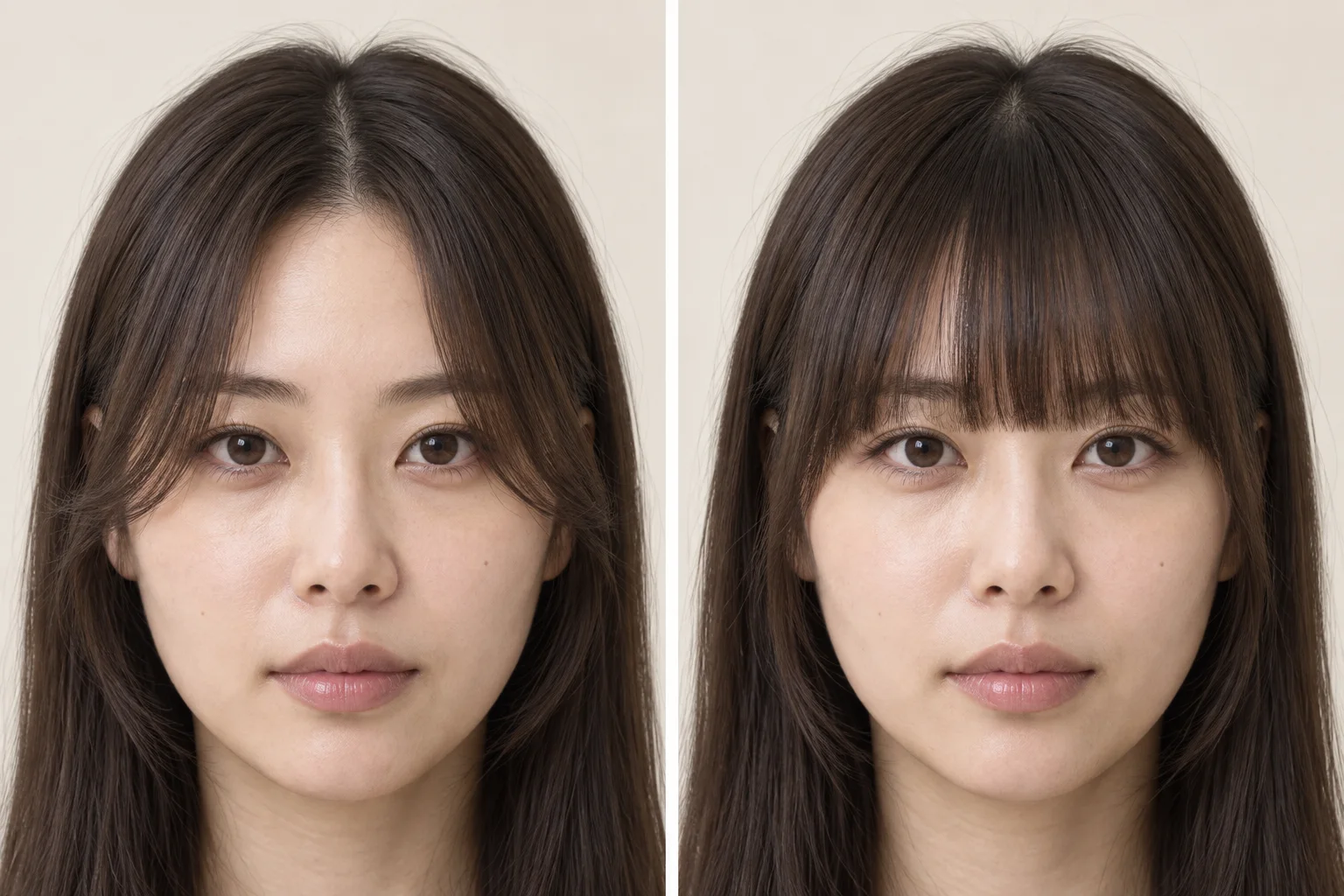
Set aside a result if changes to your eyes, face, or lighting are driving the preference. Write a precise note beside useful images, such as “keep the center opening but lengthen the sides” or “prefer the lighter spacing, not the straight finish.”
The photo try-on guide has a fuller checklist for source photos and inconsistent previews.
What should you ask at the consultation?
Bring one reference you like and, if useful, one that shows what you do not want. Then ask:
- Where would the shortest point sit when my hair is dry?
- How would this shape fall with my natural part and cowlick?
- What would I need to do after washing, sleeping, exercise, or wearing a hat?
- Can the sides be adjusted if I want less forehead coverage?
- How could I part, pin, or blend the fringe while growing it out?
Explain the reason behind the picture. “I like the open center and cheek-length sides” gives a stylist room to account for your hair; asking for an exact reconstruction hides the choices that matter.
Plan the growing-out period before you cut
Ask how the fringe can move into a side part or blend with face-framing layers as it grows. During that transition, changing the part, pinning the shortest pieces, or letting them join longer side sections can make the change feel intentional. Bring a second reference with a length you would be happy to grow into, especially if you are testing bangs for the first time.