Choose both the endpoint and the line across the back
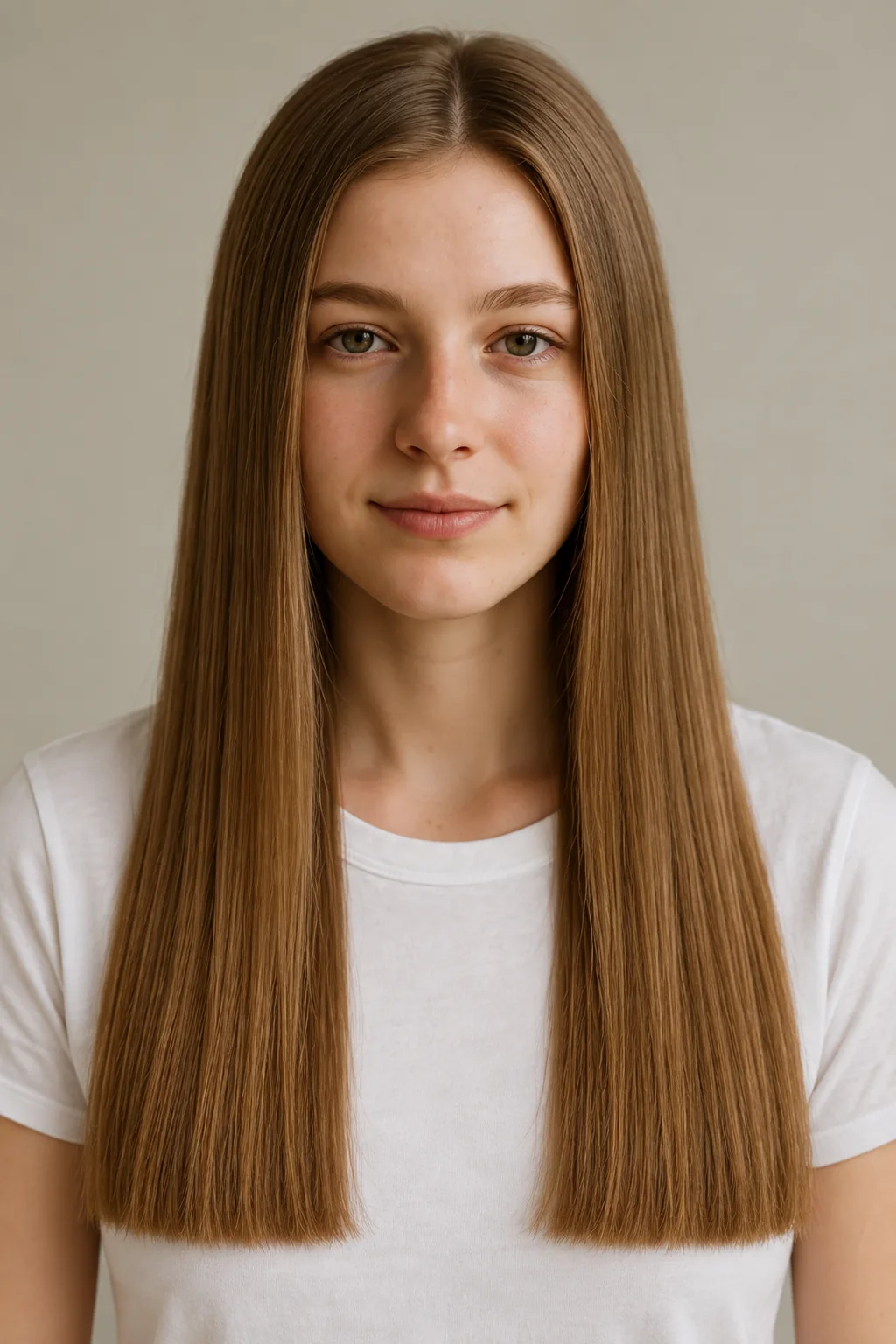
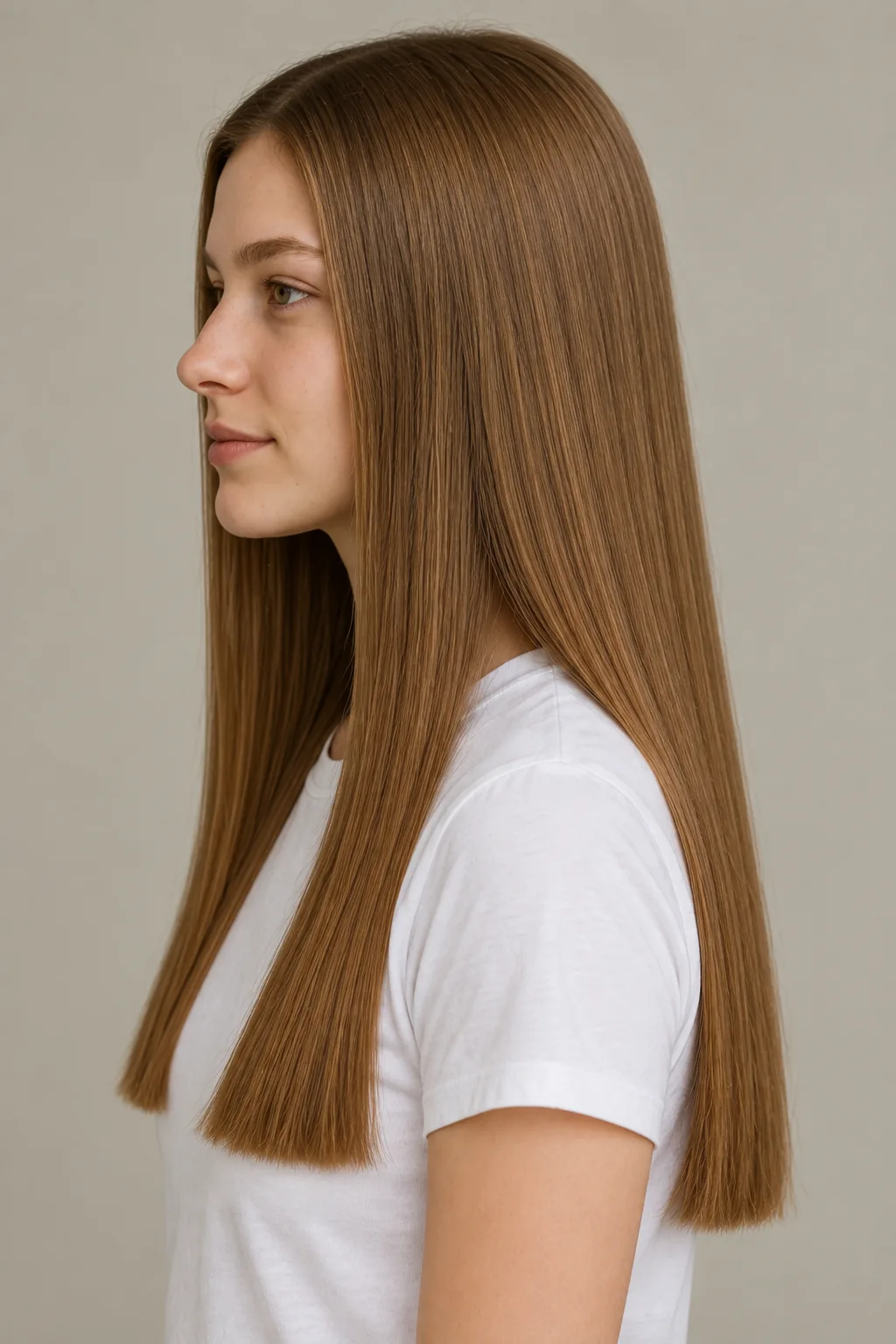
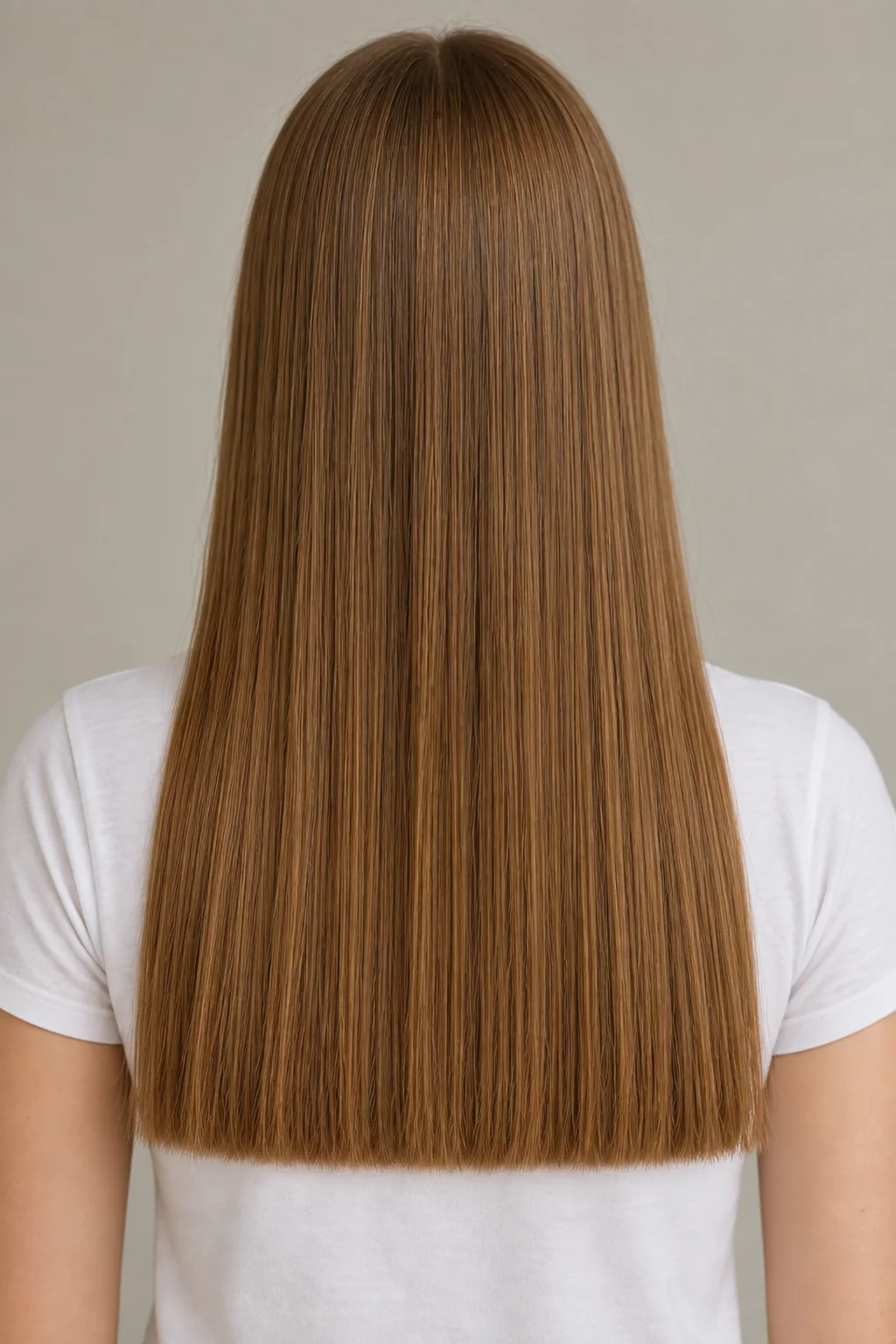
This long blunt haircut keeps chest-length hair in a full horizontal baseline. The center part opens into long front sections, with no bangs or short face framing. From the back, the edge runs across rather than dipping into a U or tapering to a V.
Point to where you want the longest hair to end while your head is upright. Then show the rear reference to confirm the shape of that line. “Keep it long” does not tell a stylist whether you prefer a straight, rounded or pointed back, and those choices can look similar in a front-only photograph.
Compare the proposed endpoint with your usual clothing and posture. The front lengths lie over the chest while the back hangs behind it, so do not expect every visible end to meet the same point on your body in every view.
One length describes the outline, not identical strands
Hair begins at different places on the head and travels different distances to reach the same baseline. A long one-length cut does not mean measuring every strand to an identical length from its root. It means retaining a coherent outer line rather than deliberately creating short layers through the shape.
Tell your stylist if you want the front left long. A routine offer to “soften around the face” may introduce shorter pieces that change how the cut hangs, tucks or ties. You can ask for a tidy perimeter without requesting new face framing.
If you already have layers, identify them before agreeing to a result. Some may remain above the chosen baseline until they grow.
A full edge is not the same as more density
Keeping weight at the perimeter can produce a substantial outline, but it does not add hair. If the last part of your length looks sparse, ask where a fuller line could sit and how much length that would remove. You may prefer a less perfectly dense edge while continuing to grow.
| What you are deciding | A useful question |
|---|---|
| Length versus a denser-looking edge | Where would you place the baseline within my agreed trim limit? |
| Existing short layers | Which sections still cannot reach that line? |
| Heavy long lengths | Do I want this weight, or am I asking for a different layered shape? |
| Long front sections | Can we keep them intact instead of adding framing during the tidy-up? |
| A visible rear shape | Will the final line stay horizontal when checked in my normal posture? |
If you find the weight uncomfortable, discuss that directly. Internal changes may alter the way the hair moves or the fullness you see at the bottom. Do not treat maximum fullness and maximum weight removal as the same request.
Set a trim limit before chasing every uneven end
Agree the maximum amount you are comfortable losing before cutting starts. Ask your stylist to show the proposed line and explain any uneven sections that would remain within that limit. Removing every shorter or finer-looking end may require more length than you want to give up today.
A staged approach is a reasonable discussion: preserve more length now and maintain the edge while older layers grow. It may mean accepting an imperfectly dense line for a while. Trimming can remove selected ends, but does not automatically repair the condition of the hair that remains or guarantee a particular future result.
Make the boundaries of the trim explicit
Use the requests below to record the trim limit, horizontal edge and long front sections you want to preserve. They appear in your salon card and do not change the AI preview.
A straight cut line does not straighten your texture
The reference has a smooth fall and restrained volume at the roots. In Real Simple’s blunt-cut guide, the long 1970s-inspired example is described through a middle part and straight finish. That is a styling description, not evidence that cutting a blunt line will remove waves.
If your hair naturally bends, ask to see how a horizontal perimeter reads in that texture. You may prefer that variation without straightening it. If you do want the sleek finish, discuss the work involved separately and follow tool instructions with appropriate heat protection when using heat.
Check your volume expectations too. This version does not rely on short crown layers for lift. Adding those layers to chase a fuller top changes the structure you originally selected. Explain whether the quiet, long silhouette is part of what you like before making that tradeoff.
Check your parting and the way you put it up
Wear your usual part for the final check. If you alternate between a center and side part, mention that before the outline is finalized. Moving hair across the head can change its visible distribution even when the baseline itself has not been recut.
Try an ear tuck and your normal ponytail. The longest hair has plenty of reach, but older short front pieces or layers may still escape. If keeping the front secured matters, avoid adding new short framing simply because it is common in other long-hair references.
As the hair grows, revisit the endpoint and trim limit rather than assuming you need the same amount removed at every appointment. If your goal is to grow out old layers, preserve those shorter sections while selectively maintaining the longer edge. Recutting them into fresh layers keeps the separation you wanted to reduce.
Put the limit before the finishing request
I want a long blunt haircut with a horizontal back line, center part and long front sections. Please agree the maximum trim with me before trying to even every end. Do not add bangs, short framing or a U-shaped taper. Show me any existing layers that still need to grow into the baseline.
Bring the back photograph so the perimeter is clear, then discuss how you will wear the finish day to day.
Prepare my long blunt haircut salon card →Questions about retaining a full long line
Does one length mean I cannot have natural movement?
No. Your texture can still bend or wave. The reference is straight, but the decision to keep a coherent baseline is separate from forcing the hair into that finish.
Can a trim remove every uneven end without losing length?
Not always. Ask what is achievable within the amount you agree to remove, especially if older layers sit well above the baseline.
Can I add face framing later?
Yes, as a separate change. This version deliberately keeps the front long, so make sure any later framing is something you want rather than an assumed part of maintenance.