
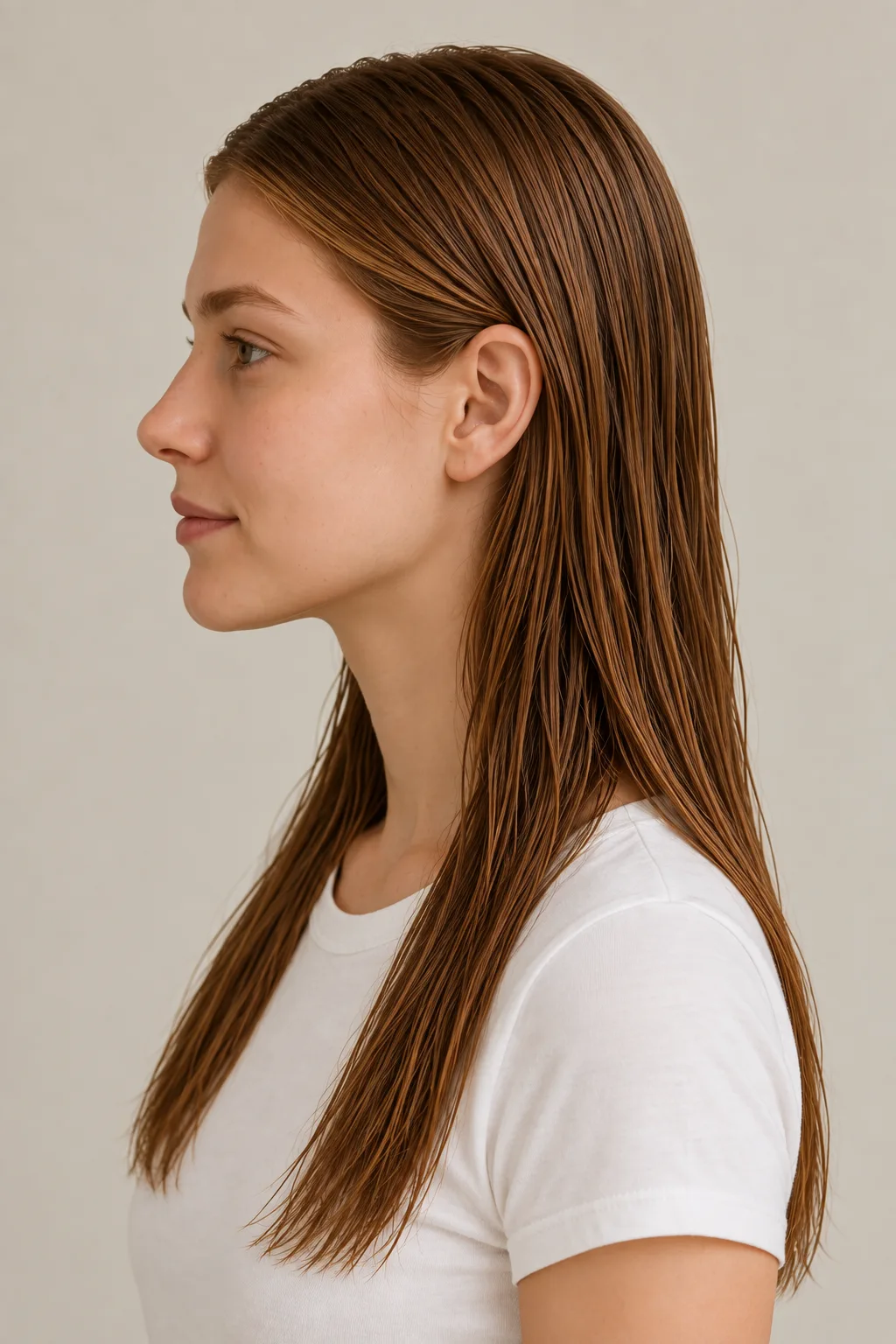
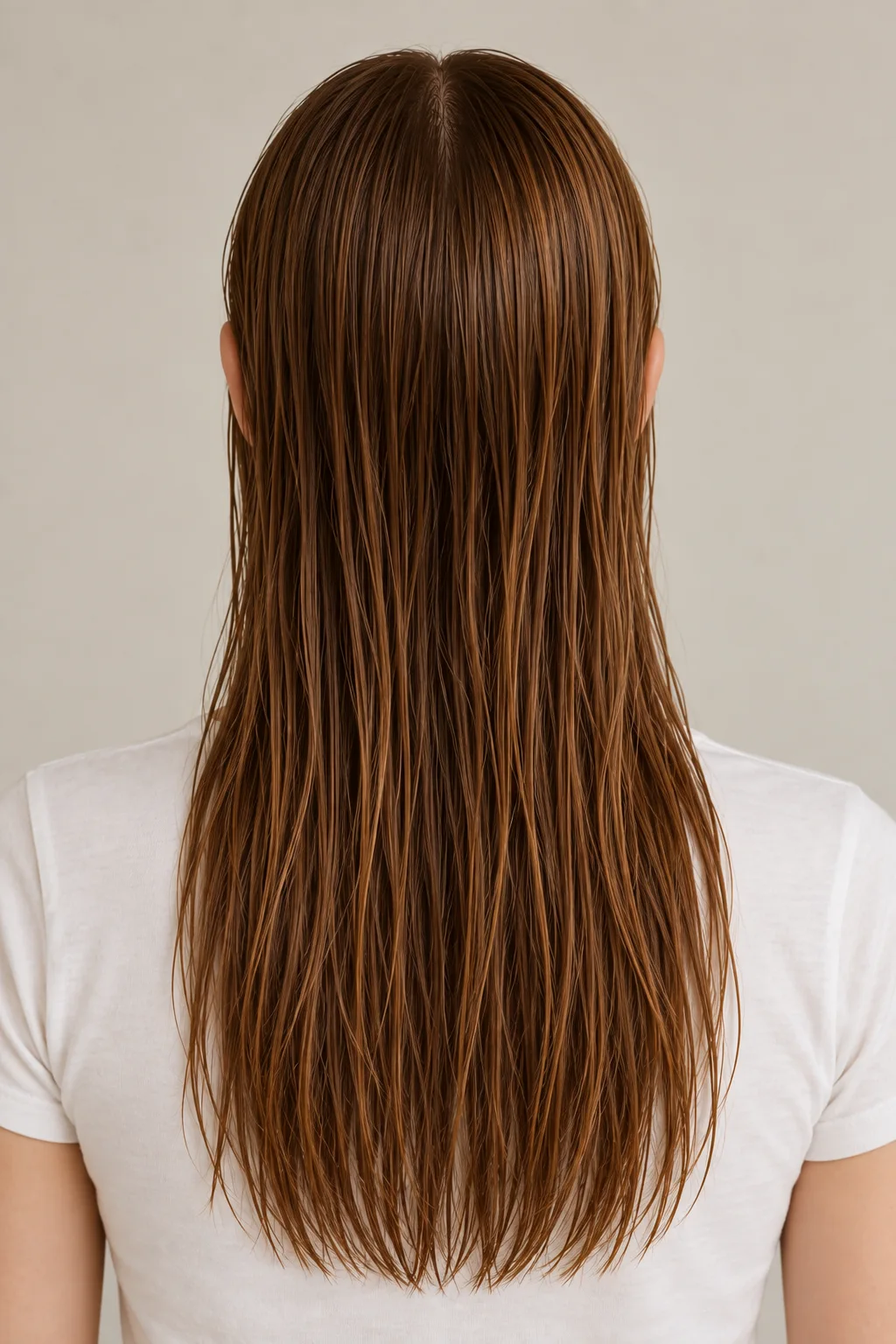
Define the finish
undefined
The research review included Vogue wet-hair guide and InStyle wet-hair guide. Those sources support terminology and practical consultation themes; they are not used to promise a result, prescribe a universal product routine or exclude any face shape.
| Reference detail | Decision to make |
|---|---|
| Service boundary: Temporary styling finish | Confirm how this should translate to your current hair and routine. |
| Part: Clean center part | Confirm how this should translate to your current hair and routine. |
| Length: Lower chest | Confirm how this should translate to your current hair and routine. |
| Finish: Glossy separated strands | Confirm how this should translate to your current hair and routine. |
Plan product and preparation
Product choice and starting moisture change the result. The reviewed Vogue and InStyle search results both frame the look as a styling process and discuss damp preparation plus flexible-hold or conditioning products. Ask a professional to choose a compatible combination for your hair; do not assume that more gel creates a better finish.
Decide whether the roots should follow a center part, a side part or be combed fully back. Ear exposure, hairline direction and any cowlicks affect how the style sits. The rear should remain evenly separated rather than becoming a single heavy sheet.
Choose parting and placement
Study the front, profile and rear together. A single front image can hide how much hair is removed, where a layer connects, or whether the lower outline remains dense. Ask the stylist to point to the proposed sections and finished dry lines before work begins.
The reference is a design target, not blanket permission for additional services. Keep color, extensions, chemical texture and any unrelated change as separate decisions with their own assessment.
Turn your priorities into consultation requests
Choose only the changes that matter to you. They will carry into the salon card; they do not alter the AI preview or authorize a service.
Plan for the routine you will actually repeat
Discuss transfer onto clothing, how long you need the finish to hold and how it should be removed. Avoid repeatedly dragging a fine comb through fragile wet lengths. Follow product and tool directions, and stop if the scalp or hair reacts badly.
Ask how the result changes after sleep, humidity, exercise and tie-back. A good consultation distinguishes the cut or placement from the polished styling used to photograph it.
Bring a three-angle brief
I want a long wet-look finish with a clean center part, close controlled roots, both ears exposed and glossy separated lengths that remain flexible. Please keep my existing cut and color unchanged and explain the product and removal routine.
Use the front for the defining face view, the profile for connection and projection, and the back for length and density. Record personal priorities before the appointment.
Prepare my long wet look salon card →Common questions about long wet look
Is this a haircut?
No. It is a temporary styling finish. Keep any trim, thinning, color or chemical service separate.
Does the hair need to be soaking wet?
No. The appearance can be created with styling products on an appropriate damp or dry base. Follow professional and product guidance.
Can the finish stay soft?
Yes. Ask for flexible separation instead of a rigid gel cast, then check hold and transfer before leaving.
Will it work on every texture?
The visual idea can be adapted, but product, section size and final movement should respond to your texture and density.