
Read the haircut as two localized lengths
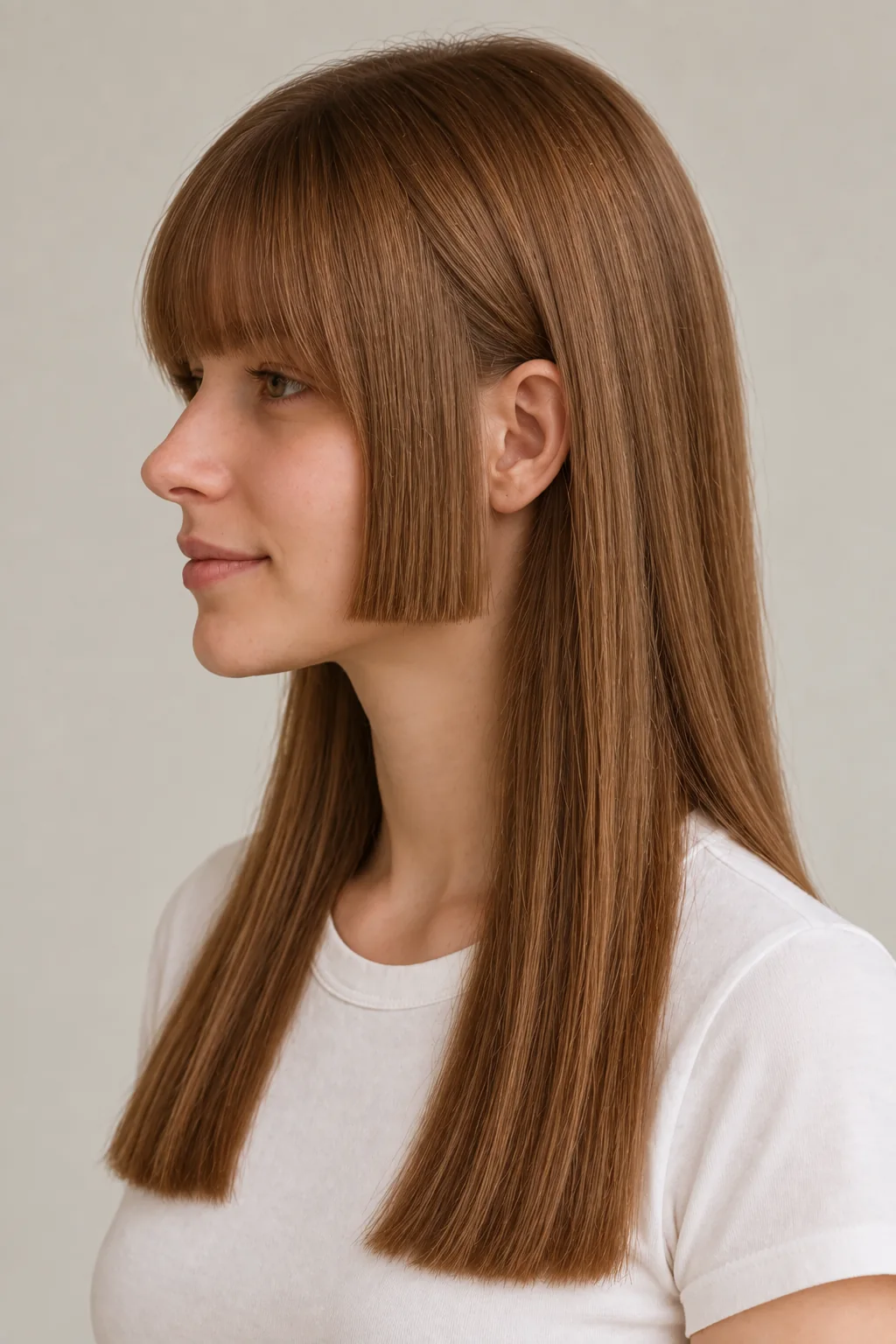
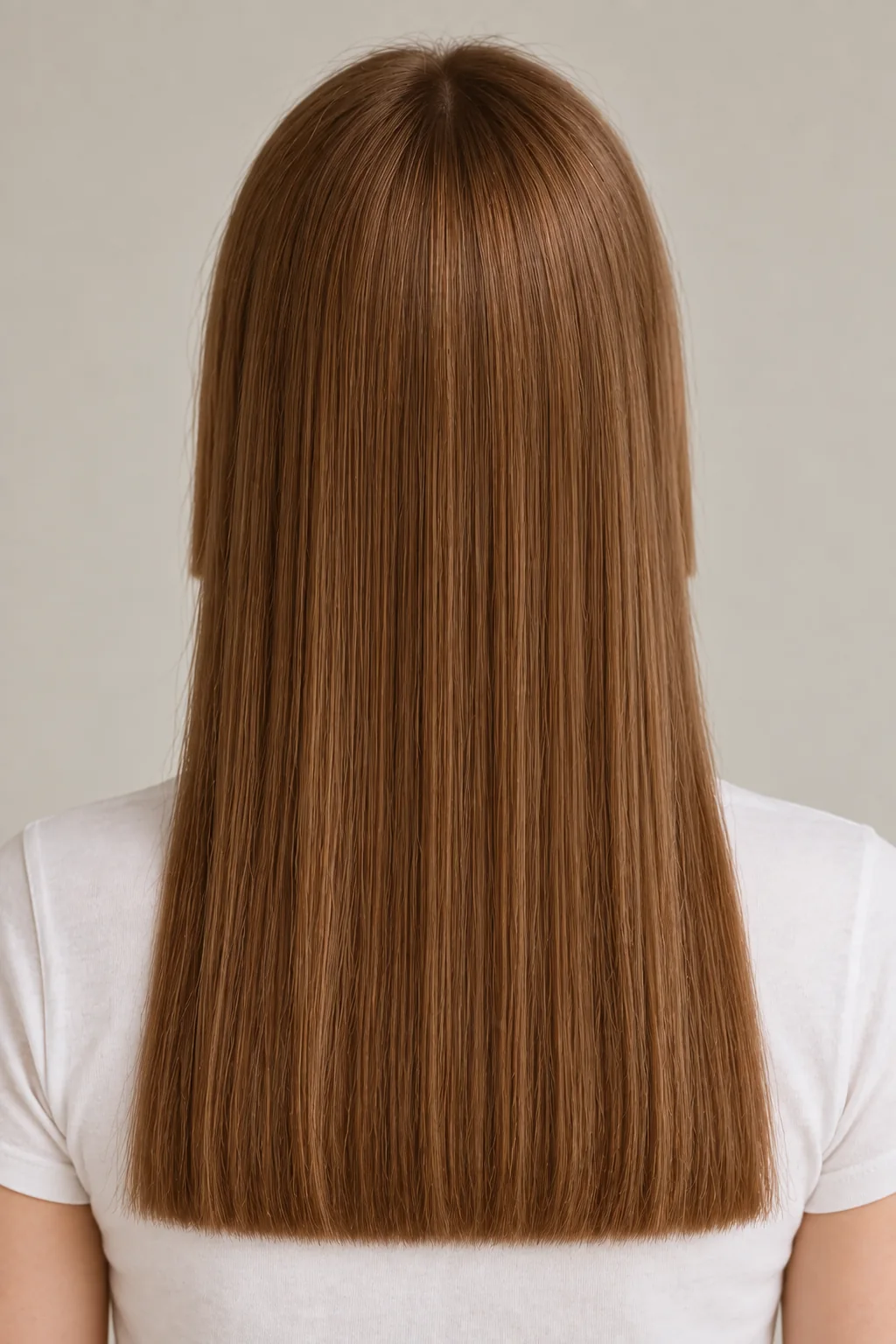
A long hime cut is defined by contrast. The fringe and two front sidelocks form the short geometry; the rest of the hair remains substantially longer. In this reference, the sidelocks stop at the jaw while the straight back reaches the lower chest. A long haircut with blunt bangs is not automatically a hime cut—the disconnected pieces in front of the ears must be visible.
John Frieda’s hime guide describes the recurring structure as an optional traditional straight fringe, jaw-length face-framing sections and long straight hair behind. It also notes that the overall back length can be retained or changed. That makes the long section a decision to protect, not spare hair that can be shortened without discussion.
The short pieces stay localized around the face. Country & Town House’s stylist-sourced guide distinguishes this from a jellyfish cut: the latter carries a short upper shape farther around the head, while the hime keeps the shorter lengths at the front. Use the side and back views when names become ambiguous.
| Reference detail | Decision to make |
|---|---|
| Jaw-length sidelocks | Whether you want the line at the cheek, jaw or slightly below it. |
| Full straight fringe | Whether you want this density, a lighter fringe or a more open forehead. |
| Lower-chest back | How much existing length you want to preserve. |
| Blunt long baseline | Whether your current ends have enough density for a full edge. |
| Sleek finish | How the cut should work in your natural texture and routine. |
Choose the sidelock line and section width together
The line is only half the decision. A wider section creates a heavier graphic panel but also takes more hair away from the long back. If your front density is limited or your ends already feel thin, ask the stylist to compare a narrower section before cutting. Thick hair does not automatically require a wider panel; internal weight and section size can be discussed separately.
Mark the proposed lower edge while the hair is dry. A panel pulled tight or cut wet can settle higher once released, especially when the front has a bend or wave. Check both sides rather than assuming perfect symmetry in growth direction. The goal is a balanced visual result, not forcing identical tension onto different hairlines.
The side view is the clearest structural test. The short panel should sit in front of the ear and stop cleanly. Hair behind the ear belongs to the long section in this version. If the short line travels around the side and continues through the back, you are agreeing to a different silhouette.
Protect the long back before creating the short front
Long hair is not a blank canvas with unlimited density. Sectioning two front panels and a full fringe redistributes hair away from the remaining perimeter. Ask the stylist to show how much hair will stay long after the proposed sections are isolated. This is particularly important when the temples are fine, the current face framing is already short or the lower ends are sparse.
The back image documents a continuous blunt line rather than a V shape, U shape or layered tail. You can choose another perimeter, but name it separately so the long hime structure is not used as silent permission to reshape all of your length. If preserving length is your priority, agree on the maximum trim before the front sections are cut.
Existing short layers may limit how solid the sidelocks look or may connect them to the long hair more than this reference shows. A stylist can explain whether to work with that softer transition now or wait for more length. An AI image cannot inspect strand condition or tell you how much must be removed.
Treat the fringe as its own commitment
This reference uses a dense brow-skimming fringe with no center opening. John Frieda describes a straight-across fringe as traditional but optional, and notes that curtain or side-swept alternatives create a softer version. Decide whether you want the classic full forehead line rather than assuming the sidelocks require identical bangs.
Check cowlicks, natural parting and how often you are willing to reset the fringe. A full fringe may need attention sooner than the lower perimeter because small amounts of growth move it toward the eyes. If you wear glasses, test the intended length with the frames on.
Turn the reference into your own cut request
Select the changes you want to discuss. They will carry into your salon card as consultation requests; they do not modify the AI preview and do not authorize a haircut.
Plan for the texture you will actually wear
The polished reference makes the two cut lines easy to compare, but a hime cut does not require every person to straighten their hair. Country & Town House quotes stylists describing the geometric shape as adaptable across textures, while noting that dry cutting can matter when angular lines are created on waves or curls. Treat that as a consultation route, not a promise that every texture will reproduce the photograph.
If you want the sleek finish, ask for a demonstration that fits your hair condition and tools. Use appropriate heat protection and follow the tool manufacturer’s guidance. Repeatedly straightening the short panels without a plan is not the only way to keep them deliberate; a lower line, narrower section or texture-aware dry finish may suit your routine better.
The long section and short pieces behave differently when tied back. A ponytail can gather the rear while the sidelocks and fringe remain loose. Before cutting, test whether small clips, a headband or a different panel length works when you need the front clear for work or exercise.
Decide whether you want a sharp edge or a softer grow-out
The front lines announce growth sooner than the long back. John Frieda gives shorter trim intervals for a crisp finish and longer intervals for a softer one; another stylist-sourced guide recommends regular appointments to maintain the shape. Use those ranges as examples, then schedule around when your own fringe enters your eyes or the sidelock edge loses the position you chose.
Growing the panels into the long perimeter takes substantially longer than softening a fringe. Blending the corners into face-framing layers can make the transition less abrupt, but it also changes the hime design. Discuss whether you want to preserve the disconnected shape, soften it gradually or commit to growing it out before adding more layers.
Bring the front, side and back as one brief
I’d like a long hime cut with a full straight fringe, blunt jaw-length sidelocks in front of the ears, and a full lower-chest-length back. Please mark the dry panel line and section width first, keep the short pieces localized at the front, and preserve my long perimeter.
The front shows the visual balance; the side shows which hair belongs to the short panel; the back protects the long section from becoming a different layered cut. Ask the stylist to compare the reference with your current face-framing pieces, density and natural movement before the first cut.
Prepare my long hime cut salon card →Common questions about a long hime cut
What makes this different from the shoulder-length hime cut?
Both use localized blunt sidelocks and may include straight bangs. This version keeps a lower-chest-length back, creating a much larger distance between the jaw panels and rear perimeter. The shoulder-length version has less length contrast and different tie-back behavior.
Is a long hime cut the same as a jellyfish cut?
No. This hime version keeps the short panels at the front. A jellyfish cut typically extends a short upper shape around more of the head with longer hair underneath. Compare the side and back, not only the front.
Can I keep my long hair without trimming the back?
Possibly, if the existing perimeter and condition support the shape you want. State that preserving length is a priority and agree on any back trim separately. The stylist needs to inspect the actual ends.
Can I get it without blunt bangs?
Yes. The sidelocks can remain while the fringe is lighter, longer or absent. The reference includes a full fringe, so bring a second reference if you want a different forehead treatment.
Will it work on wavy or curly hair?
The structural contrast can be adapted, but the dry edges will bend, spring or separate differently. Choose the panel line in your worn texture and do not use this sleek image as a guarantee of your result.
Are the short pieces easy to tie back?
Usually not at jaw length. The long section can tie back while the sidelocks remain loose. Test clips or a headband if keeping hair off your face is important.