Book a finish, not an assumed haircut
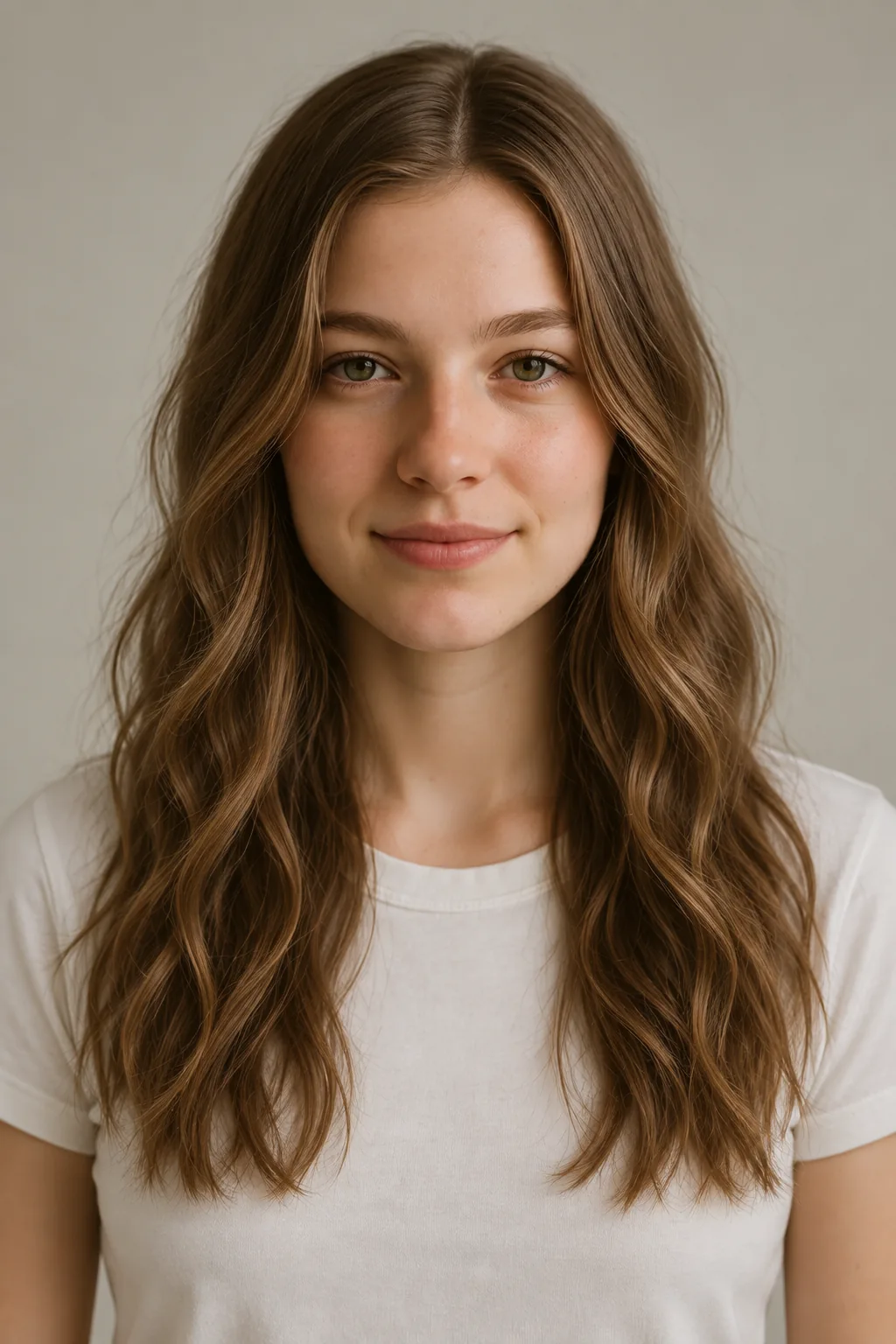
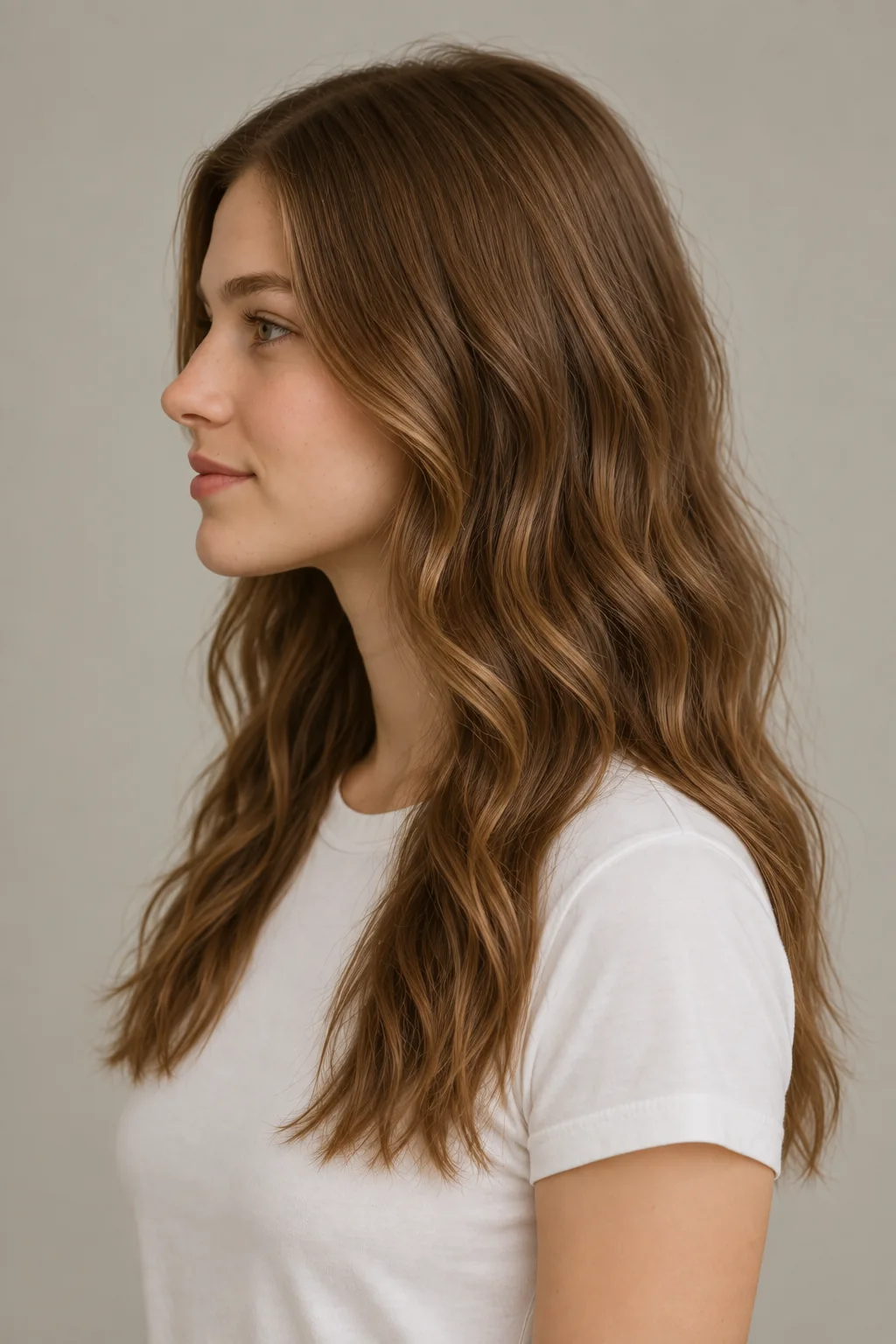
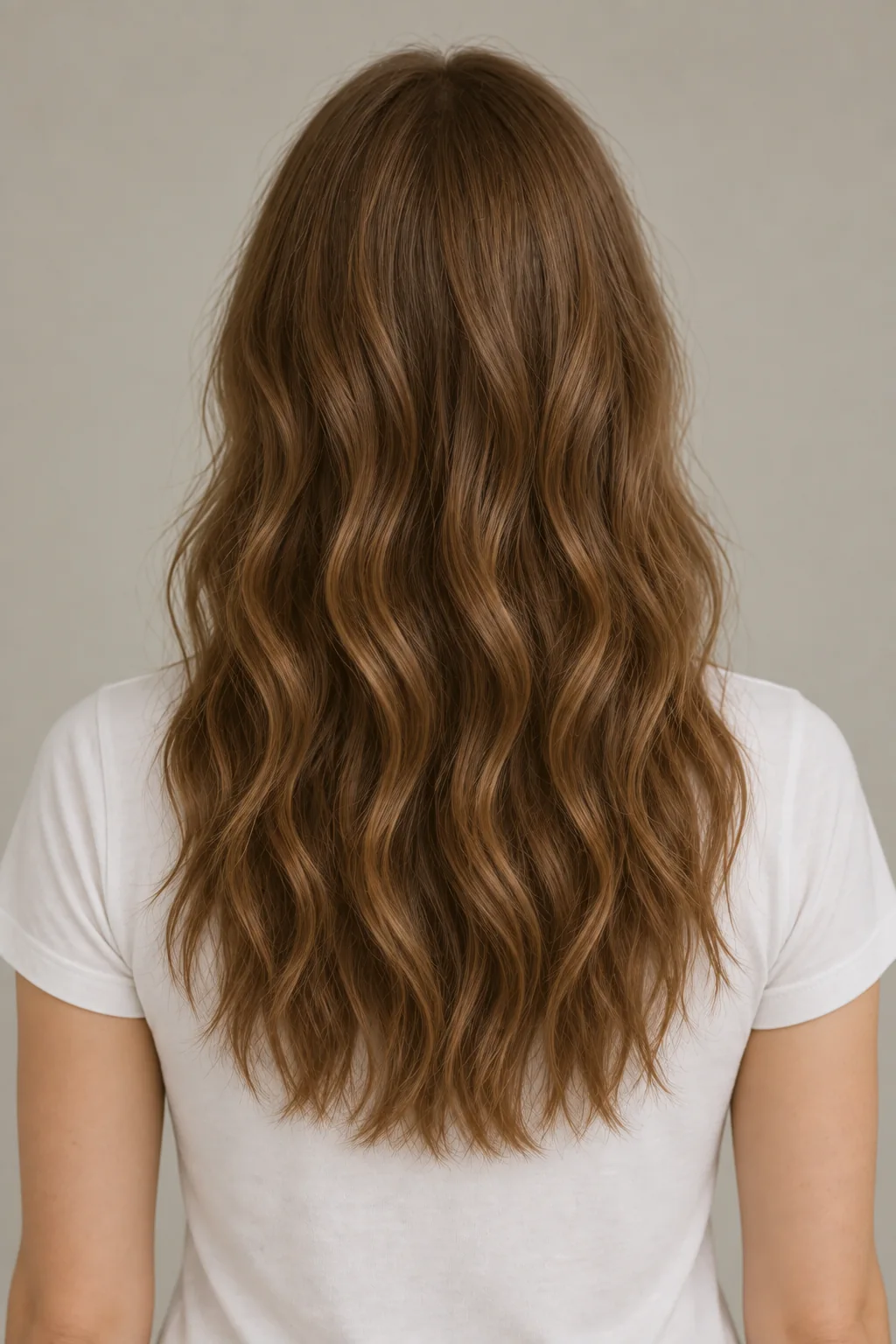
Beach waves describe a way of styling the hair. This reference shows chest-length hair with a center part, relatively quiet roots and broad irregular bends through the middle. The ends stay more relaxed and straighter than the wavy section above them.
You do not automatically need a trim, new layers or a perm to discuss this finish. Tell your stylist if the appointment is for styling your current hair only. If they suggest changing the cut to affect movement, treat that as a separate decision about length and structure, not something included in the name “beach waves.”
The reference has soft long layers, but you can explore a wave on another haircut. Ask what is achievable with the length you have rather than assuming the image requires your hair to be recut first.
Map the bends before styling starts
Three choices make the request more precise: how wide the waves are, where the first bend begins and how much of the ends stays straight. Here, the roots remain quieter and the movement starts through the mid-lengths. The pattern varies between sections instead of forming one sculpted wave across the head.
Stylist Brittany Gray’s Fancy Face tutorial describes working through the middle while leaving the tips straighter, varying sections for a less uniform result and letting shaped hair cool before loosening it. Use those visible features to describe the finish rather than expecting one tool technique to suit everyone.
Point to where you want the first wave beside your face. Starting higher can create more width near the cheeks; starting lower leaves the upper lengths calmer. Neither is automatically better. Compare the balance with your normal parting before committing to the whole head.
Check the length after the hair bends
Waves can make the ends appear higher even though nothing has been cut. Ask to see the front and back once the pattern is formed and loosened. If retaining the longest-looking outline matters, discuss larger bends or more relaxed ends rather than assuming extra cutting is necessary.
Also check how the hair sits over your shoulders. Pulling everything forward for a photograph changes the view of the length and the way sections overlap. Look at the back so the finished movement is considered all around, not just in the pieces beside the face.
If your hair is shorter than the reference, agree what the wave will look like at that length. A visual preview can illustrate a longer style, but the styling appointment cannot create missing length by waving alone.
Choose your styling preferences
The requests below concern placement, softness, product feel and method. Your request can be styling-only: no length needs to be removed without a separate agreement.
Work from the pattern you have now
Straight hair needs bends added for this finish. Naturally wavy hair may need only selected areas arranged, while curly hair can be worn in its own pattern or styled differently if that is your preference. You do not need to change your natural texture to make it acceptable for an occasion.
| Your starting point or preference | What to discuss |
|---|---|
| Straight hair that quickly drops a wave | A trial of the method and a looser result you still like as it relaxes. |
| Natural waves with uneven sections | Which areas actually need adjusting and which can stay as they are. |
| Natural curls | Whether you want your own pattern or deliberately prefer a looser styled finish. |
| No heated tools | A heat-free approach tested on your hair rather than a promise of identical bends. |
| Fine hair that feels weighed down | A lighter product approach and a check after the finish settles. |
If heat is used, follow the tool instructions and use suitable heat protection. If you prefer a heat-free method, ask about preparation and the possible differences in the result. Neither approach guarantees the exact pattern shown here on every texture.
Decide how the hair should feel
Beach waves do not require salt spray. The name describes the loose appearance, not a compulsory ingredient or product category. Tell your stylist if you prefer a lighter feel, dislike stiffness or do not want a matte-looking finish.
Ask what each suggested product is meant to change: hold, separation or the way sections sit together. Start with the feel you want as well as the photograph. A heavily defined finish may look different from the airy reference, and adding more product does not automatically make a reluctant wave last longer.
Check the hair after it is loosened and moved, not only while each section is freshly arranged.
Plan for the occasion without a fixed hold promise
Explain whether you will be outdoors, dancing, wearing a hat or repeatedly tucking the hair behind your ears. Moisture and movement can alter the pattern. A trial before an important event gives you more information than a promised number of hours that ignores your hair and conditions.
Ask which small adjustments are realistic during wear. You might accept softer waves as the day goes on, tuck the front or refresh one section that has changed direction. There is no need to force every bend back into a matched pattern for the look to remain relaxed.
Sleeping can rearrange the shape again. Discuss a next-day version you like rather than assuming the original finish will survive unchanged.
Separate the finish from any change in length
I’d like loose beach waves through the mid-lengths, with calmer roots and straighter tips. Keep the pattern varied and the product feel light. Please work with my current length and discuss any cut or chemical service separately. Show me where the waves will start and how the finish may soften during wear.
Bring the side and back views to show the relaxed ends and the overall pattern, not just the front framing.
Prepare my beach waves styling card →Questions about a temporary wave finish
Are these the same as Hollywood waves?
This reference has varied loose bends and relaxed ends. A more sculpted, aligned wave set creates a different visual rhythm. Show the pattern you want instead of relying only on a styling name.
Will cutting layers give me these waves?
Not by itself. Layers change the distribution of length, while this wave pattern depends on natural texture or styling. Discuss the cut separately.
Do I need a perm?
No perm is implied by this request. If you are interested in a chemical service, discuss it as a separate choice rather than treating it as the default way to get temporary beach waves.