
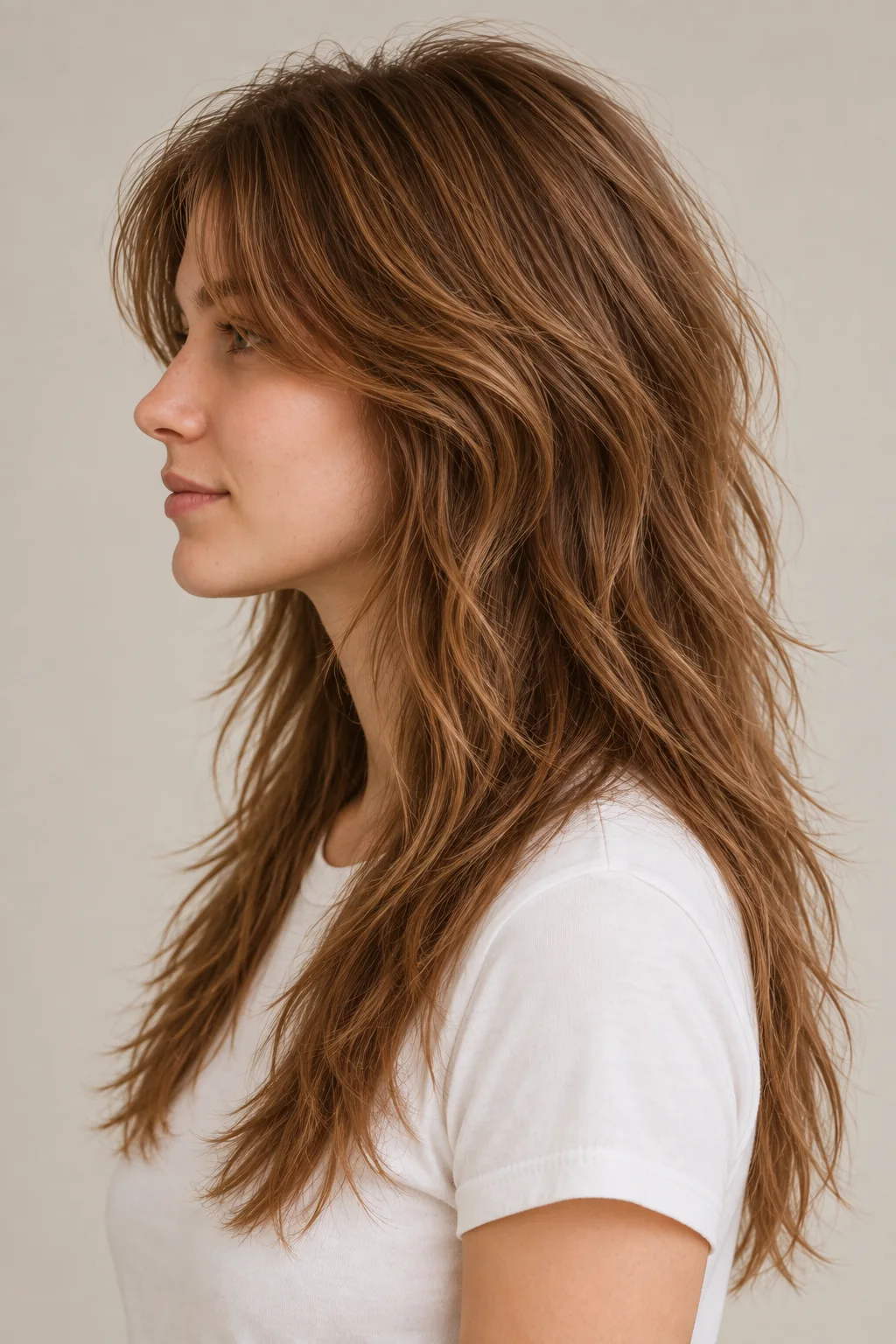
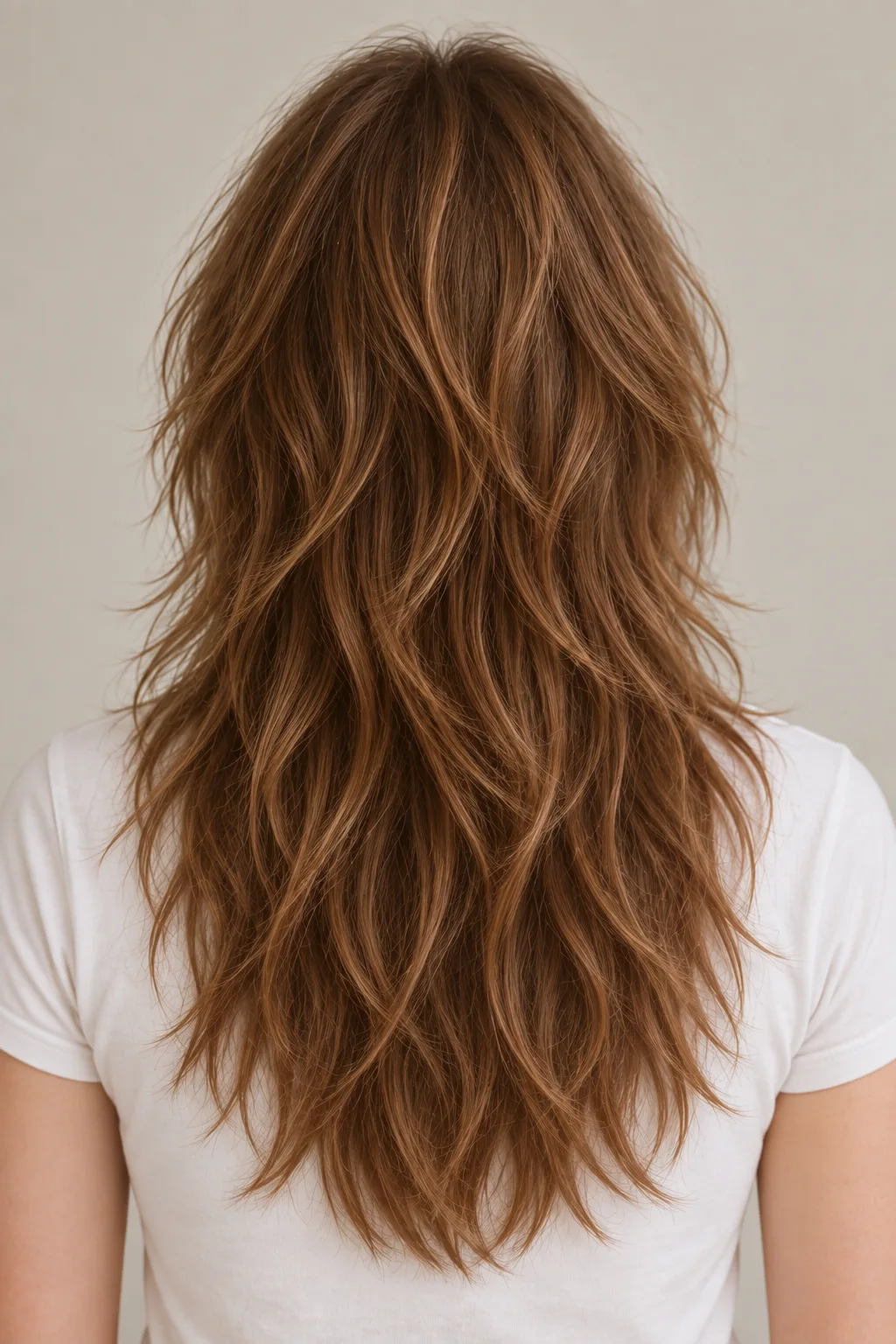
Read the shag structure
A long shag keeps substantial length while concentrating shorter, more separated layers near the crown and face. The reference uses a wispy split fringe, cheekbone pieces and tousled bends. It should look airier and more irregular than conventional long layers.
The research review included The Hair Standard shag guide and NewBeauty shag guide. Those sources support terminology and practical consultation themes; they are not used to promise a result, prescribe a universal product routine or exclude any face shape.
| Reference detail | Decision to make |
|---|---|
| Crown: Short and lifted | Confirm how this should translate to your current hair and routine. |
| Fringe: Wispy split fringe | Confirm how this should translate to your current hair and routine. |
| Length: Lower chest | Confirm how this should translate to your current hair and routine. |
| Texture: Airy and piecey | Confirm how this should translate to your current hair and routine. |
Choose crown and fringe
The reviewed Google results consistently described crown volume, face framing and interior movement as core shag features. The Hair Standard result also distinguished the long shag as a version that keeps length while adding interior volume. Use the photos to define how much contrast you actually want.
Short crown layers change everyday styling and grow-out. Mark the shortest point, then inspect how much hair remains in the lower perimeter. On finer ends, aggressive razor work or thinning may remove the visual base the reference still preserves.
Protect the long base
Study the front, profile and rear together. A single front image can hide how much hair is removed, where a layer connects, or whether the lower outline remains dense. Ask the stylist to point to the proposed sections and finished dry lines before work begins.
The reference is a design target, not blanket permission for additional services. Keep color, extensions, chemical texture and any unrelated change as separate decisions with their own assessment.
Turn your priorities into consultation requests
Choose only the changes that matter to you. They will carry into the salon card; they do not alter the AI preview or authorize a service.
Plan for the routine you will actually repeat
Ask for a repeatable way to encourage bend and separation without needing a perfect blowout. Natural waves may need less manipulation; straighter hair may need directional drying or tools. Heat and product advice must reflect your actual condition.
Ask how the result changes after sleep, humidity, exercise and tie-back. A good consultation distinguishes the cut or placement from the polished styling used to photograph it.
Bring a three-angle brief
I want a long shag with a light split fringe, visible short crown layers, cheekbone-to-jaw framing and airy movement through a full lower-chest base. Please show me the shortest crown point and protect my lower density before texturizing.
Use the front for the defining face view, the profile for connection and projection, and the back for length and density. Record personal priorities before the appointment.
Prepare my long shag haircut salon card →Common questions about long shag haircut
Is a long shag the same as a wolf cut?
They overlap, but this reference distributes layers through a fuller long base and avoids a narrow mullet-like tail.
Do I need bangs?
No, but removing the fringe changes the reference. Decide it separately from the crown layers.
Will it work on fine hair?
It can be adapted, but section size and texturizing must protect visible density.
Is it low maintenance?
The tousled finish may be forgiving, but short crown layers and fringe still affect styling and grow-out.