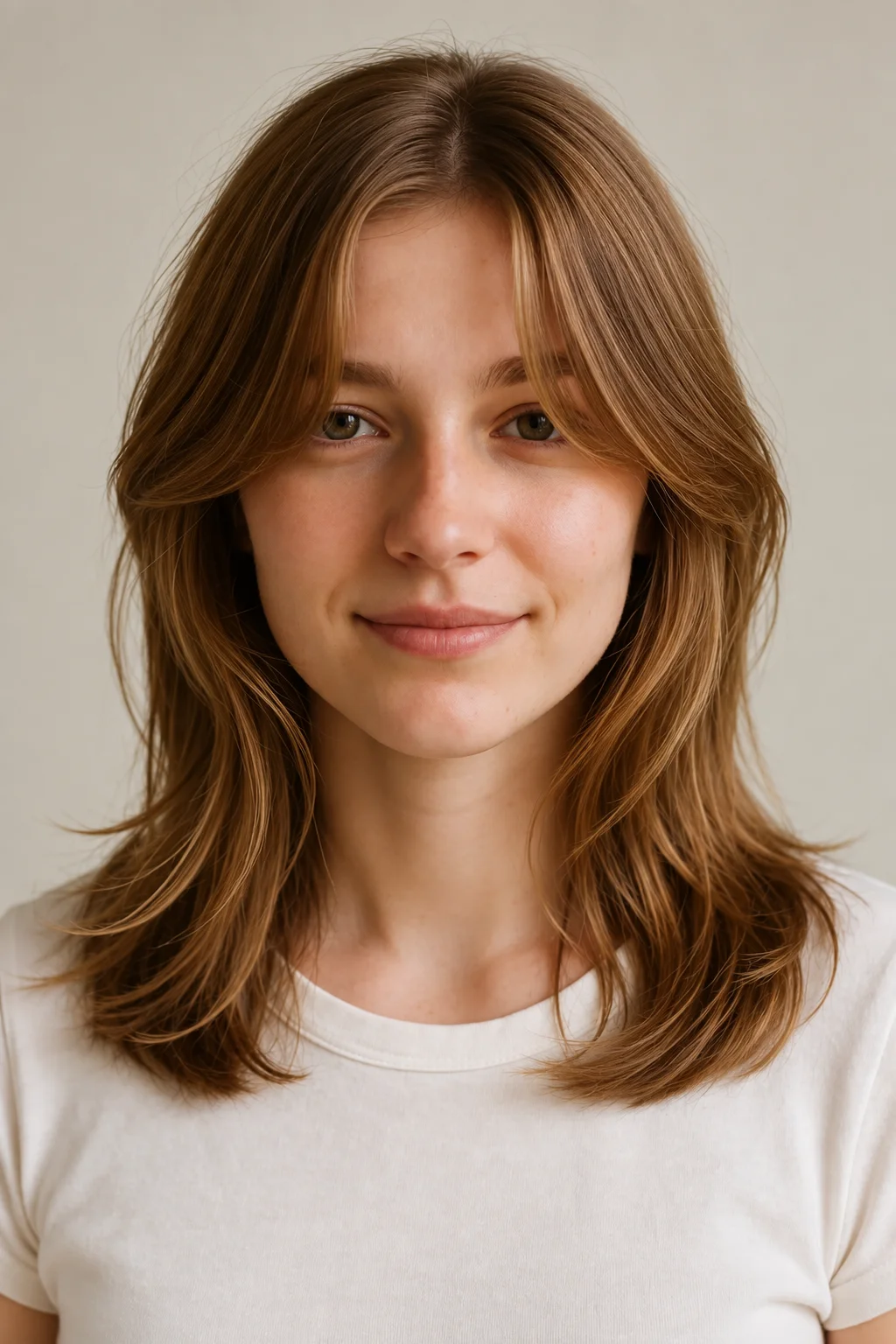
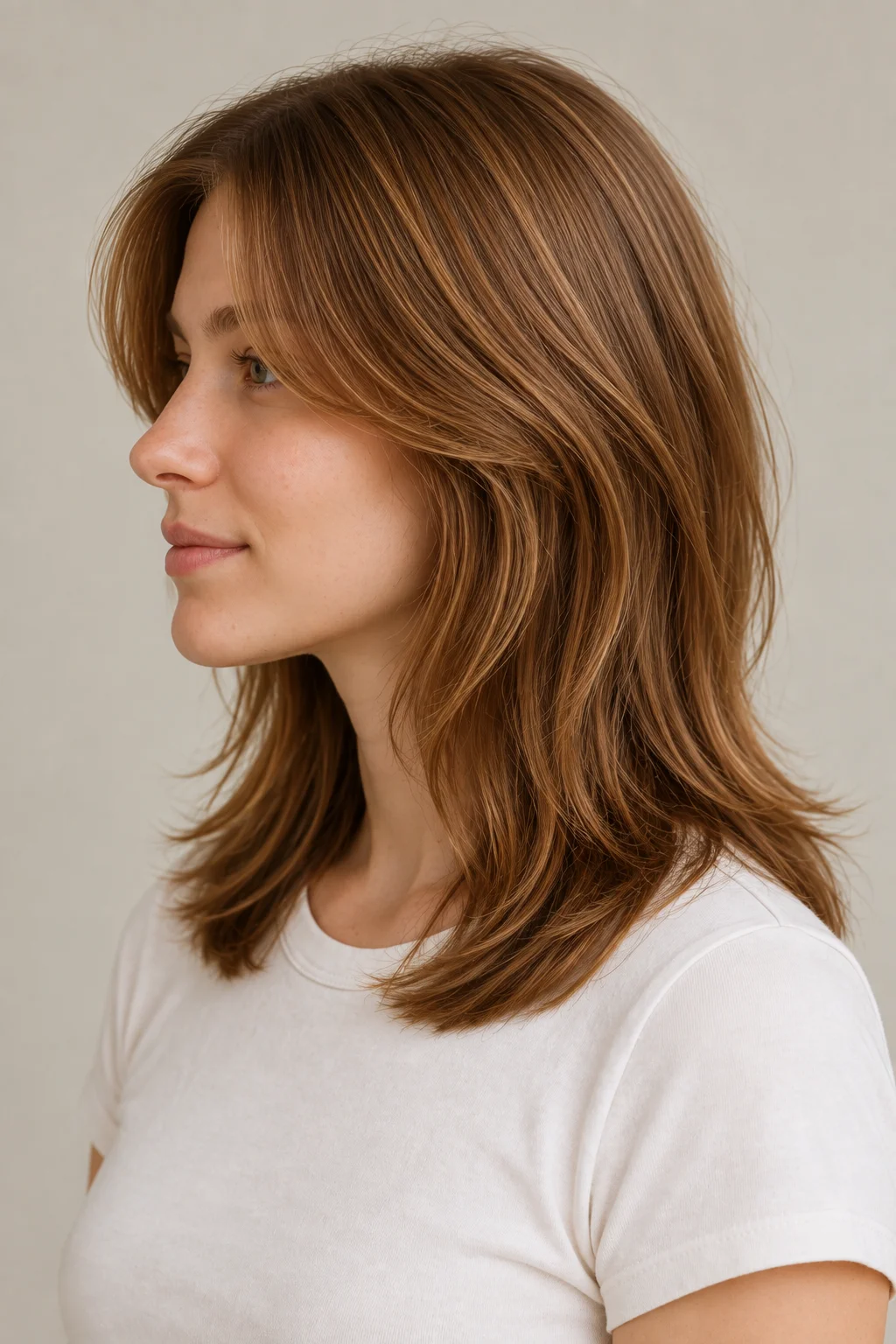
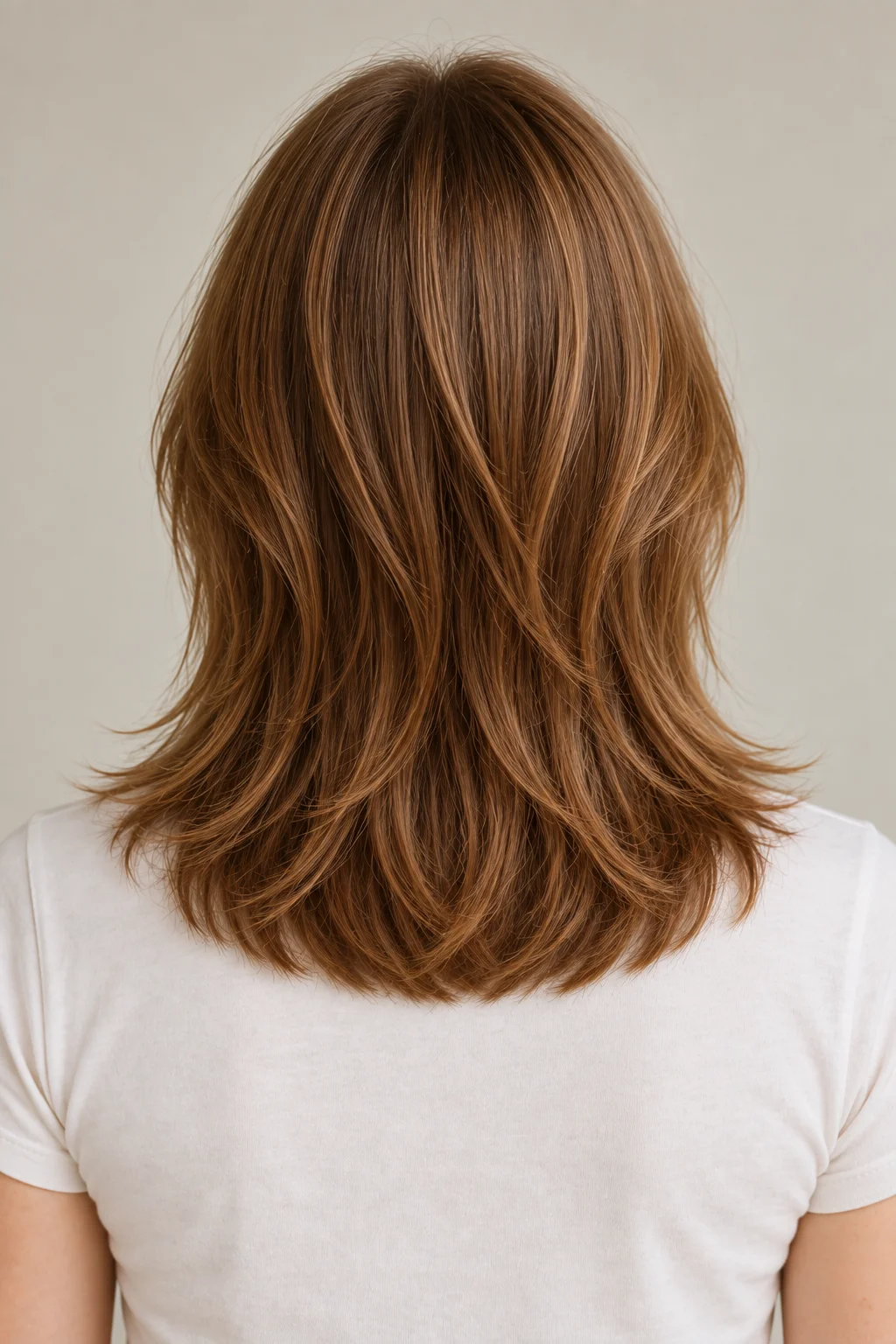
Soft layers, with enough length left at the shoulders
This shoulder-length shag has a center opening, long curtain bangs and layers that frame the cheeks before blending into the ends. The reference shows a shaped, outward-bending finish with moderate lift at the crown. The bottom still looks substantial: the appeal is movement without a dramatically disconnected back section.
You may also see this family called a medium shag haircut or soft shag. A name alone will not tell your stylist how short to cut the fringe or how much weight to remove. Use the photographs to point out the features you want to keep. Sam Villa’s soft-shag demonstration illustrates how face framing and layering can be connected while protecting length and weight.
The decision that matters most: how full should the ends stay?
Fine strands and low density are different things. If your individual hairs are fine but you have plenty of them, you may have more room for layering than someone whose ends already look sparse. Ask your stylist to assess the bottom edge before adding texture everywhere. JATAI’s medium-shag lesson demonstrates creating separation while retaining internal weight on finer hair.
| Your starting point | What to discuss with your stylist |
|---|---|
| Ends that already look thin | Use fewer layers and less texturizing; preserve a substantial bottom edge. |
| Dense hair that feels bulky at the sides | Remove weight selectively and agree which parts of the outline should stay full. |
| Straight hair, usually left to air-dry | Expect a straighter finish than the reference. Discuss fringe length and a manageable front-section routine. |
| Natural waves | Check where the shorter pieces settle when dry, especially near the forehead and cheeks. |
| Curly or coily hair | Assess layer and fringe placement in your usual dry texture; this smooth reference does not show that result. |
| A secure ponytail every day | Check the shortest pieces against your usual tie-back position before cutting. |
For face framing, start with a preference rather than a face-shape rule: do you want the shortest pieces to open at your cheekbones, sit closer to your jaw, or stay long enough to tuck away? Your parting, cowlicks and comfort with hair near your eyes matter to the final choice.
Like the shape, but want a small change?
Choose the details you want to discuss. They will travel with you to the salon card, where you can review or remove them. Your stylist can help decide which adjustments work together.
Choose the finish you will actually wear
For natural movement, work a small amount of a styling product suited to your texture through damp hair, encourage your existing bends by hand, then air-dry or diffuse. Adjust the amount if your ends feel coated or your roots lose lift. Hand styling can be an option even on some straight, fine hair, as shown in Hairstory’s session with Jayne Matthews, but it is not a guarantee of the polished bends pictured here.
For the reference finish, shape the curtain fringe and selected front sections away from your face with a dryer and brush. Use heat protection when heat styling, then lightly separate the ends instead of adding product all over again. Ask your stylist to demonstrate on your own hair and let you repeat the front section before you leave.
The practical question is whether you are happy with your natural version on a busy morning. If you only like the brushed-out finish, budget for that routine. Ask your stylist to show you both the natural finish and the shaped front sections before choosing your routine.
Will it stay in a ponytail?
The lower sections may reach a low tie or clip, while the curtain bangs and shorter face-framing pieces can fall free. A photograph cannot confirm how securely your finished cut will tie back. If you need all your hair off your face for work, exercise or cooking, say so before agreeing to the shortest layers.
Ask your stylist to gather the proposed front pieces toward your usual ponytail position before cutting. You might prefer a longer fringe, longer face framing, or a clip for the pieces that escape. Treat that as part of the haircut brief, not something to discover afterward.
Keep the shape, or let the layers grow?
Discuss a full reshape at roughly 8–12 weeks as a starting point; The Hair Standard’s shag guide uses that range. Your fringe may need attention sooner if it stops sitting comfortably. Your preferred length and tolerance for a softer outline matter more than following a fixed calendar.
If you want to grow toward a more even length, tell your stylist at the next appointment. The shortest layers need time to catch up, and repeatedly shortening the crown works against that aim. Keep a photo of the lengths you want to preserve so a routine trim does not turn into another full shag refresh.
What to say in the chair
“I’d like a soft shoulder-length shag with long curtain bangs and face-framing layers. I like movement through the ends, but I want the bottom to keep looking full. Please show me where the shortest fringe and crown pieces will land before cutting. Let’s adjust the weight removal to my density and check what will stay in my usual ponytail.”
Bring the reference views, then add your own limits: the length you cannot lose, the tools you use at home, and whether you usually air-dry. Ask to see how the shape works with your natural parting. The salon consultation guidance from Modern Salon emphasizes lifestyle and routine—details that a trend name cannot supply.
Take these requests to the salon →Before you choose this shag
Is this a wolf cut, butterfly cut or hush cut?
This page describes the specific soft, shoulder-length shag shown above. Trend names overlap between salons, so they are not precise substitutes for a visual brief. In Sam Villa’s wolf-cut lesson, the wolf is a shag–mullet hybrid; that stronger contrast is not the outline we are aiming for here. If you want a different silhouette, bring a separate reference and compare the shortest layers and back length.
Do I have to have curtain bangs?
They are a defining feature of this particular reference. You can ask for longer framing instead, but the opening around the face will change. Decide where you want those pieces to fall before selecting the rest of the layers.
Will the AI preview show my exact salon result?
No. It is a visual way to explore the outline on your photo. It cannot measure your density, predict shrinkage or show how the cut will behave after washing. Use a preview to explain what you like, then confirm the achievable length and routine with your stylist.