
Choose the cheek line before choosing the length
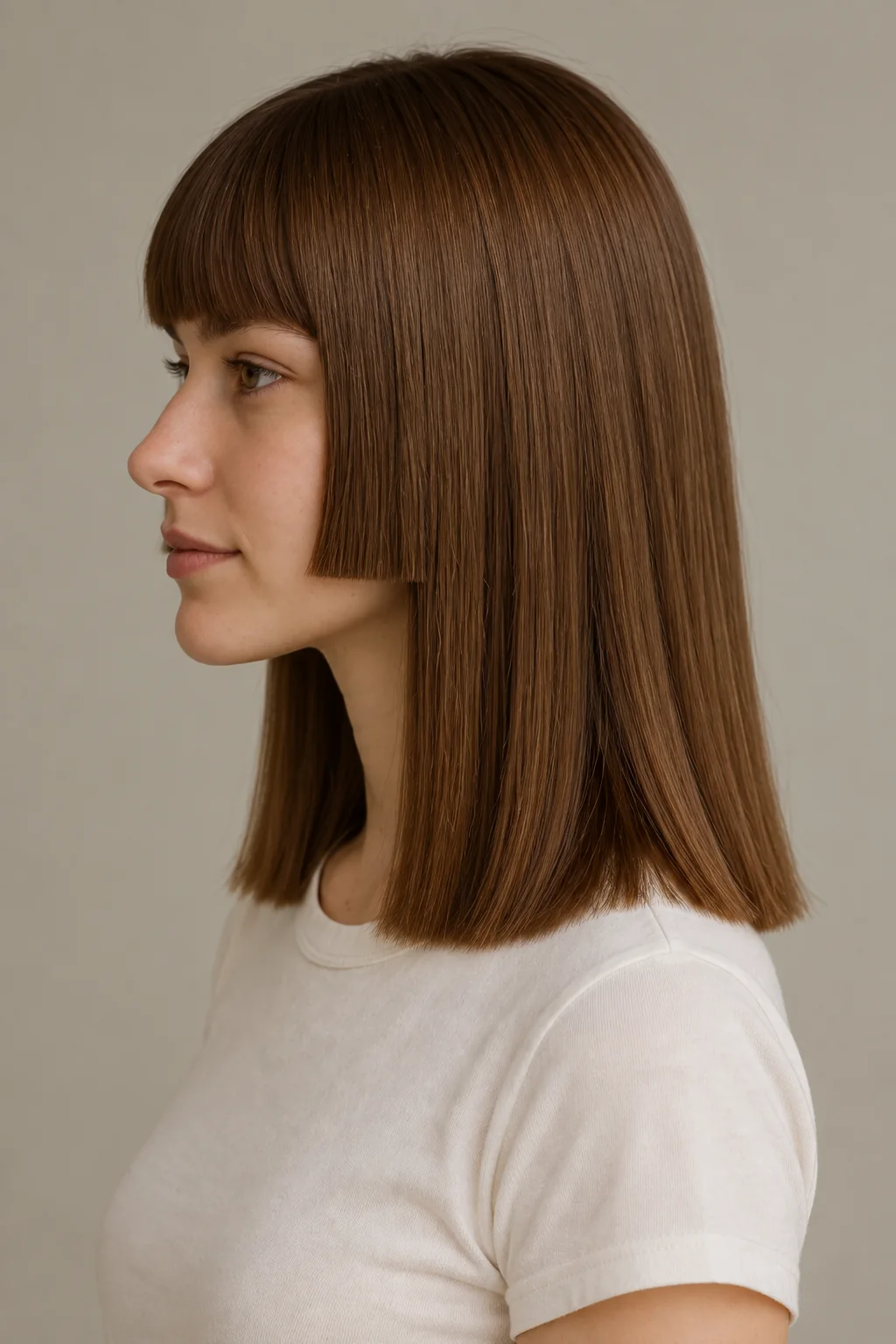
The defining feature of this shoulder-length hime cut is the step beside the face: a short, flat-ended panel sits in front of the longer hair on each side. The straight fringe completes this particular version. A shoulder-length cut with bangs alone is not the same silhouette—the cheek panels need to be visible.
My Snug Room’s hime guide shows the design on different overall lengths and explains how taking more or less hair into the front sections changes their weight. For this reference, compare three decisions: where the lower edge meets your cheek, how wide the panel is, and how much longer hair remains behind it.
Ask your stylist to hold the proposed sections in place before cutting. A higher line draws attention to a different part of the face from a lower line near the jaw. Neither is automatically correct for a particular face-shape label. Use your own preference, natural parting and comfort with hair against your cheeks to make the choice.
A crisp outline depends on more than straightening
A wide panel uses hair that would otherwise contribute to the longer outline. If your front hairline is sparse or your ends look thin, ask whether a narrower panel would keep both sections looking intentional. Fine strands and low overall density are different questions; do not assume you need the same panel width as the model.
| What your hair does | What to check before cutting |
|---|---|
| Falls straight and flat | Whether the fringe needs less weight, and whether the cheek panels sit where you want without pushing them forward. |
| Feels thick at the temples | The width and internal weight of the panels; a larger section is not always the answer. |
| Has sparse front sections | Whether taking hair into a panel leaves enough fullness behind it. |
| Forms waves around the face | The dry cut line after the wave has settled, not only the stretched wet length. |
| Curls or coils | How each panel contracts and separates in your usual texture. This smooth reference cannot demonstrate that result. |
| Has a fringe cowlick | Where the bangs naturally divide or lift, and how much styling you are willing to do. |
You can explore the outline with an AI try-on, but the image cannot assess your scalp coverage, growth patterns or the way a panel moves as you turn your head. Those checks belong in a real consultation.
Personalize the panels, not just the name
Choose the requests you want to discuss. Keeping the panels longer, taking a narrower section or reducing fringe weight each changes the balance of this cut. These choices travel to your salon card; the AI try-on still previews the reference shown here.
Keep the front neat without promising a perfect air-dry
Work with the fringe and cheek panels while drying so they settle in the intended direction. For a smooth finish, ask your stylist to show you the brush position and tension that suit your texture. If heat tools are part of the routine, use appropriate heat protection and follow the tool’s instructions. You should not need to guess by repeatedly passing a straightener over the same section.
If you prefer air-drying, bring a photograph of your usual unstyled texture. The useful question is not whether this haircut is “low maintenance” in general, but whether you like its line when your own hair bends, separates or lifts. A less geometrically straight version can still be a deliberate choice.
The long section can tie back; the panels usually cannot
A low tie or clip may gather the shoulder-length base, but the short panels and fringe are separate pieces. If you need all of your hair off your face for exercise or work, test a headband or small clips before agreeing to the panel length. A cheek panel that looks long from the front may still be too short to reach your usual ponytail.
Tucking the panel behind an ear also changes the visible shape. Ask to see the cut both loose and clipped away, rather than assuming the same graphic outline will remain in every arrangement.
Maintain the edge—or decide to let it soften
A few millimetres of growth can matter more at the cheek line than at the back. John Frieda’s hime guide suggests frequent fringe and panel trims for a sharp result, with more time between appointments for a softer look. Agree a schedule based on where the line starts to bother you; the front and back do not necessarily need trimming together.
Growing out the panels takes patience because they begin well above the longer perimeter. If you want to change direction, ask about softening their corners or gradually connecting them to longer face framing. That is a change in shape, not an instant return to one length. No reference image can provide a reliable grow-out date for your hair.
Show the step you want to keep
I’d like a shoulder-length hime cut with straight bangs and clearly separated cheek panels. Please show me the width and finished dry height of the panels before cutting. Keep fullness in the longer back, and explain how I can clip the front away when needed.
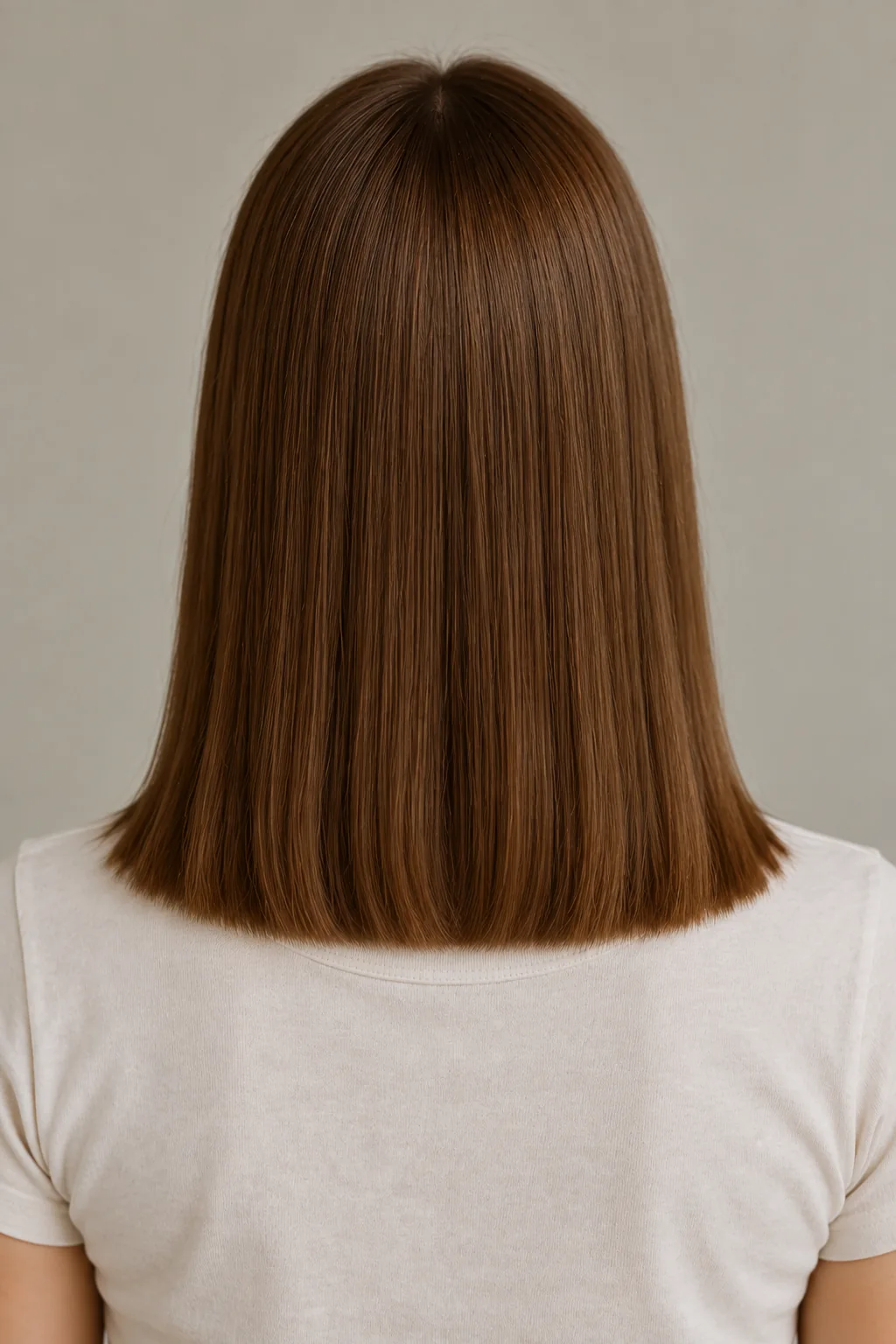
Bring the front and side references together. The front shows the cut line; the side explains which hair belongs to the panel and which stays long. The back view is useful for agreeing the overall perimeter, but it will not show the signature front sections.
Prepare my hime cut salon card →Questions before committing to the panels
Is this a hime cut or a jellyfish cut?
This version has localized short sections at the cheeks. A jellyfish reference typically shows a shorter upper shape wrapping farther around the head, with a longer lower section. Ask your stylist to compare the side and back silhouettes instead of relying only on either trend name.
Can I have a hime cut without bangs?
Yes, the cheek panels can remain while the forehead is more open. The reference here includes straight bangs, so removing them is a different variation to discuss rather than the same finished look.
Does it only suit a small or oval face?
There is no single face-shape rule that decides whether you should choose it. The panel height, width and contrast affect what you notice around your face. Try the outline and choose what you like; a preview is not a promise that a haircut will make a face look smaller.
Will the back have the same short step?
Not in this version. The short panels are at the front, while the rear keeps a full shoulder-length outline. If you want a disconnected tier around the back, bring that as a separate reference so the stylist does not accidentally create a different cut.