Start with the length you already have
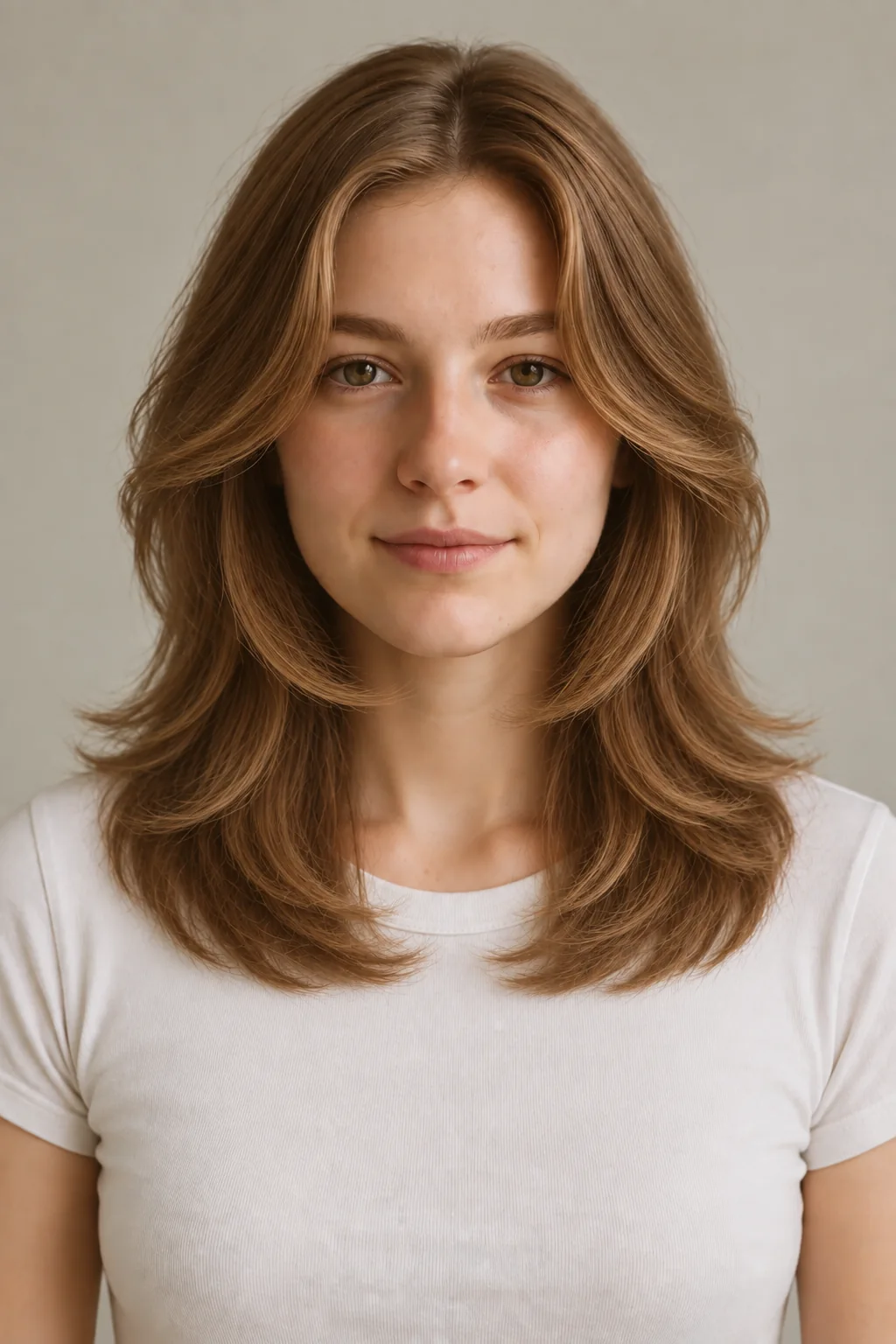
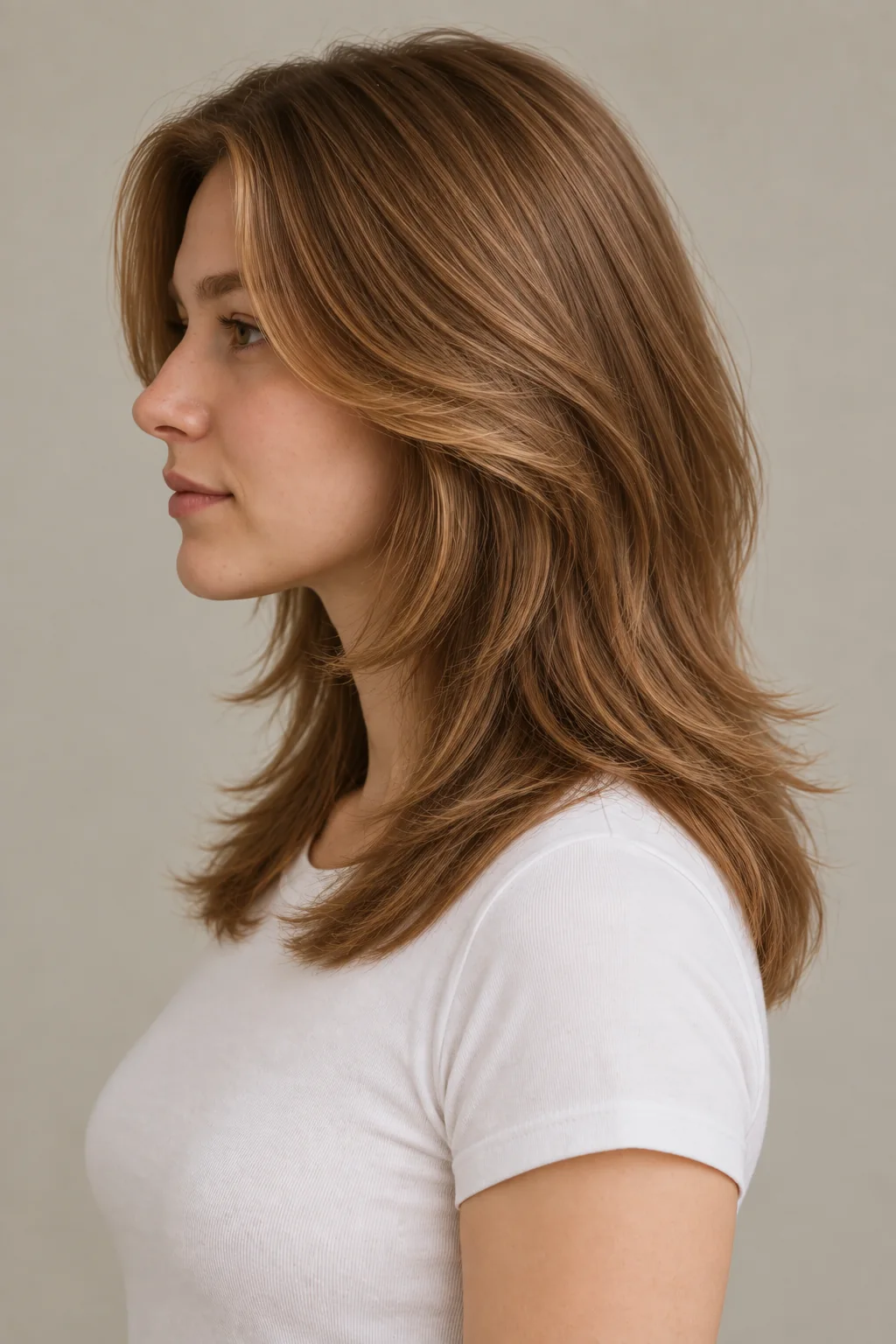
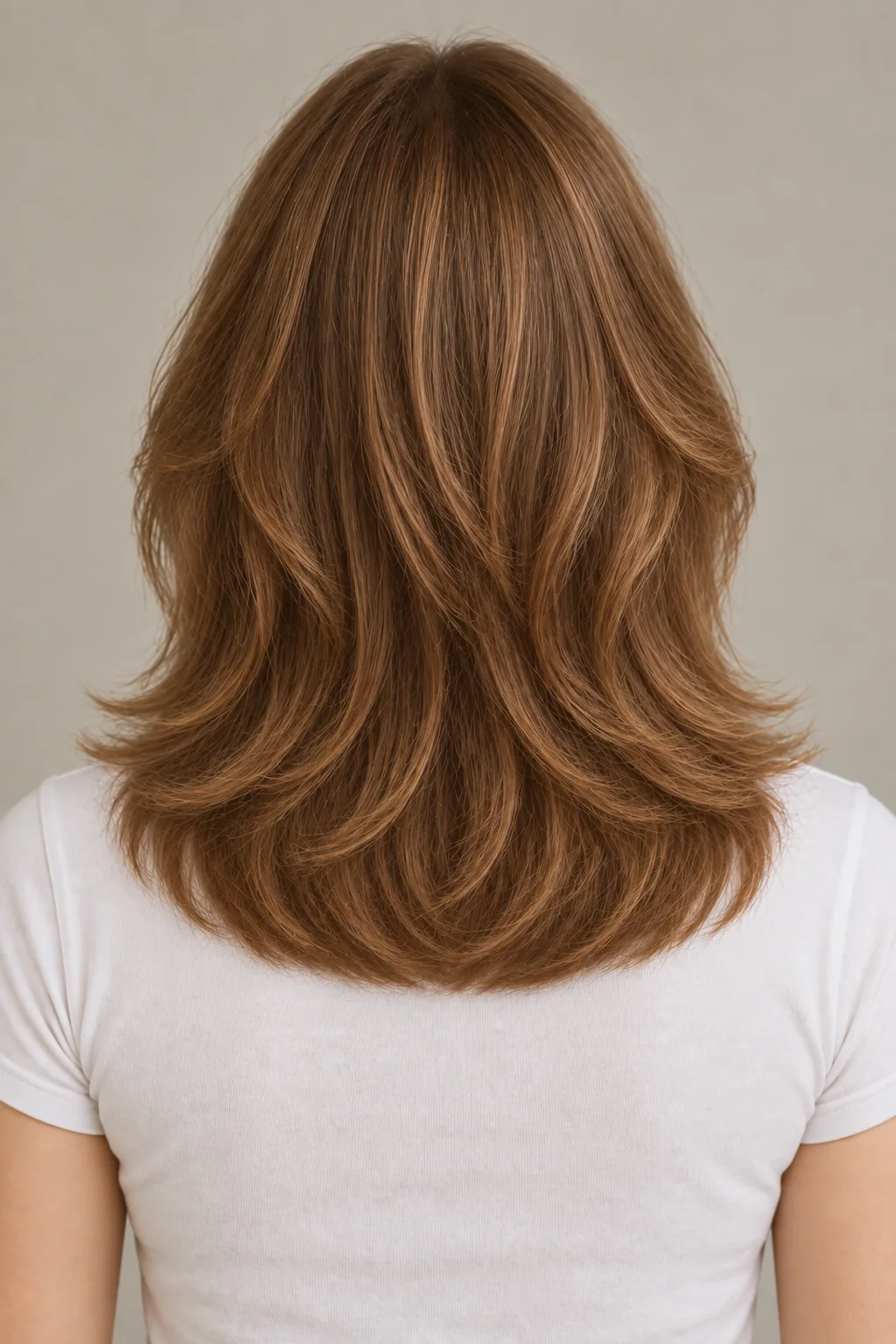
This medium-length butterfly cut combines a shorter frame around the face with a longer base below the collarbones. The front pieces sit around the chin to upper neck before joining shoulder-level upper layers. The longest ends continue toward the upper chest, with a full soft U-shaped outline at the back.
A haircut can reveal that contrast only if there is enough existing length to work with. If your hair currently stops at the chin, cutting cannot create the longer base shown here. Ask which parts of the reference are achievable now and which require growing first. An AI preview may illustrate extra length, but it is not a plan for obtaining it at the next haircut.
In Allure’s butterfly-cut interviews, Sunnie Brook describes a shorter-looking frame while retaining length, and the discussion emphasizes adapting the layering to density. Use that idea to identify what you want to preserve rather than treating the name as one fixed cutting formula.
Decide how much hair belongs to the shorter shape
The upper layers and longer base draw from the same head of hair. Taking a large amount into the shorter shape can leave less fullness at the longest ends. Ask your stylist to show what stays long before cutting the frame.
The most useful comparison is not simply “more layers” versus “fewer layers.” Look at where the shortest piece lands, how far the upper layering extends around the head and how substantial the lower outline remains. You may prefer a quieter version with longer upper layers if keeping the base full matters most.
| What you want to protect | What to confirm |
|---|---|
| Your longest length | The minimum back length that stays after the perimeter is tidied. |
| Fullness at the ends | How much hair remains in the base once upper layers are separated. |
| A front piece that tucks away | Its dry unstyled reach, not just the position of the blowout curve. |
| Your natural wave or curl | Where the short and long sections sit after they dry. |
| Less volume around the sides | A smaller layer contrast or quieter styling rather than assuming maximum lift. |
Ask for a transition, not a shelf
The reference’s shorter shape flows into the long base. It should not read as a blunt cap sitting above separate tails. Use the side view to show how softly you want the lengths connected, then check the back for a substantial lower edge.
If the top looks full only because the bottom has become thin, that may not be the balance you intended. Explain the density you want to keep as clearly as the movement you want to add. The center part leaves the forehead open here. Adding short bangs or a cropped crown would change the design and daily routine, so discuss either separately rather than assuming it comes with the butterfly name.
Set your priorities before the layers are cut
You can keep more overall length, leave the front longer or ask for less contrast between the two areas. Choose the requests you want to carry into the salon card. They guide the consultation and do not alter the AI preview’s reference haircut.
Look at the frame before and after the blowout
The reference uses broad sweeps away from the face. Those bends lift the shorter pieces and make their separation from the long base easier to see. Ask where the front ends before it is shaped, since a curved section can look shorter than its actual length.
Have your stylist show the outward finish and a version with less lift. If you usually air-dry, bring a picture of that texture and discuss how the frame will sit on an ordinary day. Straight hair may hang closer to the face, while natural waves or curls can place the fullest points elsewhere.
For the full blowout, ask which sections need directing and how to handle them with the tools you use. Follow tool instructions and use suitable heat protection if heat is involved. Do not choose dramatic short layers solely because the salon finish looks easy; decide whether you also like them after the sweep relaxes.
Test the short frame separately from the long base
The back may gather easily while the shorter front pieces escape. Try your actual ponytail position and identify the sections you need secured. If loose framing is welcome, keep it; if it gets in the way at work or during exercise, consider more front length or test clips before cutting.
An ear tuck can flatten or redirect the outward bend. Release the tucked section and see how it returns. Check that view if you often tuck the front away.
Choose whether to keep or reduce the contrast
As the frame grows, its emphasis moves lower and the short-looking upper shape becomes less distinct. You may enjoy that softer stage. Refresh the layers when their placement stops matching your preference, while assessing the condition and fullness of the long base separately.
To move toward a less layered cut, preserve the shorter sections while selectively maintaining the longer outline. Growing everything without adjustment does not instantly make the lengths equal. Conversely, recutting the frame to the reference each time keeps the contrast rather than allowing it to soften.
Tell your stylist whether retaining maximum overall length or reducing the layer difference is the priority. Those choices can lead to different trimming plans, without needing a universal appointment schedule.
Protect the base in your brief
I’d like a butterfly cut with shorter framing softly connected to a full below-collarbone base. Show me the shortest pieces without styling and agree how much length and density stay at the back. I want movement without a hard shelf or thin long tails, and a finish I can wear between blowouts.
Bring the rear reference to confirm the longest outline.
Prepare my butterfly cut salon card →Questions about the layered balance
Is this the same as an octopus or jellyfish cut?
Names can overlap in trend coverage, but the reference matters. This version keeps soft connections and a full base, rather than emphasizing a blunt upper cap or sparse longer tails. Show the silhouette you want instead of assuming the names are interchangeable.
Can I keep my natural curls?
Yes. Discuss a version planned for their dry shape and shrinkage. You do not need to reproduce this smoother blowout to wear connected shorter framing over longer hair.
Will the cut give me the lifted sweep automatically?
No. The layers remain, but the outward lifted arrangement depends on your texture and styling. Ask to see the quieter finish too.