
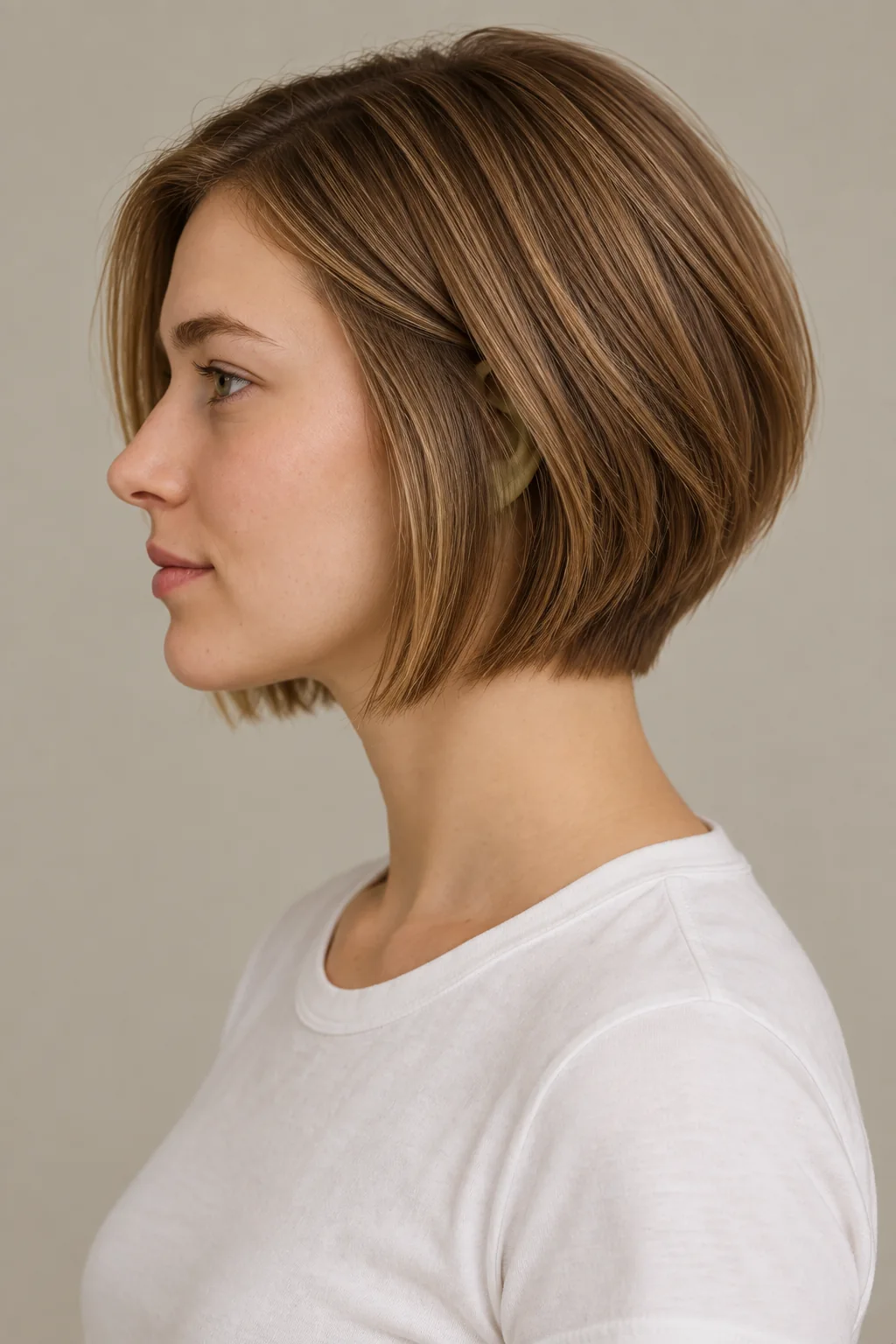

Start this consultation with the back view
From the front, this stacked bob has equal chin-length sides and a soft side part. Its defining decision is behind the ears: low graduated sections build a fuller shape above a shorter nape. That rear structure cannot be understood from a front-facing photograph alone.
In DJ Muldoon’s own stacked-bob post, the caption also calls the cut a graduated bob and describes a graduation platform at the nape with a weight line above it. For a consultation, the useful translation is to identify where you want the back to be fullest and how short you want the area beneath it—not to prescribe a cutting angle yourself.
Ask your stylist to show the proposed profile using a mirror. A low, restrained stack and a higher wedge can feel like very different haircuts even when the front length is similar. This reference keeps the rear shape low rather than building dramatic height toward the crown.
Agree exactly how much neck is exposed
Point to the lowest cut line at the back before shortening begins. Consider whether you want the natural hairline visible, partly covered or left with a little more length. A stacked bob does not inherently require a shaved nape. If a separate hairline shave or undercut is suggested, agree to that specifically rather than treating it as implied by the name.
Have your stylist inspect the nape dry. A cowlick, upward growth or a split at the hairline may become more noticeable when the section is shortened. Leaving extra length can sometimes be part of the plan; the shortest possible back is not automatically the best version.
Look at the shape with your head in its normal position. A bowed head can make the rear seem more compact than it will look once you stand and move normally.
Place the weight without promising more hair
Graduation changes how the hair is arranged into the outline. It does not create new density. If your rear sections are fine or sparse, ask how much coverage remains at the proposed short length rather than relying on the idea that “stacking adds volume.”
| What needs checking | Why it matters here |
|---|---|
| Sparse areas near the nape | Shortening may reveal more of the underlying coverage than a longer cut does. |
| Dense rear hair | The stack may feel too heavy unless its weight is controlled deliberately. |
| A strong nape cowlick | Very short pieces can lift or separate in a way the smooth reference does not show. |
| Waves through the back | The graduated layers may turn differently after drying. |
| Curls or coils | Shrinkage changes both the exposed nape and the position of the fuller shape above it. |
Ask where any weight removal will happen. The goal is the rear silhouette you agreed on, not maximum thinning or maximum height by default.
Personalize the rear before finalizing the front
A lower stack, more nape coverage or a softer weight line changes the feel of this cut. Choose the requests you want to discuss below. They appear in the salon card and do not modify the AI preview’s reference variation.
Learn the part of the routine you cannot see easily
Ask your stylist to demonstrate the nape first, then the graduated sections above it. Watch how they direct the short hair and where they place lift. Use a second mirror to see the intended rear result; otherwise it is easy to repeat only the front styling and miss what defines the haircut.
If a brush and dryer are needed, ask for a method you can manage with your own reach and coordination. Follow the tool instructions and use appropriate heat protection when applying heat. Do not assume more curling under will fix a stack that feels too heavy or high—raise that concern about the shape itself.
For a natural wave or air-dried finish, bring a photograph of your normal texture and ask to see how the short back settles. The polished reference is one finish, not a promise of how the cut will behave after every wash.
Treat the front and nape as different lengths
The chin-length sides may tuck behind your ears, while the rear is too short to gather. Do not expect a complete ponytail because the front pieces seem long enough. Test clips or a headband if you need hair away from your face during work or exercise.
An ear tuck can expose more of the transition into the shorter back. Check that arrangement during the consultation as well as the hair worn loose. If you wear glasses, put them on: the arms may redirect the side sections and change how they join the rear outline.
Decide whether to preserve the stack or soften it
As the nape grows, it can cover more neck and change the definition beneath the weight line. The front may still look acceptable while the back feels overdue for a reshape. Discuss maintenance by looking at those areas separately rather than using one fixed number of weeks for every client.
If you want less graduation later, allow the short rear sections to gain length and selectively maintain the longer outline. Trimming everything back into the original structure preserves the stack. Keeping every section untouched also does not immediately make their lengths equal. Tell your stylist whether retaining the front length or moving toward a more even shape matters most.
Make the rear choices explicit
I’d like a low stacked bob with equal chin-length front sides and a soft side part. Show me where the rear weight will sit and how much nape will be visible. Keep the nape unshaved, check its natural growth pattern and demonstrate how I can dry the short sections at home.
Use the side and back references to agree the structure, then the front to confirm framing and length.
Prepare my stacked bob salon card →Questions about the graduated back
Is this the same as an A-line or inverted bob?
Salon terminology overlaps. An angled perimeter can be longer at the front without the same graduated rear structure. Specify the low stack, nape coverage and front length rather than relying on a name alone.
Must the nape be shaved?
No. This reference keeps short hair at the nape without shaving. Agree any shaved detail separately.
Can the stack be lower and softer?
Yes, that is a useful discussion about weight placement. Ask to see the proposed profile, including how a softer version changes the rear definition.