Choose the haircut and the blowout separately
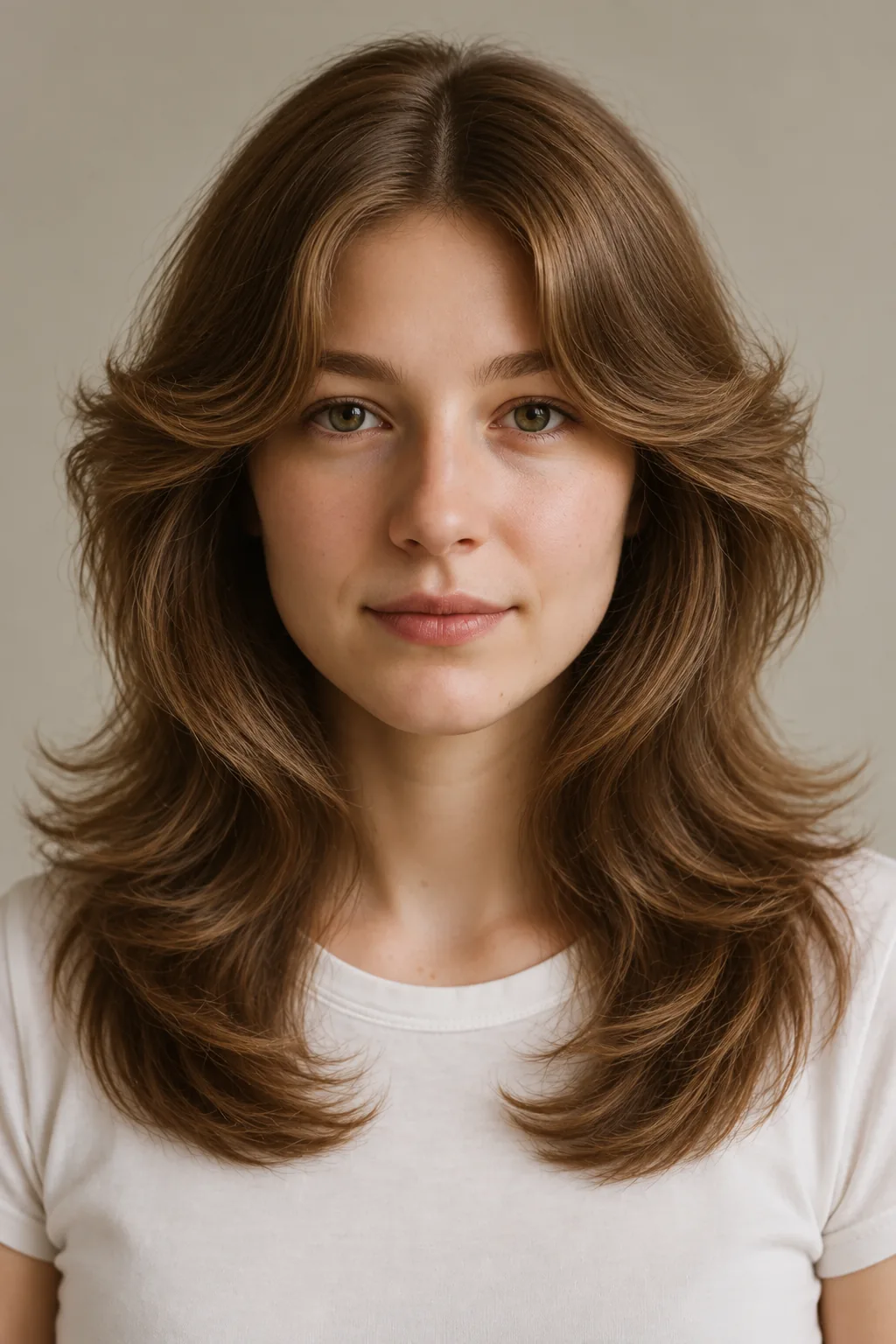
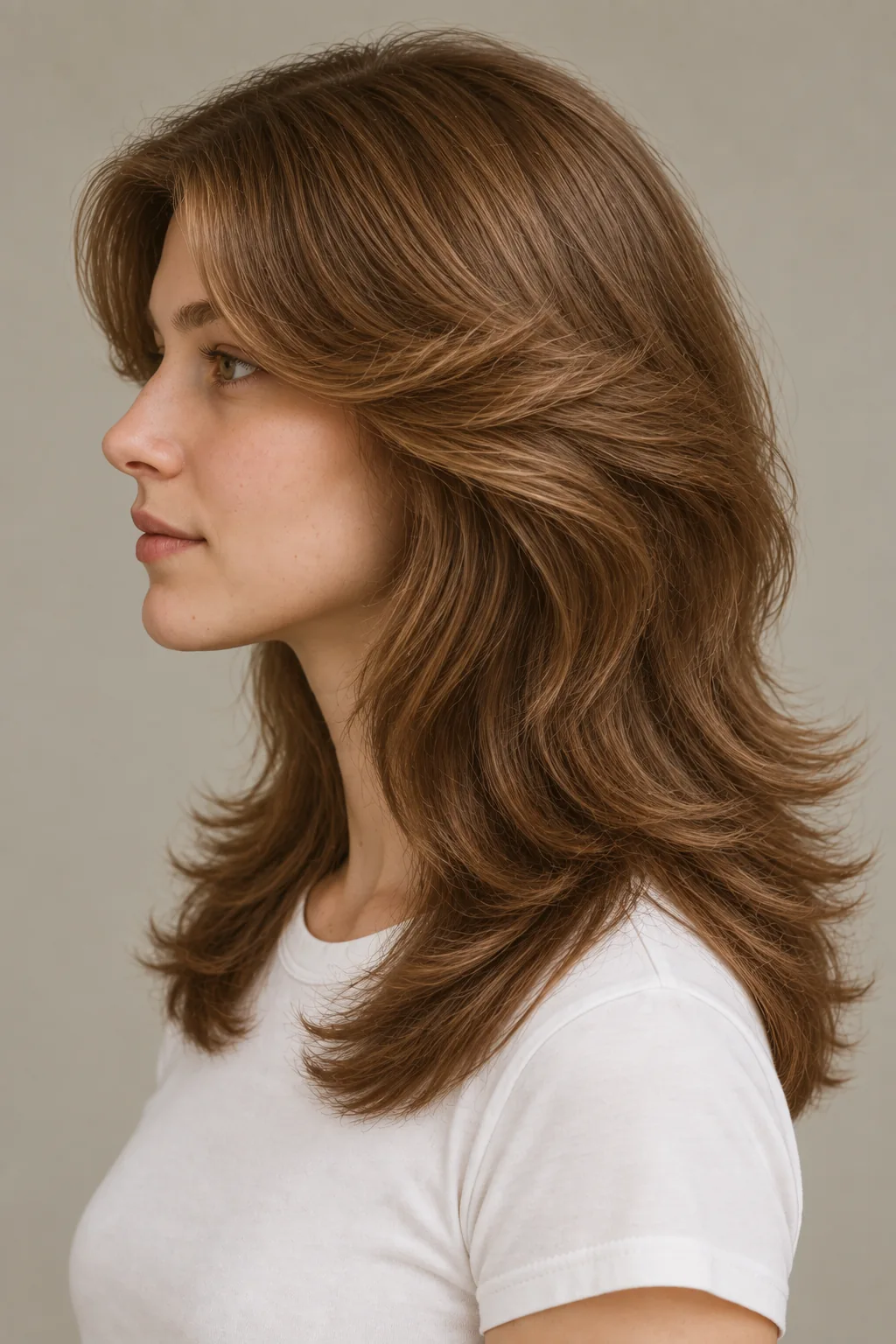
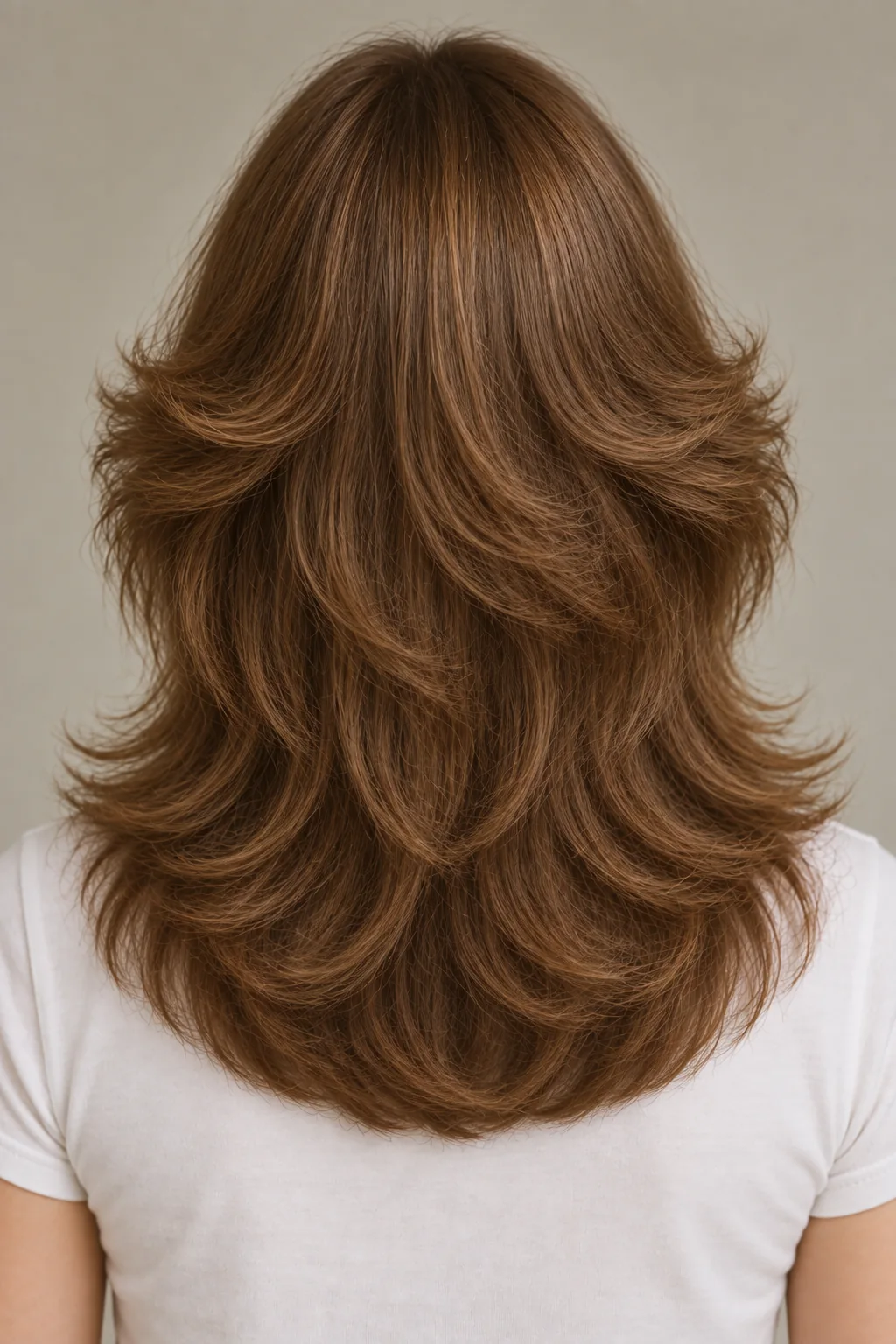
This Farrah Fawcett-inspired reference combines long feathered layers with a full outward blowout. The center part opens into sweeping curves around the face, while the base continues past the shoulders toward the upper chest. The layered cut supports that movement, but it does not make the wings permanent after washing.
InStyle’s interviews with Andrew Fitzsimons and Matthew Collins describe how longer layers and face framing help create the outward shape. A mostly one-length cut will not separate into the same feathered outline just because its ends are curled. Conversely, adding layers does not remove the need to shape them for this finish.
Decide what attracts you most: the longer silhouette, the open face framing or the full retro volume. You can discuss a softer everyday interpretation without pretending that it will look exactly like the reference.
Find the real length beneath the curve
A broad outward bend makes a face-framing piece appear shorter than it is. Ask your stylist to show where the proposed shortest section hangs before it is styled. Check that length in your normal parting and behind your ears, then compare it with the shaped version.
The front should connect into the longer layers rather than become an isolated short fringe. Agree how high the feathering starts and how strongly it frames the cheeks. If you prefer less width at the sides, discuss smaller bends and longer framing instead of assuming the largest wings are essential to the haircut.
Do not sacrifice the base for the feathering
The reference keeps a substantial long outline beneath its movement. If your ends already look sparse, ask how much hair will still reach the bottom after layering. A full blowout can temporarily make that question harder to judge, so look at the cut in a quieter finish too.
| What your hair needs | What to discuss |
|---|---|
| Fine strands or sparse ends | Fewer or longer layers, with enough weight left in the base. |
| Dense lengths that feel heavy | Selective internal weight removal rather than thinning every section. |
| Existing short front pieces | Whether they can form the intended long sweep now or need to grow first. |
| Natural waves | Which bends already move outward and which would need redirecting. |
| Curls or coils | The dry layer lengths and the work involved in a smoother, broader blowout. |
Do not choose a cutting technique solely because the word “feathered” appears in the name. Ask your stylist to explain how the proposed approach preserves the fullness and movement you want in your own hair.
Choose your version of the outward shape
Longer face framing, a fuller base or smaller wings can change how this look fits your life. Select the requests you want to discuss. They will appear in your salon card; the AI try-on continues to show the reference variation rather than applying these requests automatically.
Learn the direction, not just the tool
For the reference finish, the front is shaped away from the face, with outward movement continuing through the ends. Ask your stylist to demonstrate the round-brush direction and the section size that suit your hair. Watch how the back is handled too: the front wings alone do not create the complete silhouette.
InStyle’s tutorial also discusses setting the shape with rollers and allowing it to cool before release. If that is part of your routine, follow the roller and heat-tool instructions and use appropriate heat protection. More heat is not a substitute for understanding the direction and placement.
Ask to practise the movement or describe it back during the appointment. The useful outcome is a routine you can repeat safely, not a photograph that depends on a technique you have never been shown. Your texture affects how much preparation and shaping the full blowout needs.
Check the haircut on an ordinary day
Bring a photograph of your usual unstyled hair. The layers may fall straighter, follow a natural wave or separate differently when you skip the outward blowout. Choose a cut you also like in that state rather than judging it only when the wings are freshly set.
For a smaller daily version, ask to see less lift and a softer outward bend. If you often tie your hair back, test the shortest front pieces in your usual tie and ear tuck. The length visible in a curved reference is not a reliable measure of whether those pieces will reach.
The finish can relax between washes or after sleeping. Discuss which small areas you are willing to reshape and when you would rather leave the hair natural. There is no universal number of minutes or guaranteed hold time for this look.
Maintain the framing without repeatedly losing the length
As the face-framing layers grow, their movement starts lower and can feel softer. Refresh them when that change stops matching your preference, while checking the condition and fullness of the base separately. A fringe-like front section and the longest ends do not necessarily need the same amount removed.
If you want less feathering later, retain more of the shorter layers as they grow and discuss selective trims to the longer outline. Cutting every layer back to its original position will preserve the contrast rather than reduce it. Tell your stylist whether keeping overall length or reaching a less layered shape matters more to you.
Ask to see the cut before the final styling
I’d like a Farrah-inspired cut with long connected feathered layers, a center part and a full past-shoulder base. Show me the shortest front pieces without the outward bend. I like the sweeping finish, but also want a softer version for days when I do less styling.
Bring the front, side and back views to establish the overall length and direction. Agree the haircut first, then discuss the steps that create the finished wings.
Prepare my feathered haircut salon card →Questions about the feathered finish
Is this a shag or a mullet?
This reference keeps longer connected sides and a substantial base. It does not use a cropped crown or markedly short sides above a long nape. Compare those structural details rather than treating all feathered cuts as the same.
Does my hair need to be blonde?
No. The haircut and outward styling are separate from color. This reference uses brown hair; an AI try-on preserves your color unless you separately request a change.
Will the wings stay after I wash it?
The layered structure remains, but the large outward curves need styling for this finish. Your natural texture may create some movement, without reproducing the complete blowout.