
Choose the edge you want before choosing the tool
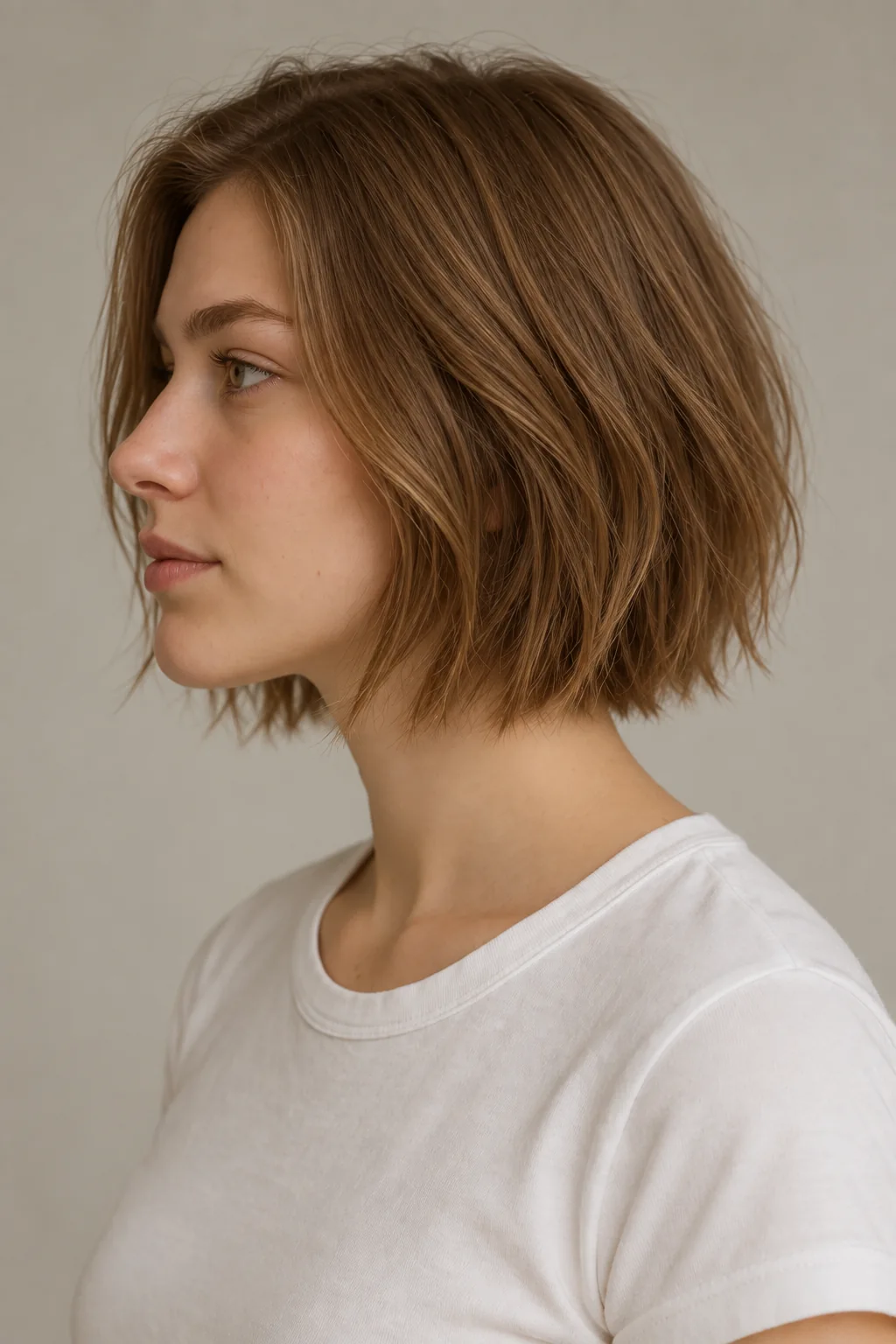
This razor bob sits between the chin and just below it, with a soft off-center part and no fringe. The ends separate into tapered pieces instead of forming a solid blunt line. Small irregular bends keep the shape relaxed, while enough fullness remains for it to read as a bob rather than a collection of thin strands.
In Country & Town House’s interview with Anna Wiig, the razor-cut bob is described through a softer, less structured finish and tapered ends. That explains the name, but a reference image cannot establish which tool was used—or which tool should be used on your hair.
Start by pointing to the amount of separation you like. Then ask your stylist to assess whether a razor, scissors or a mixed approach makes sense for your density, condition and natural pattern. The tool is a means of shaping the edge, not a requirement you need to insist on to get a relaxed bob.
Decide which areas should stay full
Texturizing removes or redistributes weight; it does not create new hair. Before agreeing to a softer edge, identify the areas where you want to retain a substantial outline. The front corners, sides and back may not have the same density, so they do not automatically need the same treatment.
If your ends already appear sparse, discuss a gentler taper or a fuller perimeter. A photograph with separated strands can look appealing without revealing how that edge behaves when it is tucked, brushed straight or left without styling product. Ask to see those quieter arrangements too.
With dense hair, explain whether the concern is heaviness inside the shape or the appearance of the bottom line. Removing weight everywhere may not solve the specific issue you are noticing. Have your stylist show where the change will happen before proceeding.
Assess condition and natural pattern separately
Bring your hair in a way that lets your stylist understand its usual behavior, or bring a photograph of its unstyled state. Mention areas that become fuzzy, tangle easily or have been previously thinned. Those details are more useful than assuming every straight, wavy or curly head needs one technique.
| What you notice | A question to raise |
|---|---|
| Sparse ends | Can the edge stay fuller with less taper? |
| Dense sections that feel heavy | Where can weight be adjusted without making the perimeter thin? |
| Waves that form unevenly | Which natural bends should remain visible in the finished bob? |
| Curls or coils | How would the proposed separation affect my dry pattern and outline? |
| Ends that become fuzzy or rough | Should condition or a different cutting approach be considered before adding texture? |
This is not a rule that curls cannot be razor-cut. It is a reason to let a stylist evaluate your particular hair rather than treating a texture label as the whole decision. An AI try-on cannot perform that assessment.
Set limits on how much texture you want
Keeping density, asking for a lighter taper or discussing scissors are all valid ways to clarify the request. Select the points you want on your salon card. They are consultation notes, not changes to the reference used for the AI preview.
Keep the movement practical
Ask your stylist to demonstrate the finish with the amount of effort you expect to use at home. Finger placement while drying may be enough to arrange some natural bends; other hair may need more directing. The aim is to understand your routine, not assume that separated ends always mean effortless styling.
If a texture product is suggested, ask which effect it provides and where to apply it. Try a restrained amount so you can distinguish the haircut’s movement from the product’s hold. Avoid smoothing every section into an identical inward curl if what you liked was the reference’s small irregular bends. Conversely, you do not need to make every strand visibly separate for the cut to work. Use suitable heat protection and follow tool instructions if heat is part of the routine.
Try the tucked-away version before committing
At chin length, the ability to tuck the front behind the ears depends on the exact length and where the shorter pieces sit. Test that arrangement while the hair is dry. When released, some ends may turn outward; decide whether you like that movement rather than judging only the freshly arranged front view.
A full ponytail is unlikely to collect every section at this length. If you need the front secured for work or exercise, test small clips or a headband. Keeping a little more length can be a practical adjustment without giving up the softer edge.
A refresh does not always need more thinning
As the bob grows, the outline sits lower and the tapered tips can lose the balance you liked. At the next appointment, reassess the edge before repeating the original texturizing process. The hair may need a tidy perimeter rather than additional weight removed throughout.
If you want a fuller line later, preserve the shorter tapered pieces as they grow and selectively maintain the longer edge. The change may take more than one trim. Repeatedly thinning the same areas can work against that goal, so state clearly when your preference shifts from separation toward fullness.
Agree maintenance around the shape and condition you observe rather than fixed weeks. A softer finish can tolerate a different amount of growth from a very precise line, but your own preference decides when it needs attention.
Describe the result and your limits
I’d like a chin-length bob with softly separated ends and small natural bends. Keep enough density for a coherent outline. Please assess my hair before choosing a razor or scissors, show me where weight will be removed and check my usual ear tuck.
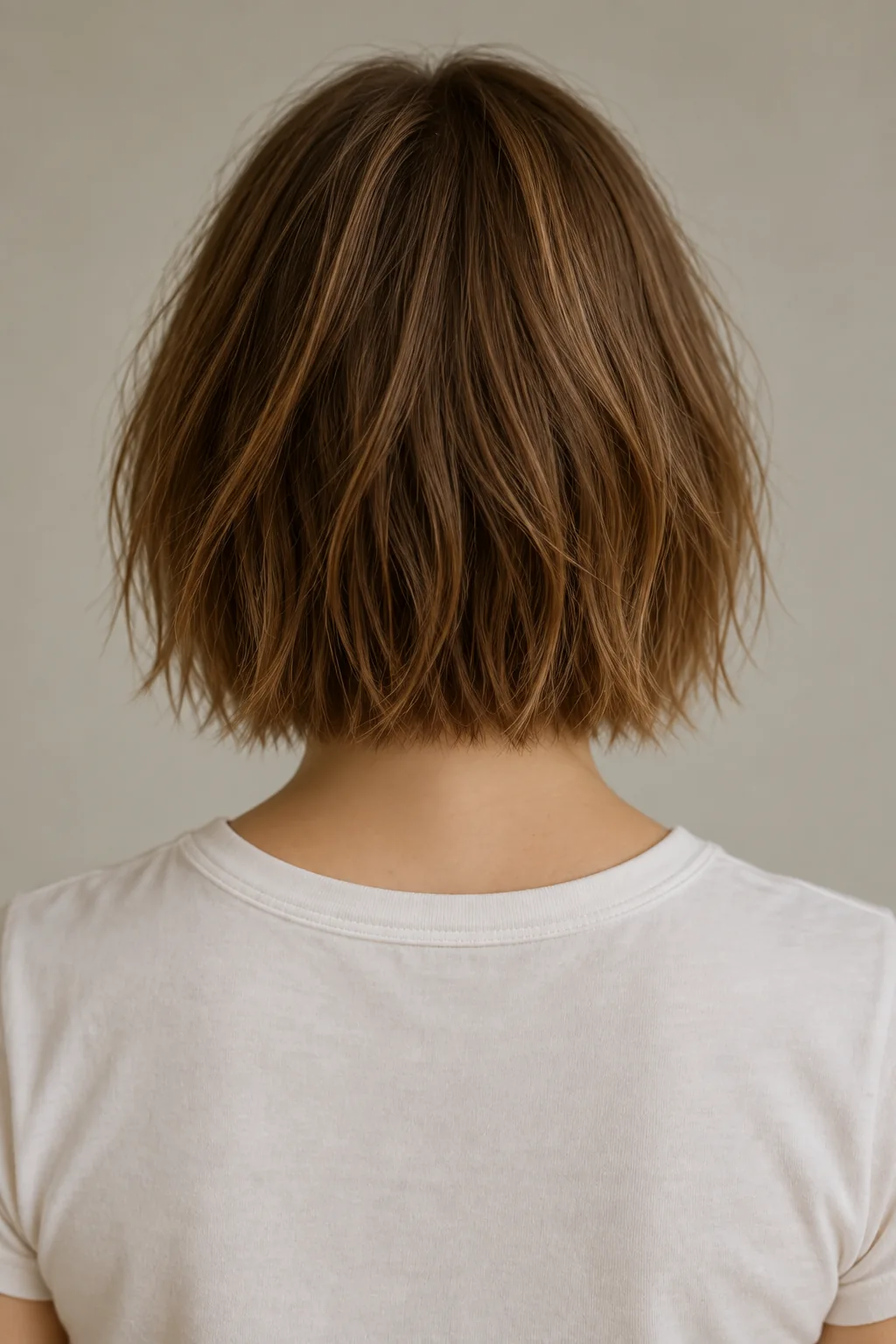
Bring the back view too: this version has no stacked nape or undercut, and its softness continues around the perimeter.
Prepare my razor bob salon card →Questions about the softer edge
Can scissors create a similar look?
Discuss that with your stylist. The visual goal is a soft, separated edge; the appropriate tool or combination depends on your hair and the technique used.
Is this the same as a blunt bob?
This reference has visible taper and separation rather than a continuous solid edge. You can choose less taper if you want a result closer to a fuller blunt outline.
Will it automatically give me more volume?
No. Texture can change how the hair appears and moves, but removing weight does not add density or guarantee lift. Decide how much fullness you want to preserve before cutting.