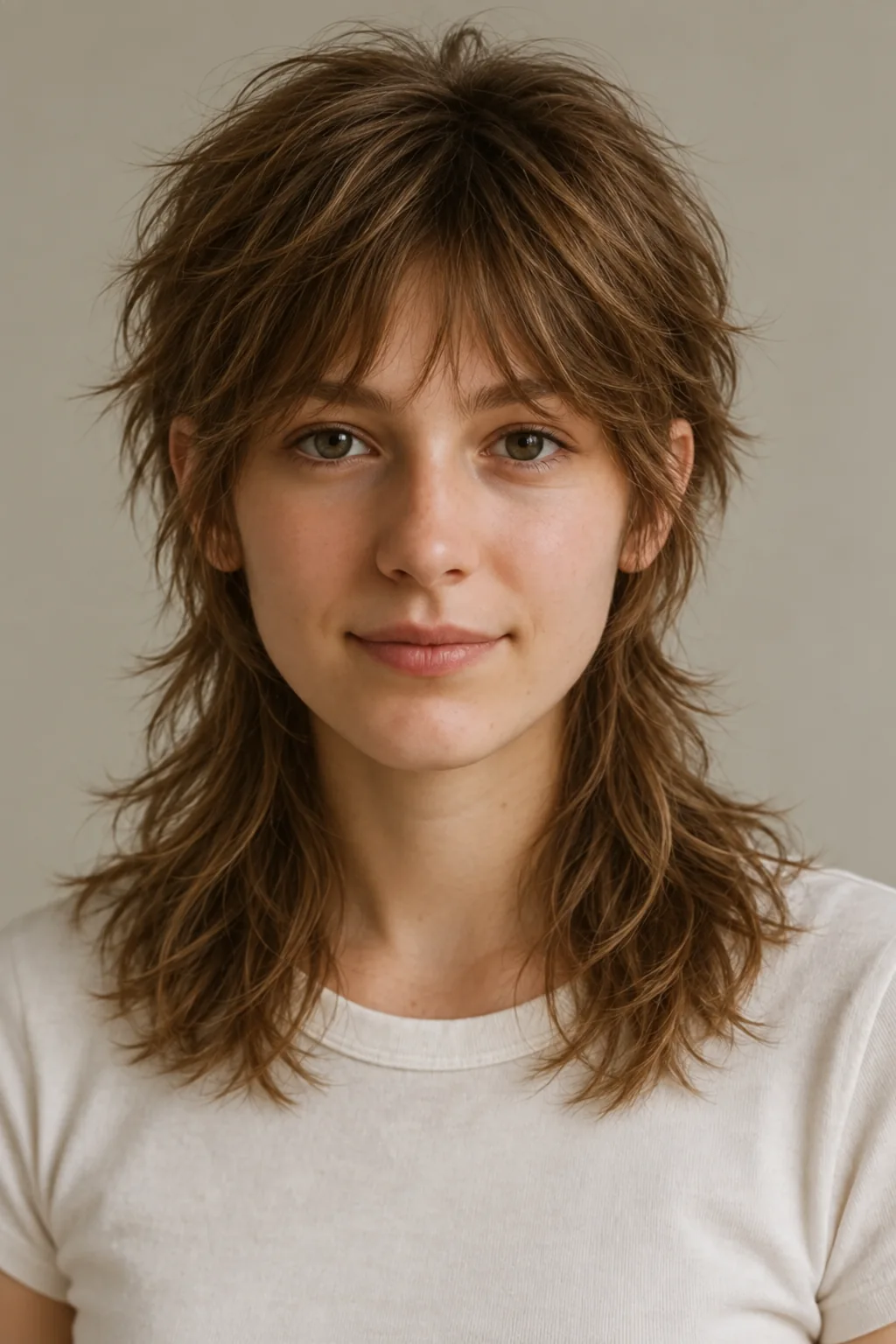
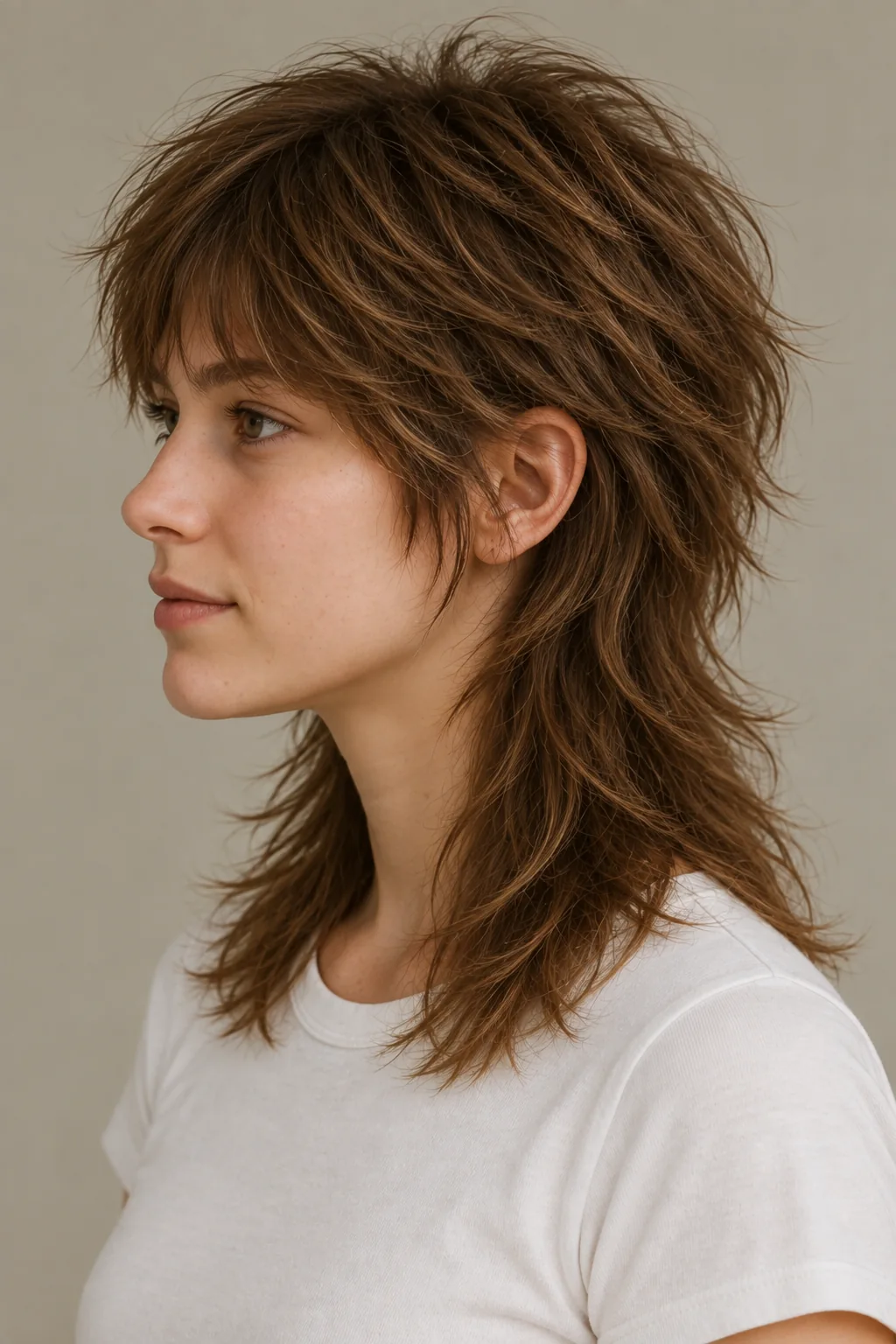
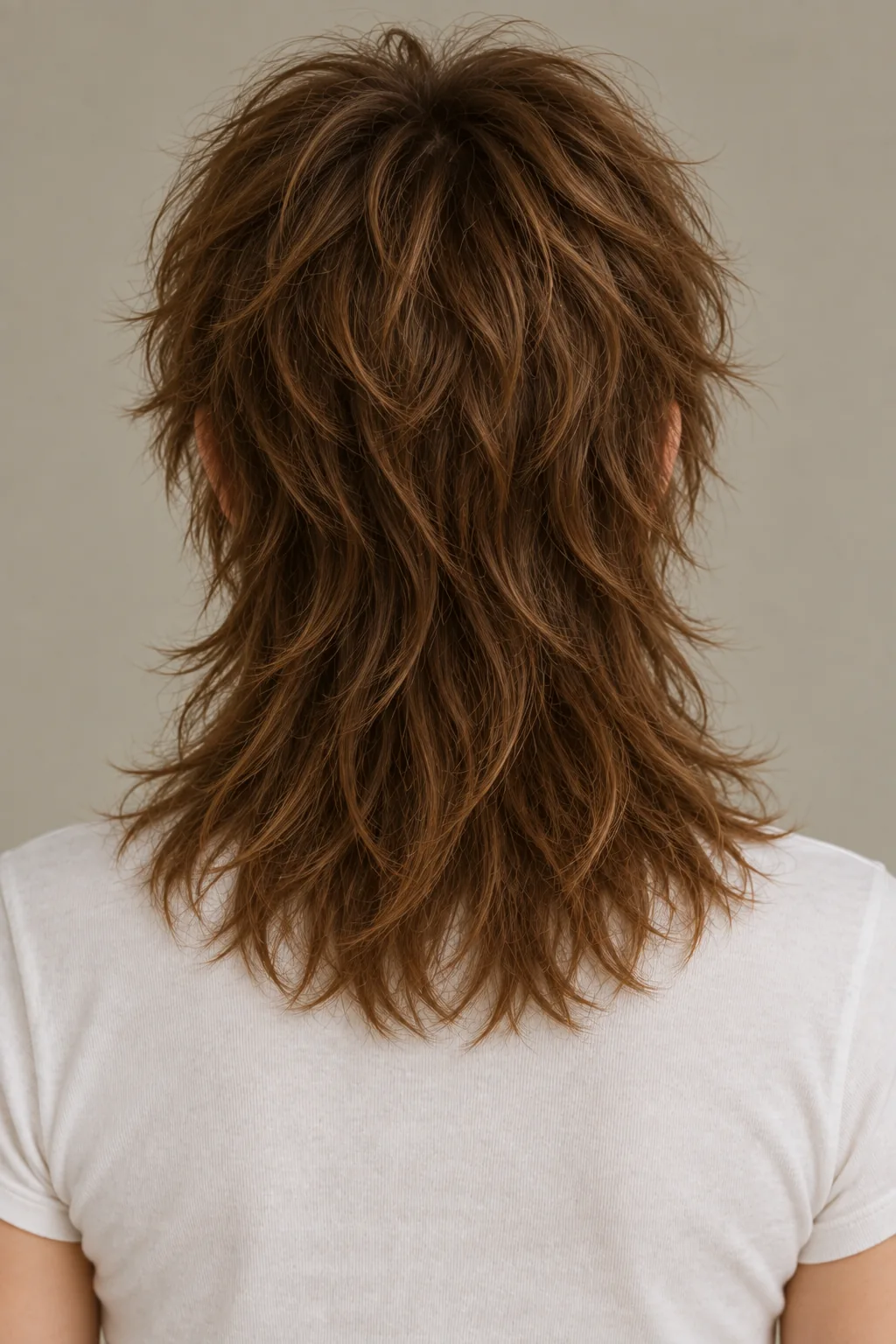
Start with the sides, not the length at the back
A shullet combines shag-like texture with a mullet’s shorter-side, longer-back structure. This version has choppy crown and side layers, a light broken fringe near the brows and a feathered nape reaching the shoulders. There are no shaved sides. Its shape depends on how short the pieces around the ears are, not simply on having a long back.
InStyle’s interviews with hairstylists describe the hybrid’s short choppy layers and longer back, while emphasizing the importance of agreeing on a specific version. The name alone can cover very different references. Point out the ear-level pieces you like, then ask your stylist to show their proposed dry length before cutting.
Decide whether you want the ears covered, partly visible or easy to tuck behind. Those choices affect both the silhouette and how the cut feels during the day. A front photograph can hide the relationship between these short pieces and the nape, so use the side view as well.
Balance lift with the density you want to keep
Shorter crown layers can change where hair sits, but they do not guarantee effortless volume. Growth patterns may make them lift, split or lie flat. Ask how the proposed length will behave on your head rather than requesting the shortest possible crown because the reference looks airy.
At the back, leave enough hair to make the longer section look intentional. If your ends are already sparse, heavy thinning may make the nape look like a few leftover strands. A quieter crown or fewer layers can be worth discussing when preserving fullness matters more than maximum separation.
| What you notice | What to agree before cutting |
|---|---|
| A crown that naturally lifts or separates | How much short layering it needs, and whether you want that growth pattern emphasized. |
| Fine or sparse back lengths | How much density stays in the nape after the upper sections are shortened. |
| Heavy sides | Where weight can be reduced while keeping the ear coverage you want. |
| Waves that turn outward near the ears | Whether that movement suits the intended short-side outline. |
| Curls with noticeable shrinkage | The dry length of each short section, not only its stretched length. |
Choose the fringe length separately from its weight
The reference has a wispy, broken fringe, rather than full curtain bangs or a solid blunt line. “Light” describes how much hair is in it; it does not necessarily mean shorter. Ask your stylist to show where the fringe will sit dry and how it responds to any cowlick at the hairline.
Try brushing it aside and clipping it away. If you need a clear forehead at work or during exercise, those arrangements belong in the consultation. A fringe that looks casual in a photograph can still need attention after washing or sleeping.
Make the short sections work for you
Keeping more side length, reducing crown height or protecting the nape’s density changes the balance without abandoning the idea. Select the points you want to discuss. These are salon requests; they do not alter the AI preview’s reference haircut.
Let your texture inform the routine
Soft natural waves can help reveal the separated layers. Straight hair may show their changes in length more sharply, while curls can lift the sides and crown into a different outline. Neither needs to be forced into the exact wave pattern shown here, but both should be assessed dry before the shortest pieces are finalized.
Ask your stylist to demonstrate the fringe and sides first, then the crown and long back. Notice which sections need directing and which settle on their own. If the finish involves heat or styling products, ask what each step changes; follow tool instructions and use suitable heat protection when needed.
Do not assume a textured haircut is automatically wash-and-go. Bring an unstyled photograph and describe your usual morning. If you dislike height at the crown or outward movement at the ears, it is better to adjust the plan than rely on flattening short pieces every day.
The long nape does not make this a ponytail-length haircut
You may be able to gather the back into a small tie, but the crown, sides and fringe will usually stay out. Ask to test a headband or clips if you need all of your hair secured. The shorter pieces may also behave differently under a helmet or headphones.
Consider whether you enjoy wearing those sections loose when the back is up. A partly tied shullet keeps a noticeably different outline from a one-length haircut gathered into a single ponytail. Extra side length may make your routine easier, even if it softens the reference’s contrast.
Decide whether to preserve or reduce the difference
To maintain the shullet, refresh the short areas when they stop sitting as intended while checking the back’s condition and outline separately. The fringe may need attention at a different time from the nape. Agree appointments around those changes rather than expecting one fixed schedule.
If you want a more even shape later, let the short layers grow and selectively trim the longer back to reduce the gap. Simply letting every section grow does not make the short pieces catch up when they grow at similar rates. Tell your stylist whether your priority is retaining overall length or reaching a less contrasted shape sooner; those goals can lead to different trimming choices.
Show the short pieces as well as the long tail
I’d like a soft shullet with shorter textured crown and sides, a light broken fringe and a shoulder-reaching nape. Please show me the shortest side pieces, agree how much ear coverage remains and preserve enough density in the back. Check the shape in my natural texture.
Bring all three views. The side shows the defining length relationship, while the back helps establish how full and long the nape should remain.
Prepare my shullet salon card →Questions about the shag-mullet shape
How is this different from a shag?
The shorter sides and distinctly longer nape give this version its mullet influence. A fuller-sided shag can have less contrast. Compare the side outline rather than relying on either name alone.
Do the sides need shaving?
No. This reference has short textured hair around the ears, not a fade or shaved section. Shaving would be a separate variation with a different grow-out.
Can I wear it without the fringe?
That is another version to discuss. Removing the fringe changes the front and how the crown connects around the face; this preview specifically includes a broken brow-length fringe.